
Upper Blepharoplasty (Eyelid) Surgery in Washington, DC
Refresh Your Look with Customized Upper Eyelid Rejuvenation with Dr. Ariel Rad
The upper eyelids can change dramatically with age, even when the rest of the face has changed relatively little. Skin becomes less elastic, tissues begin to descend, and the natural upper eyelid crease can become increasingly obscured. The result may be eyes that appear heavier, more tired, or older than you feel.
At Sherber + Rad in Washington, DC, board-certified plastic surgeon Dr. Ariel Rad performs upper blepharoplasty, or upper eyelid surgery, using an individualized approach designed around each patient's eyelid anatomy, facial proportions, and aesthetic goals.
Because the eyes are central to facial expression and identity, successful eyelid surgery is not simply about removing excess skin. Small changes can have a significant effect on the appearance of the eyes and face. Dr. Rad's goal is to create precise, balanced rejuvenation while preserving the natural characteristics that make your eyes your own.
“Plastic surgery is the craft of enhancing beauty without the evidence.”
- Ariel N Rad, MD, PhD, FACS
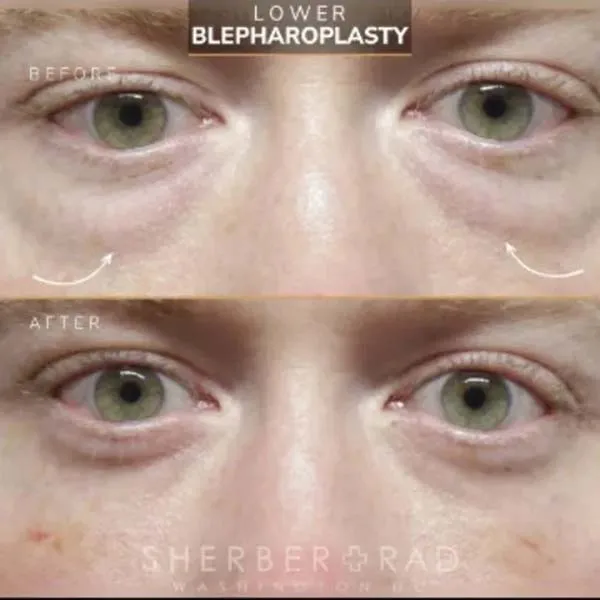
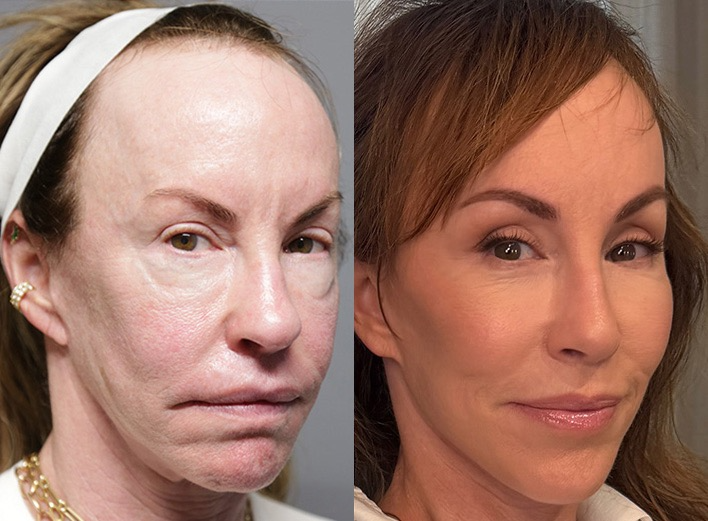
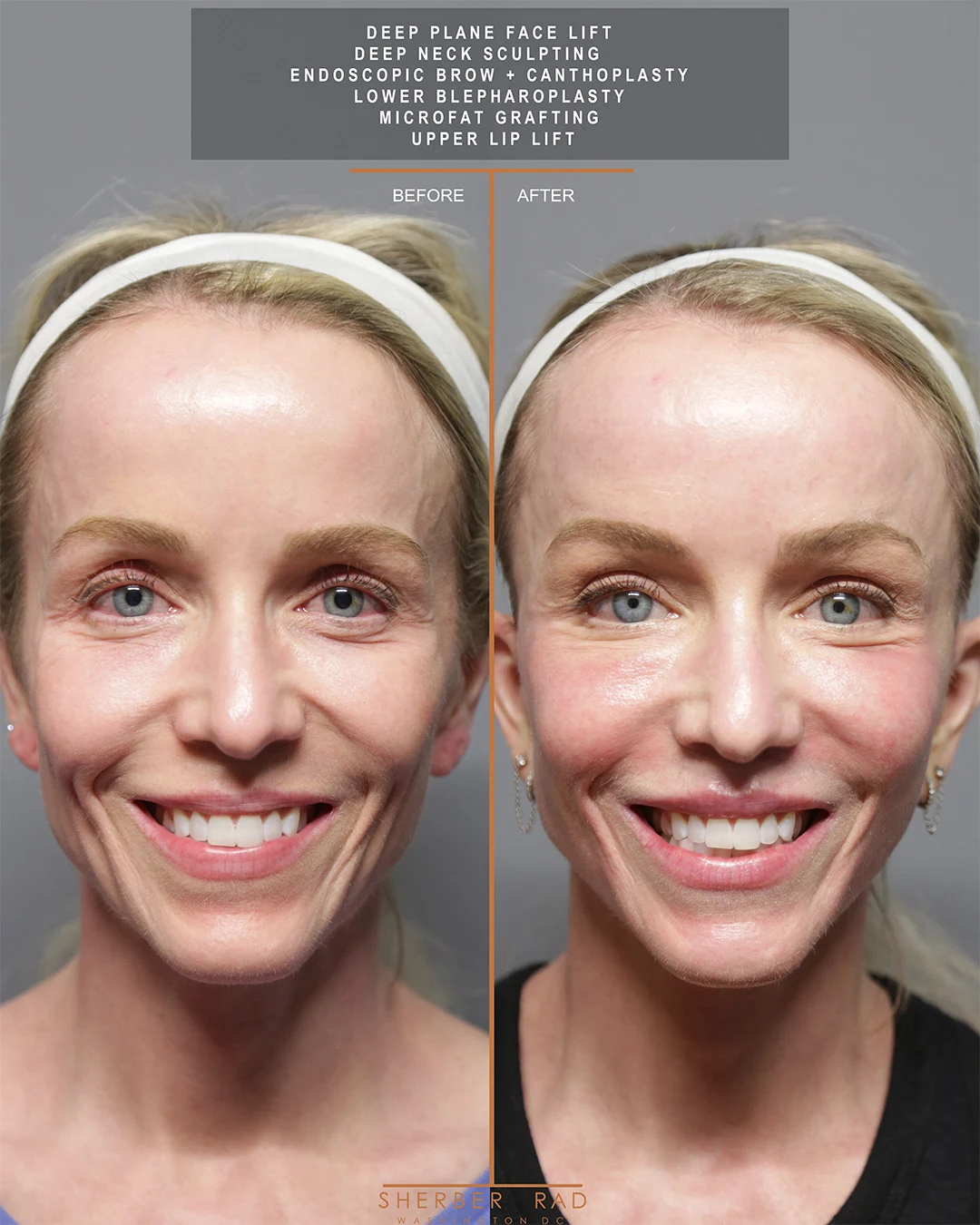
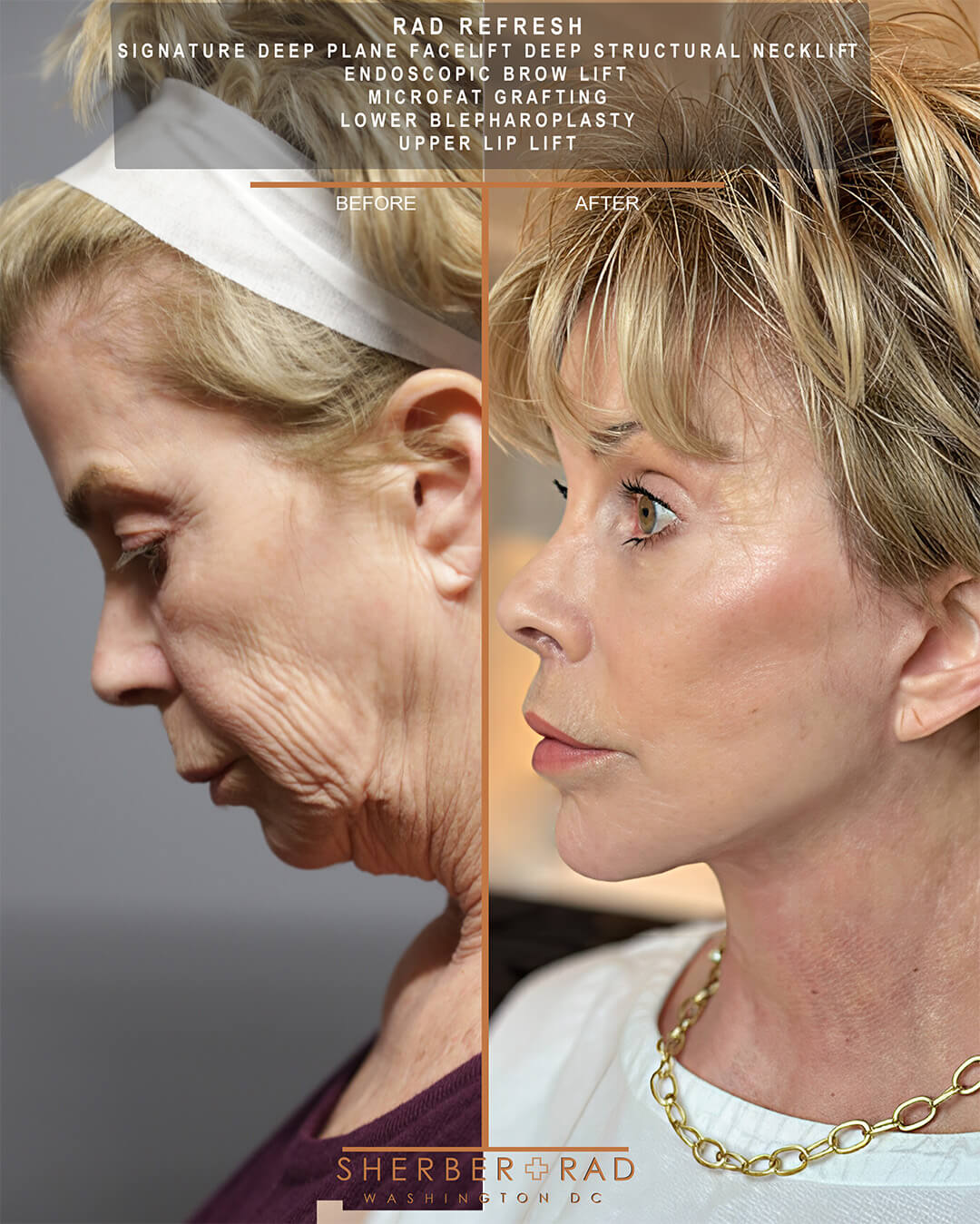
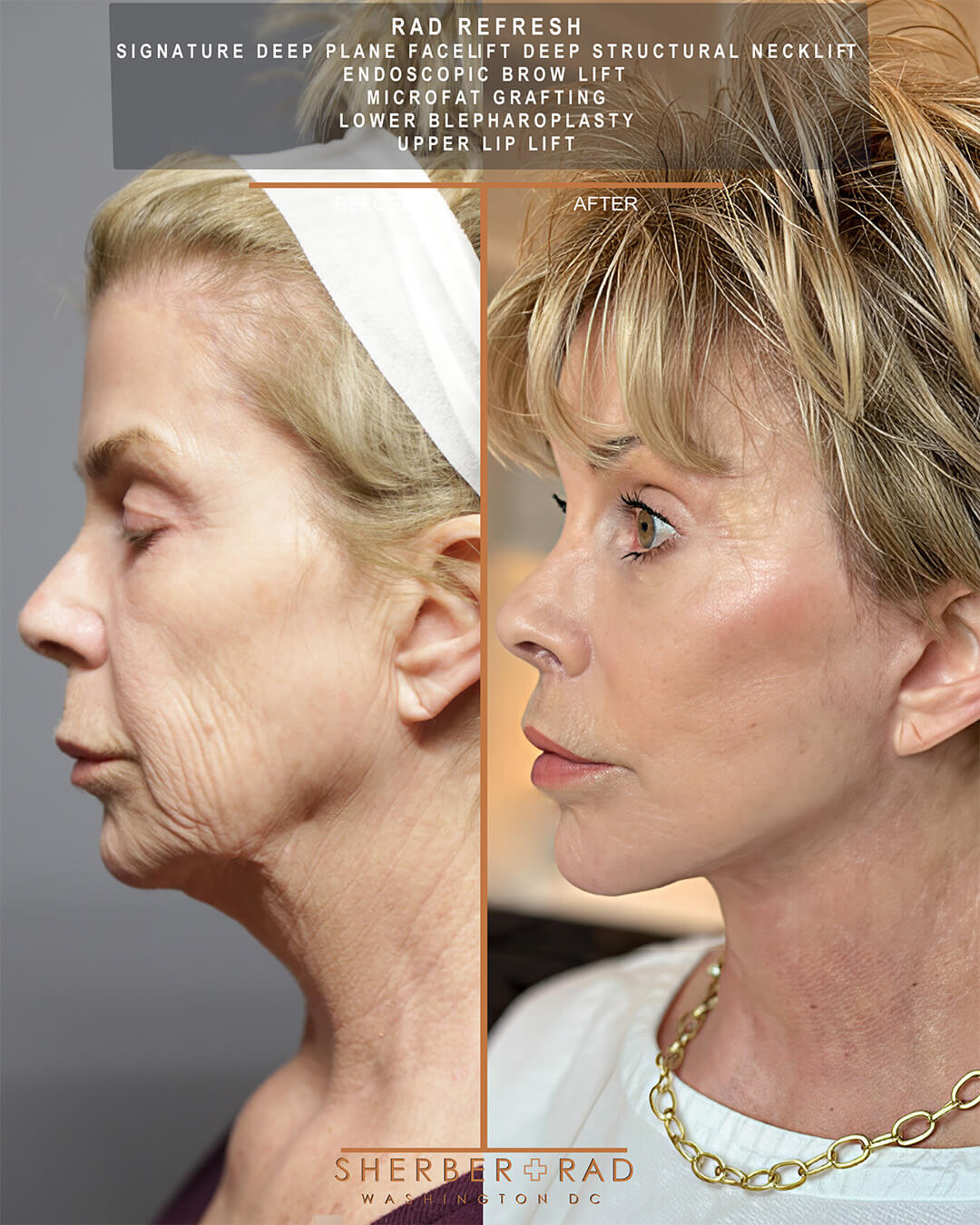
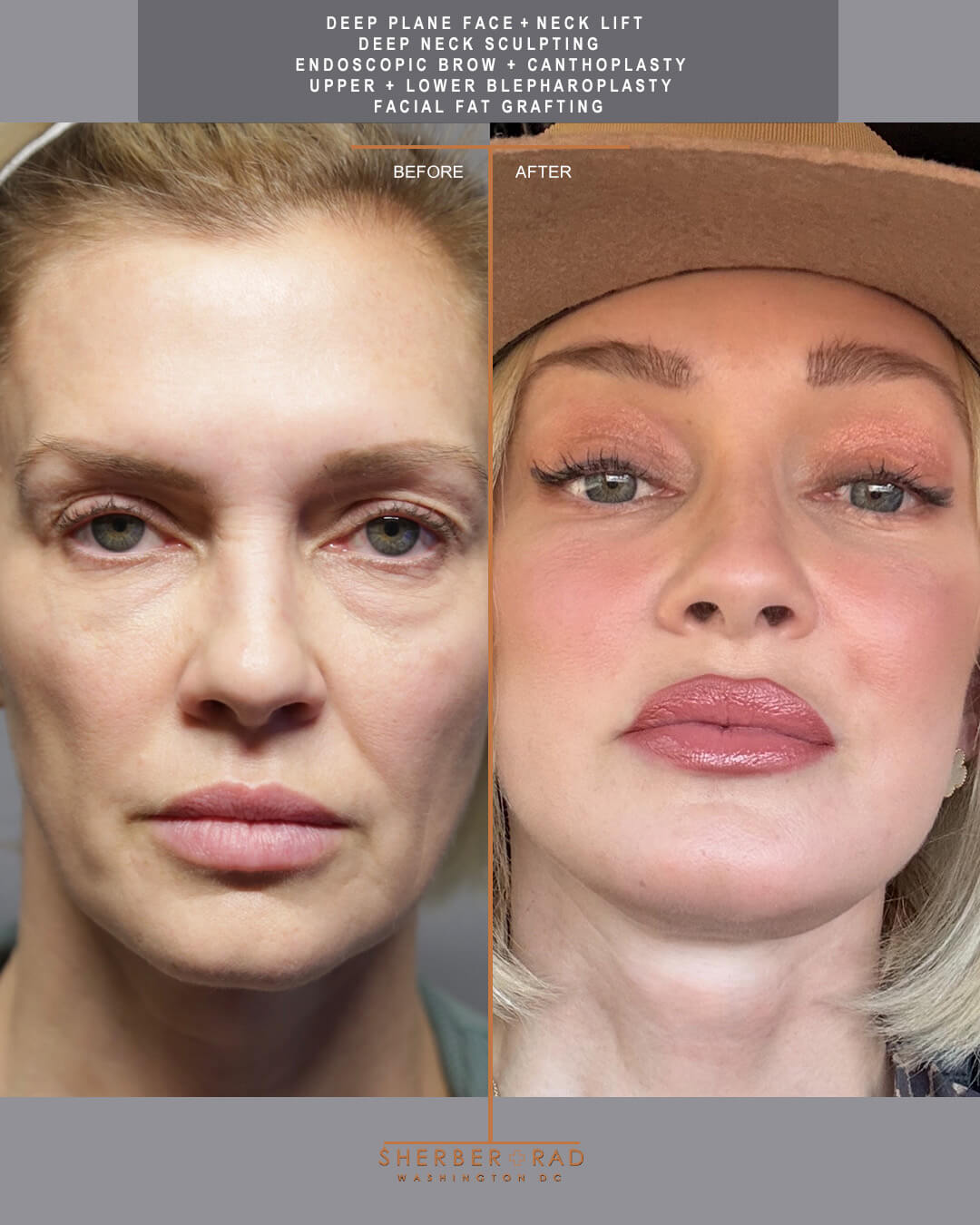
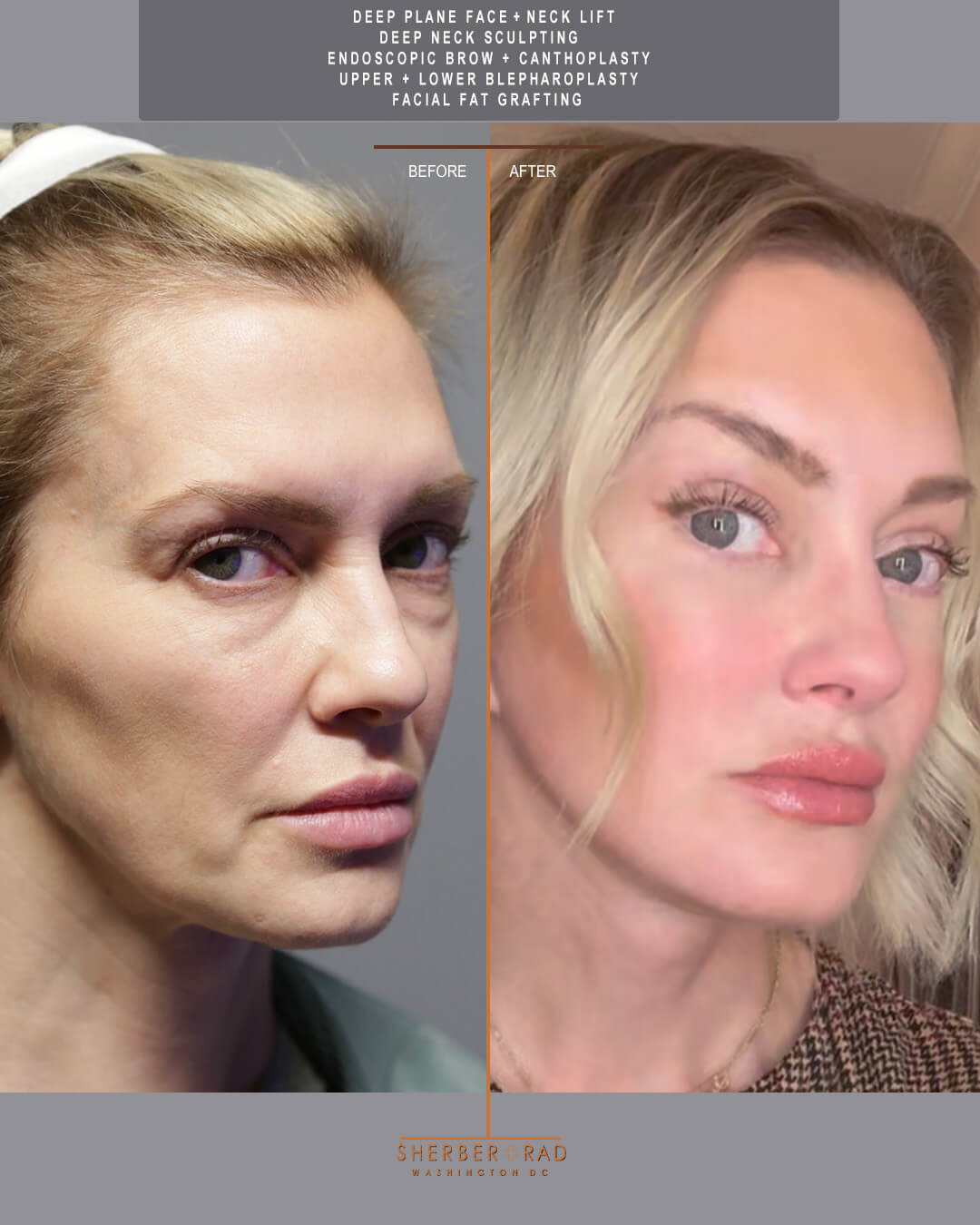
real patient resultsgallery
before
after
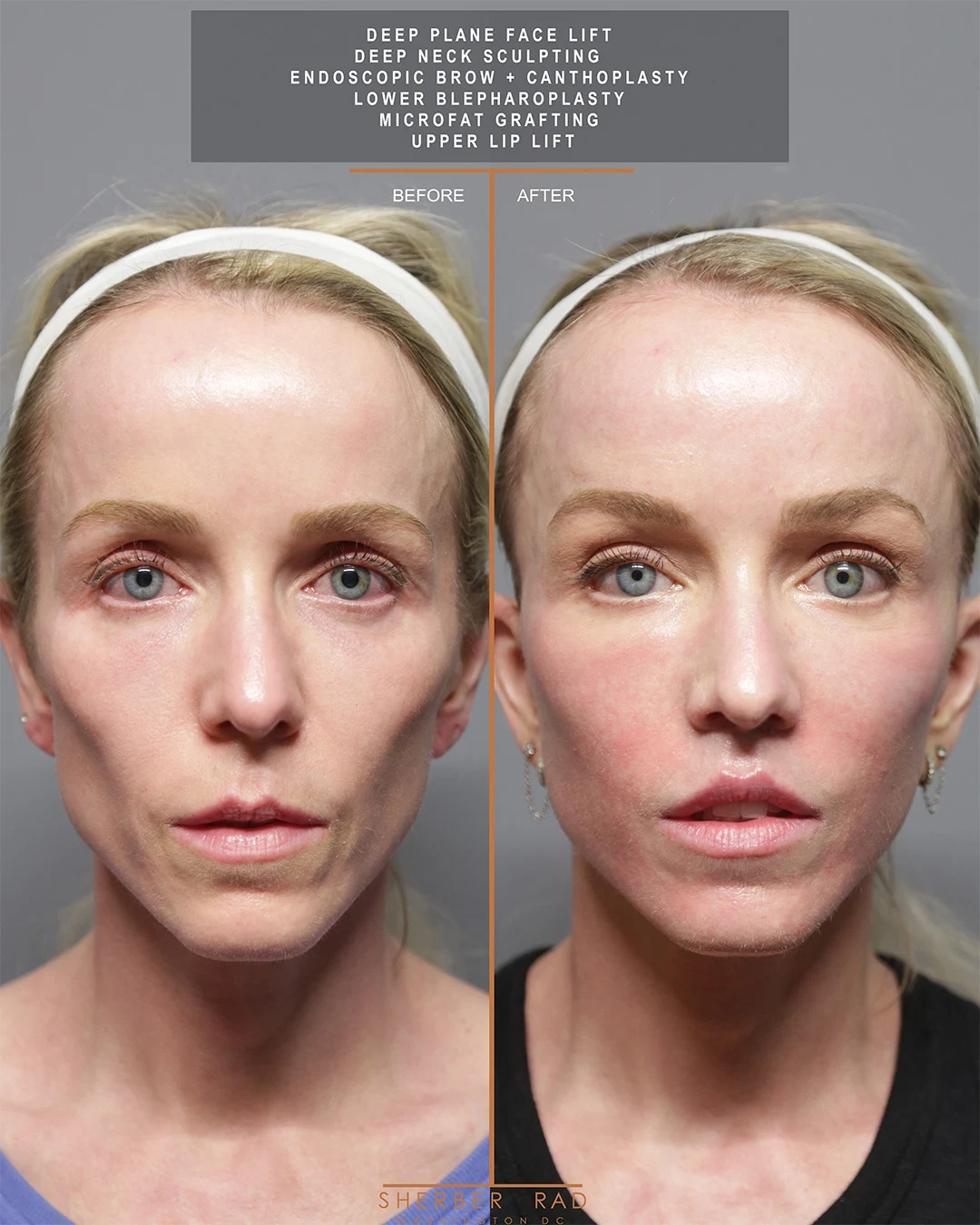
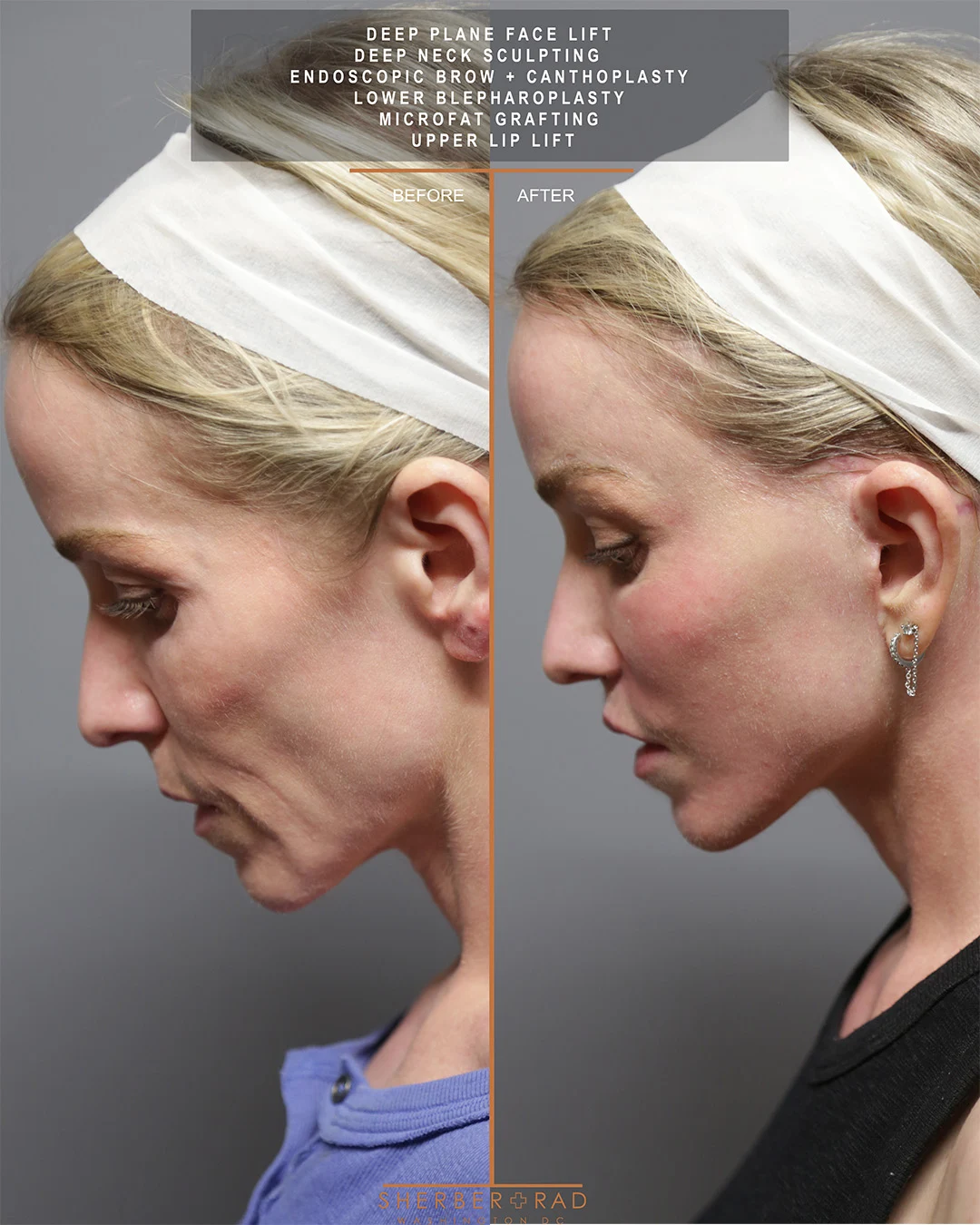
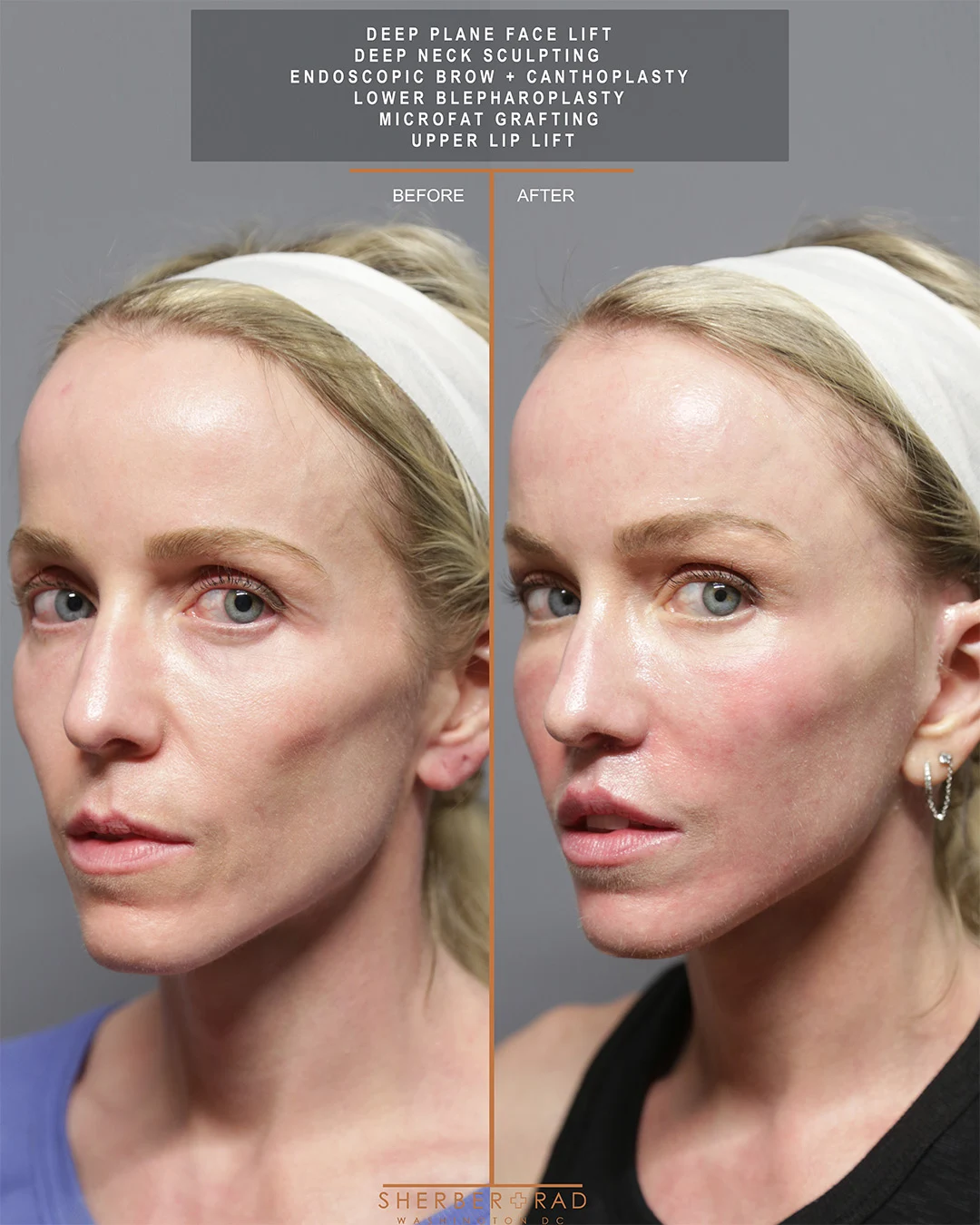
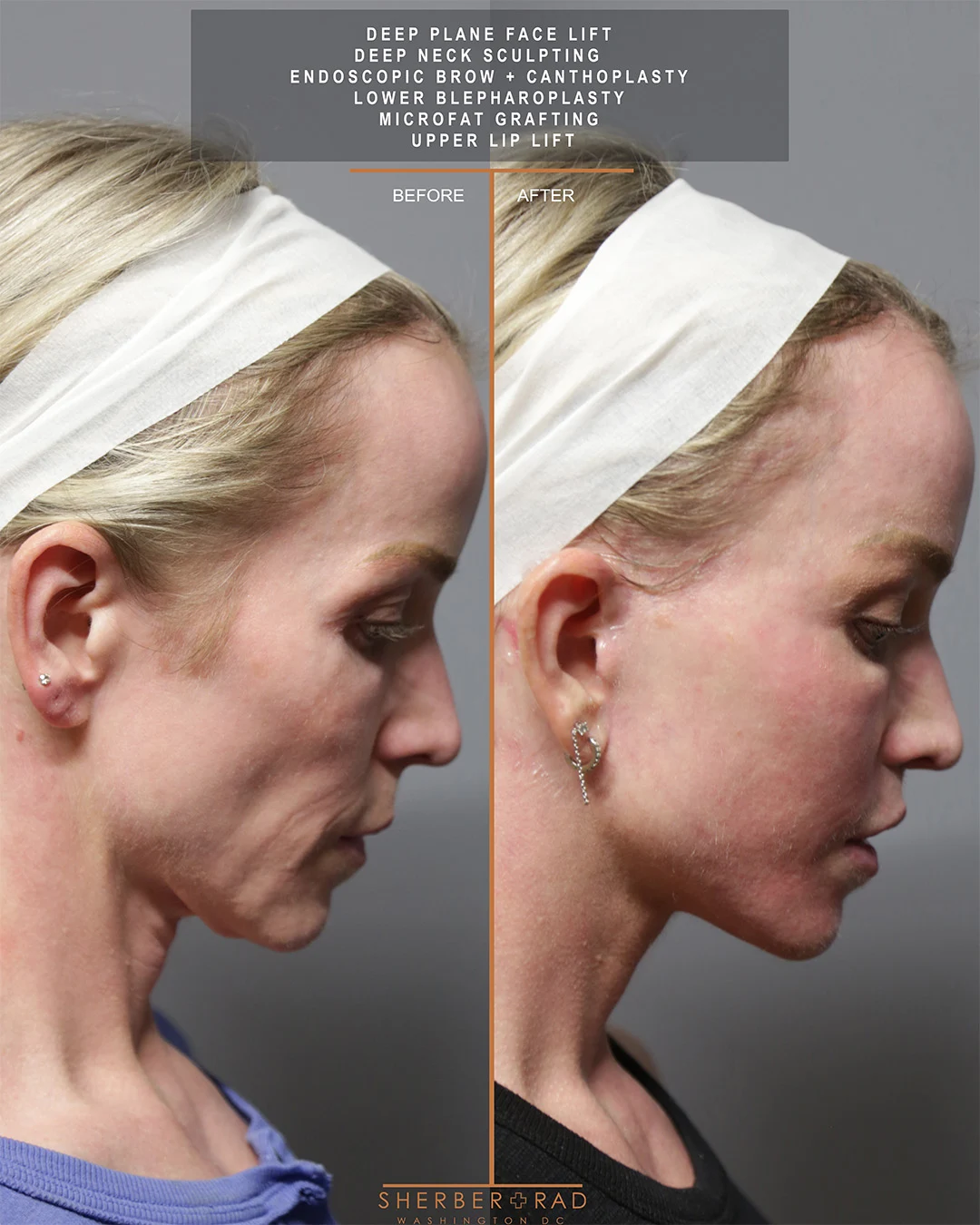
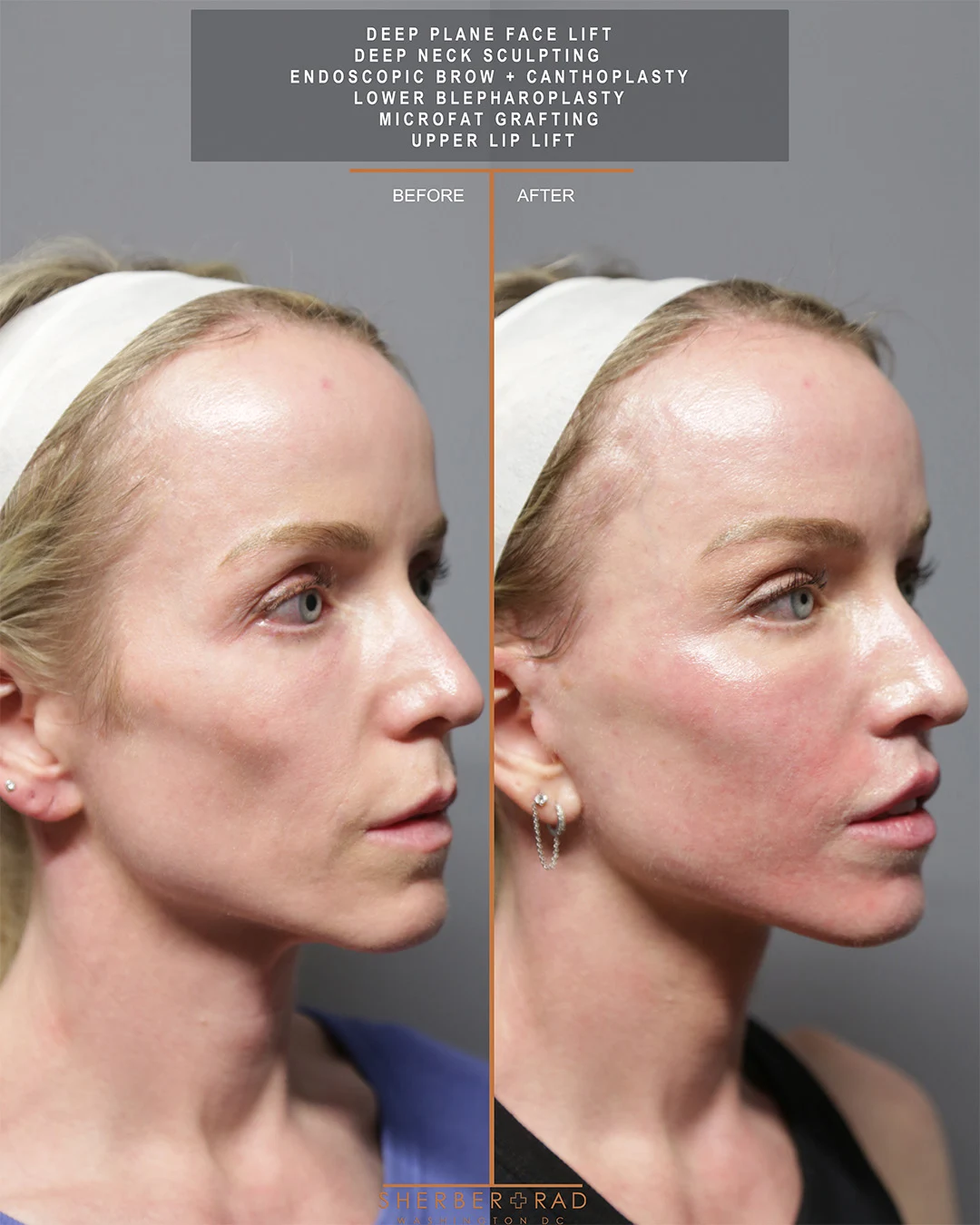
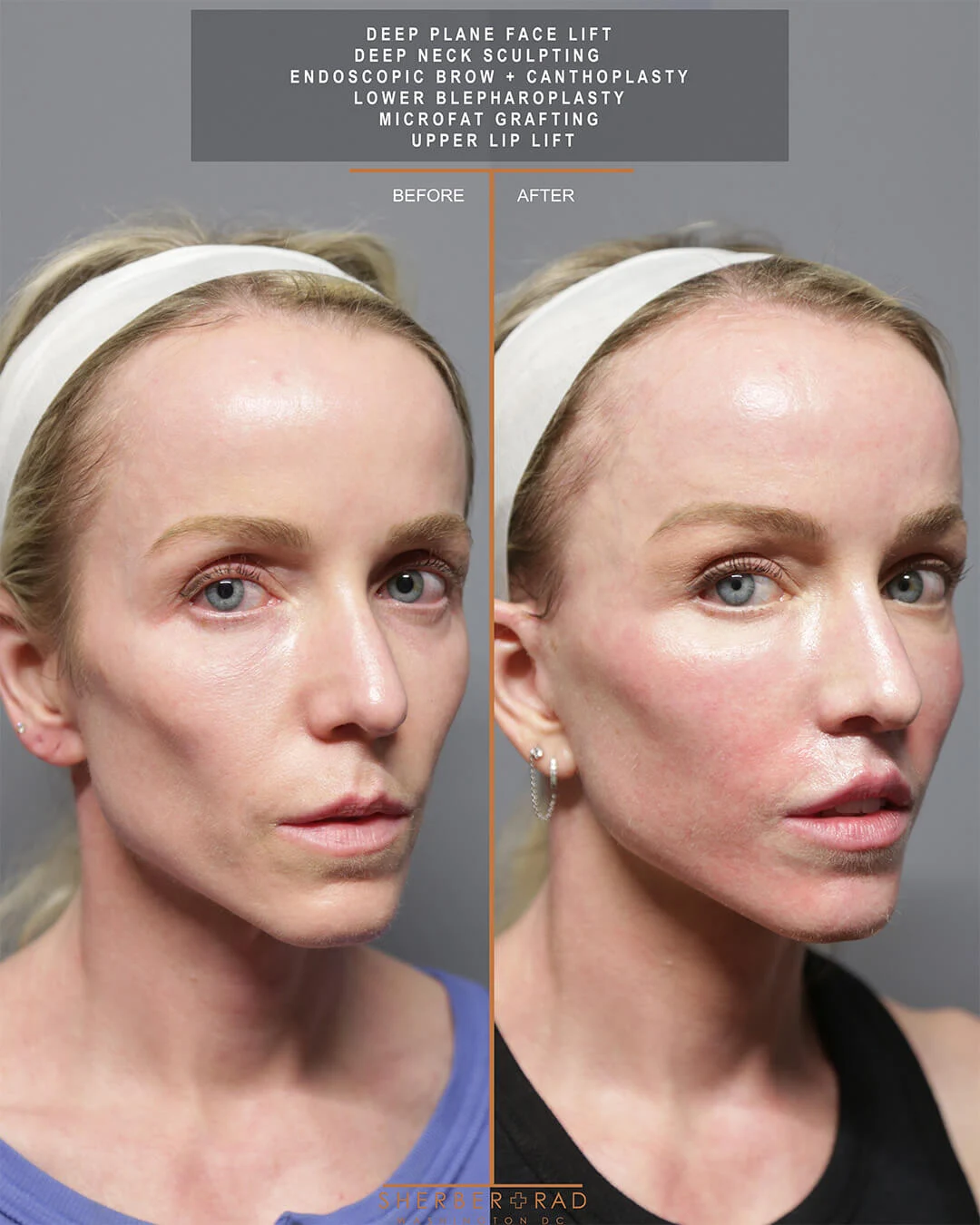
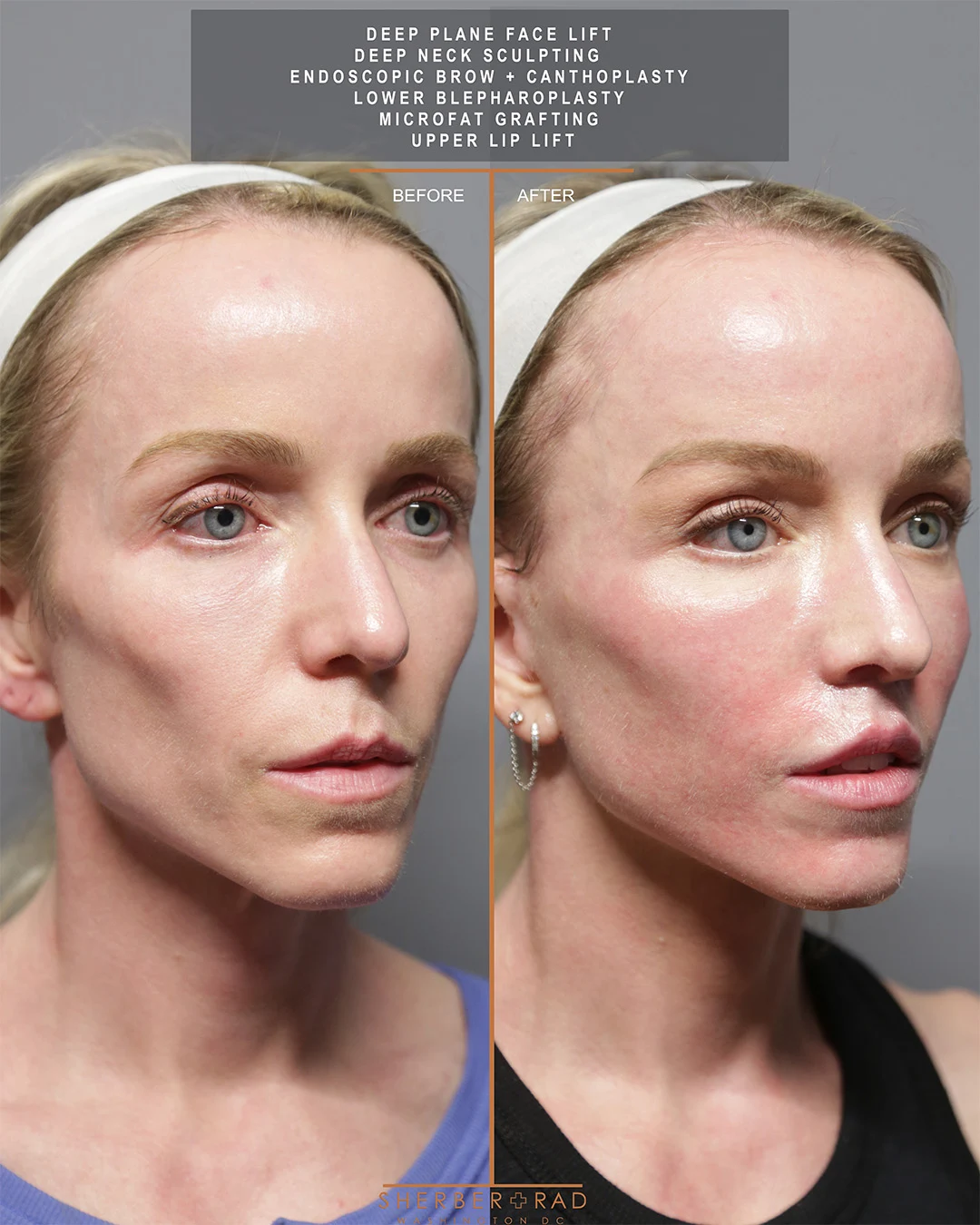
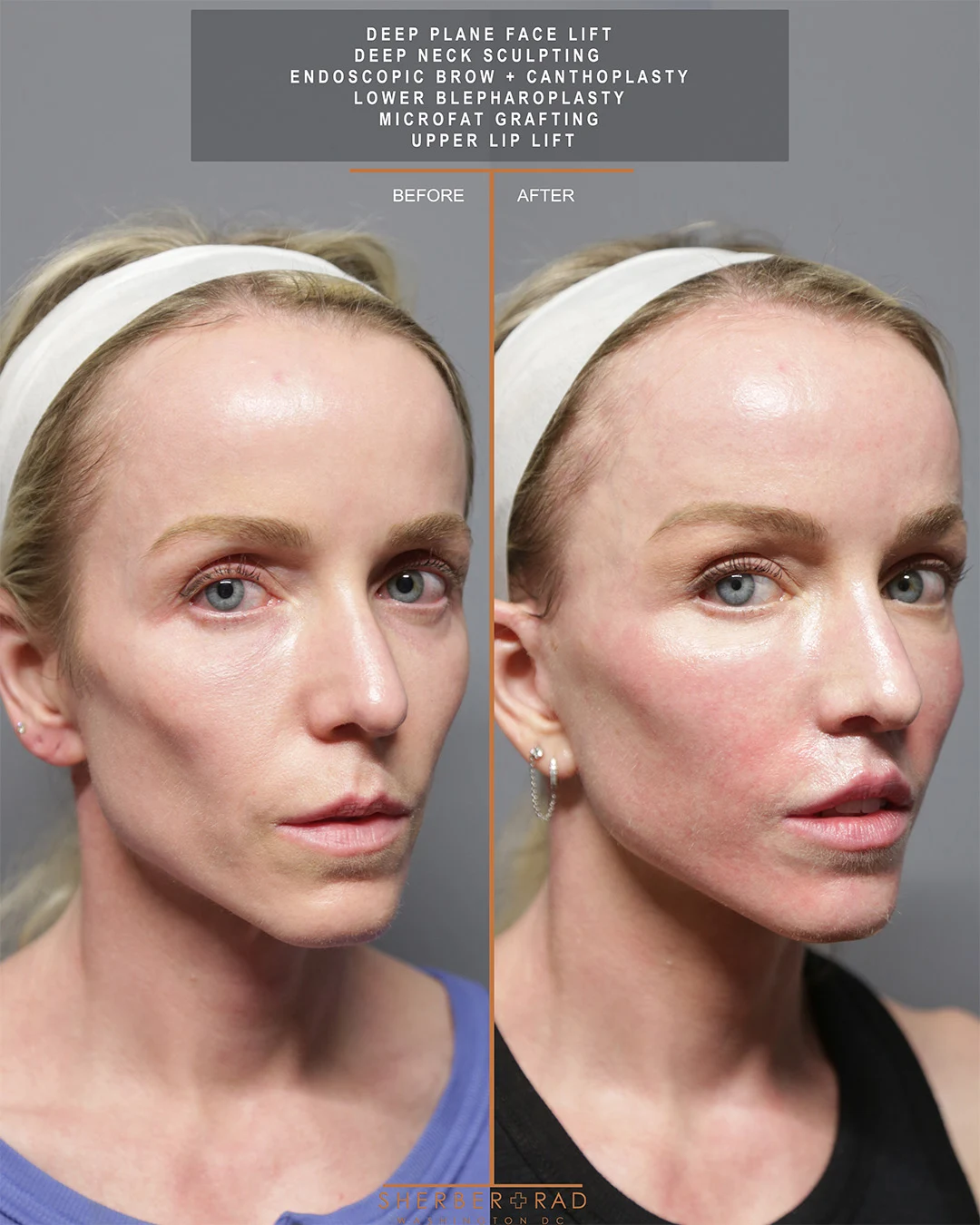
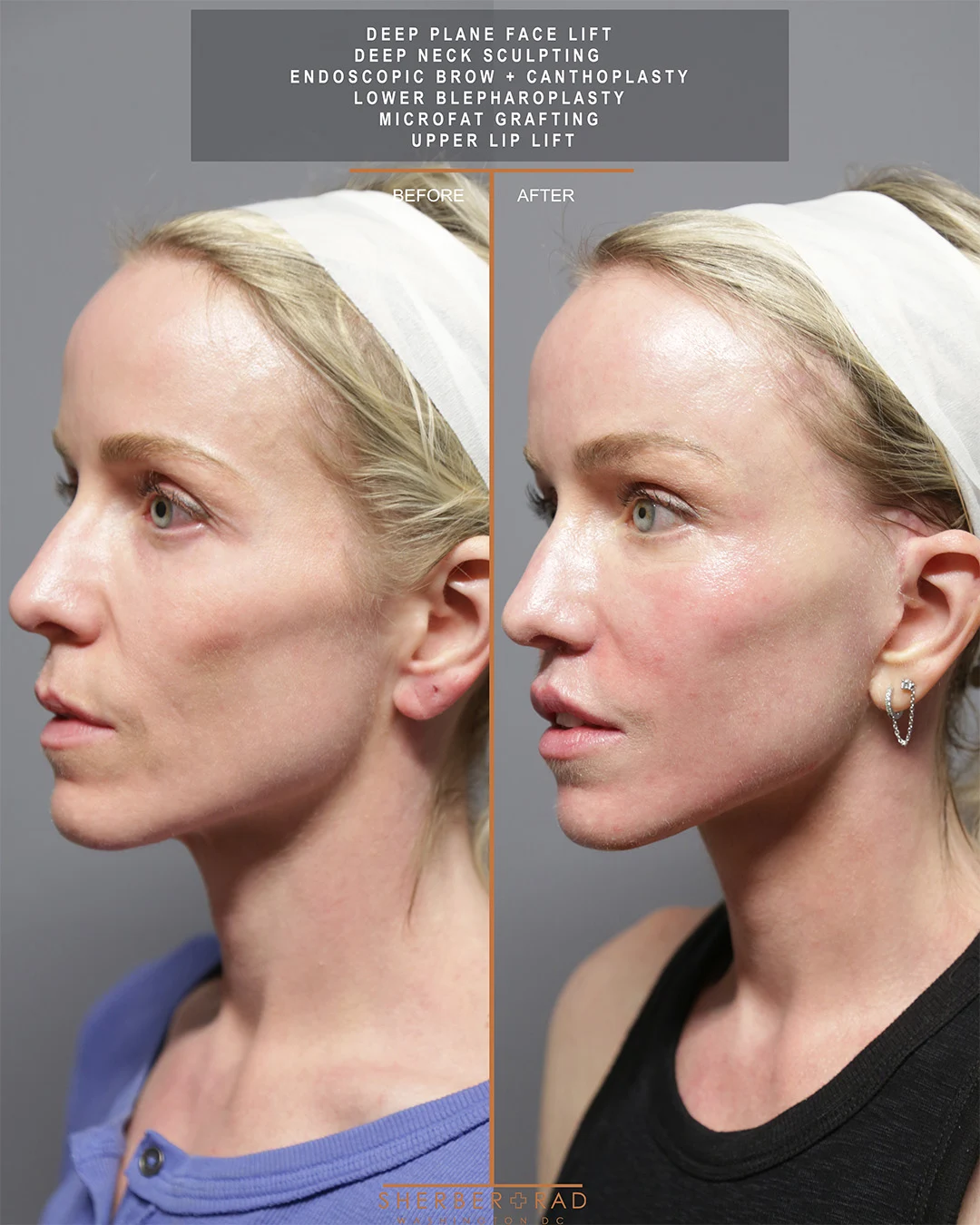
before
after
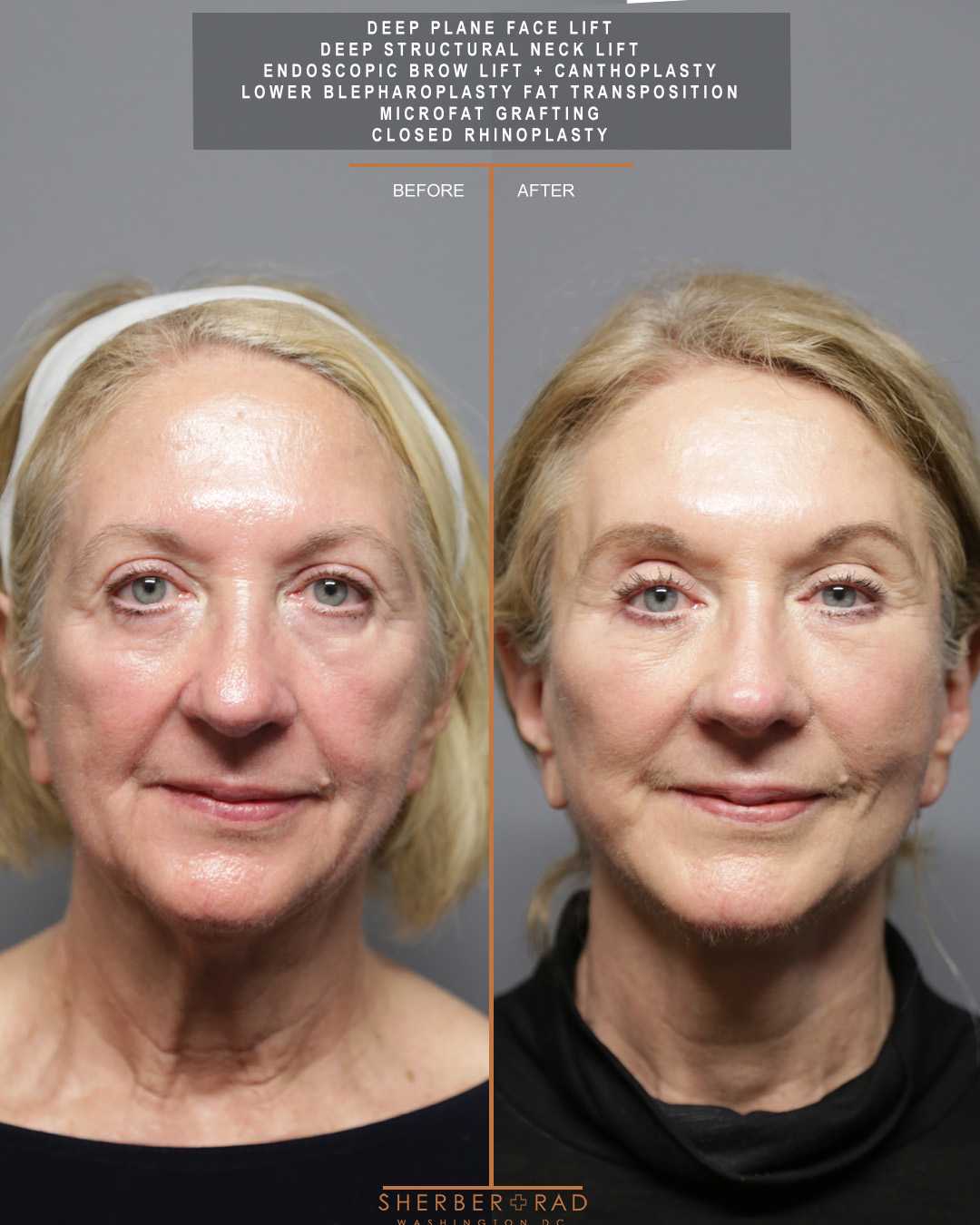
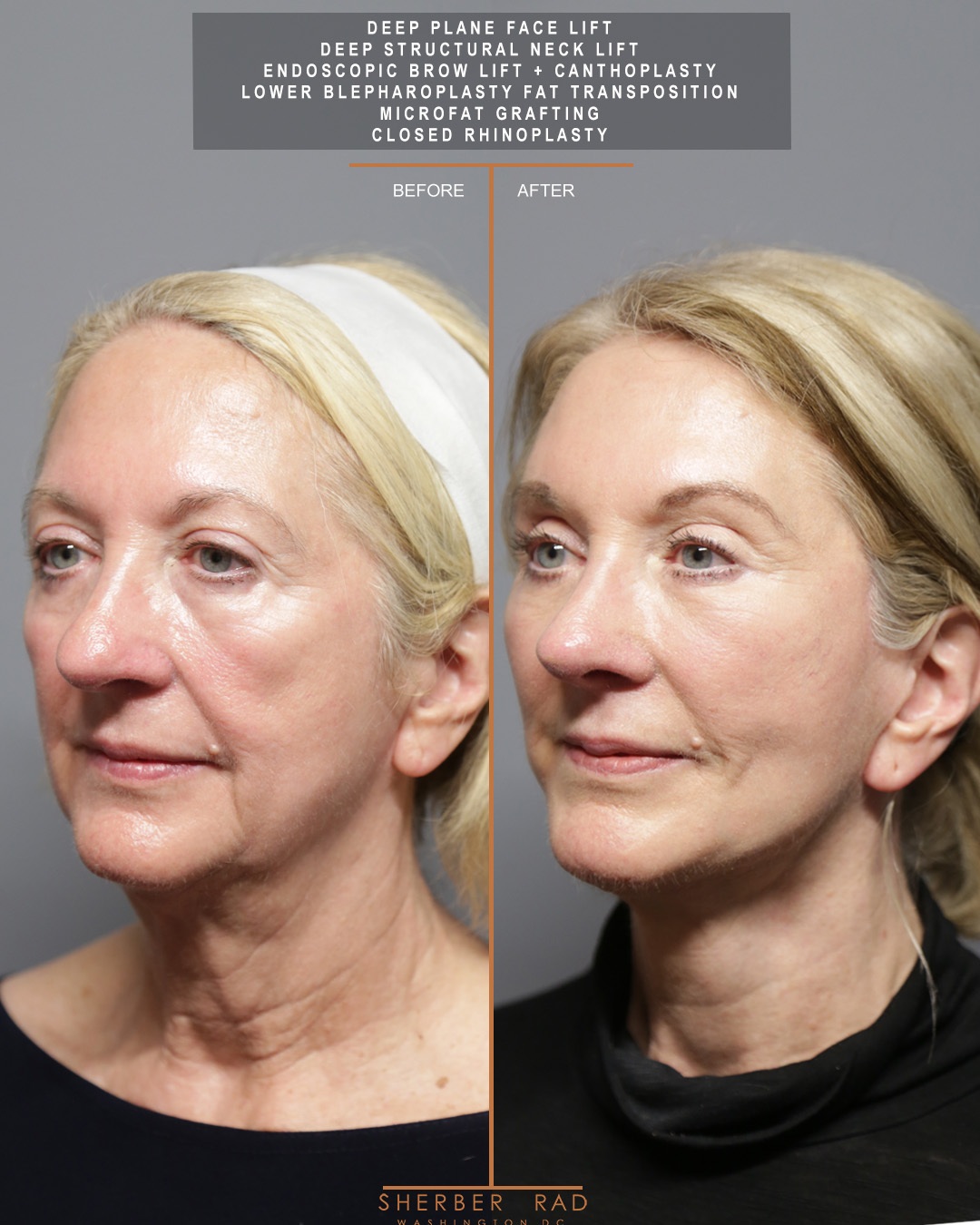
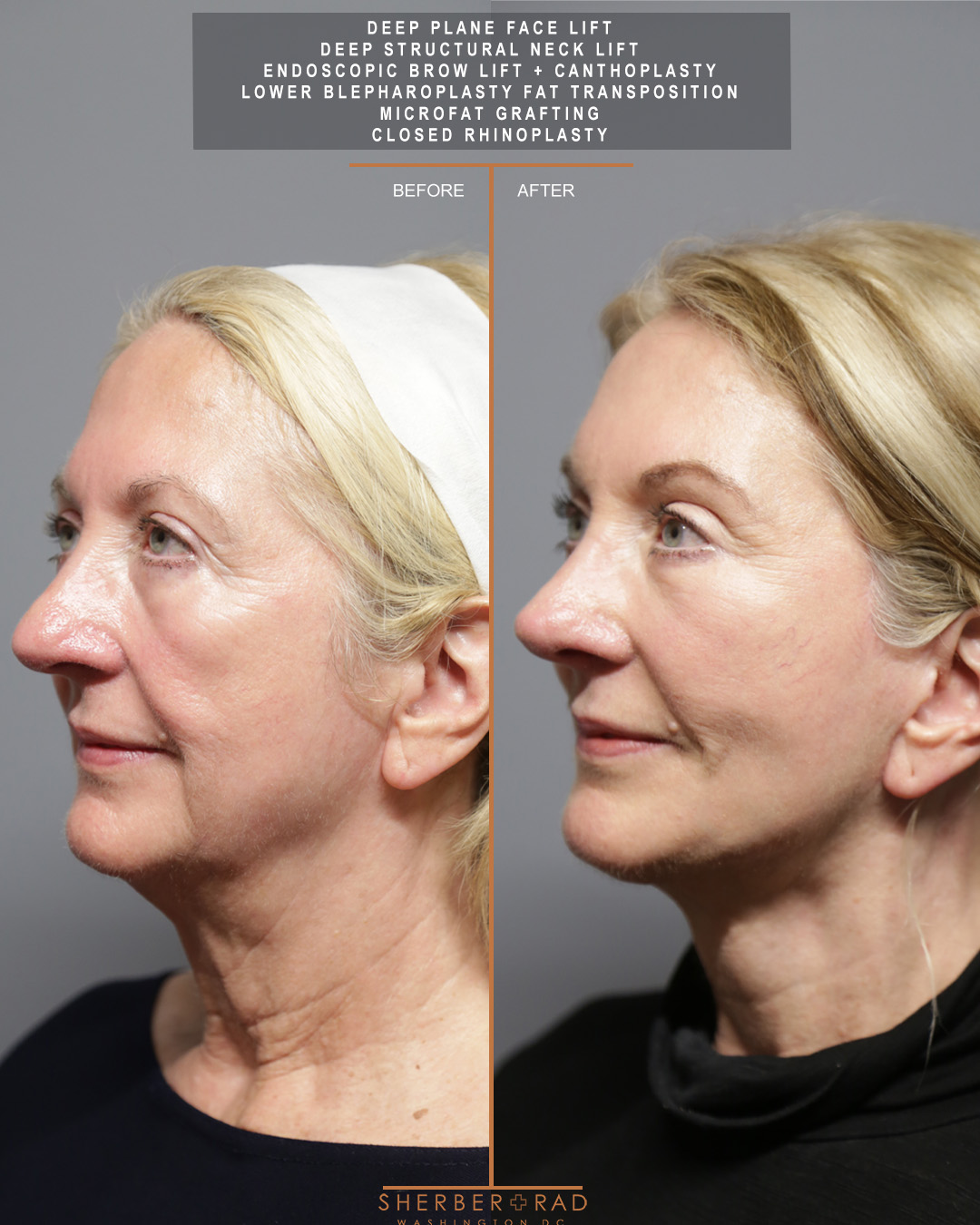
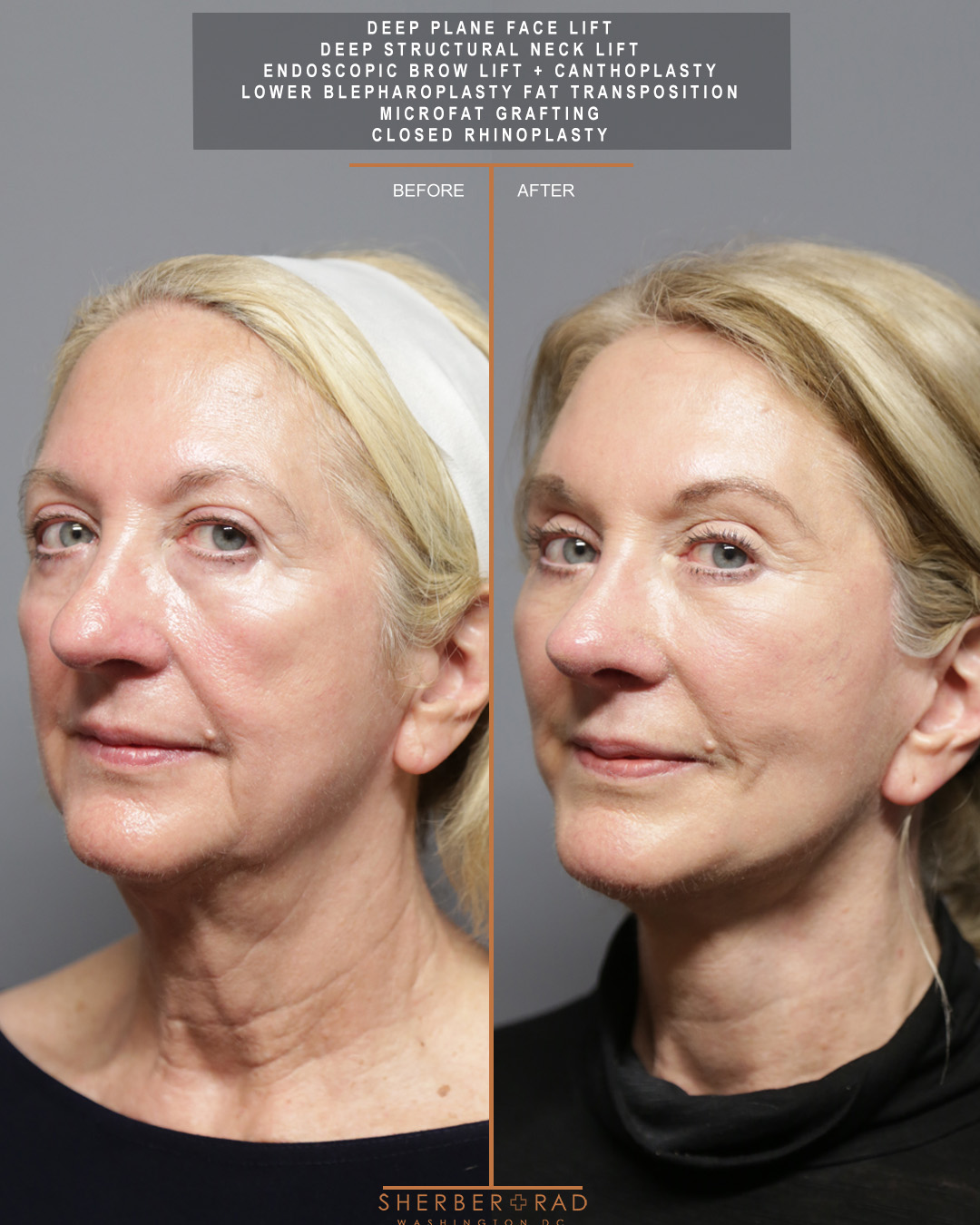
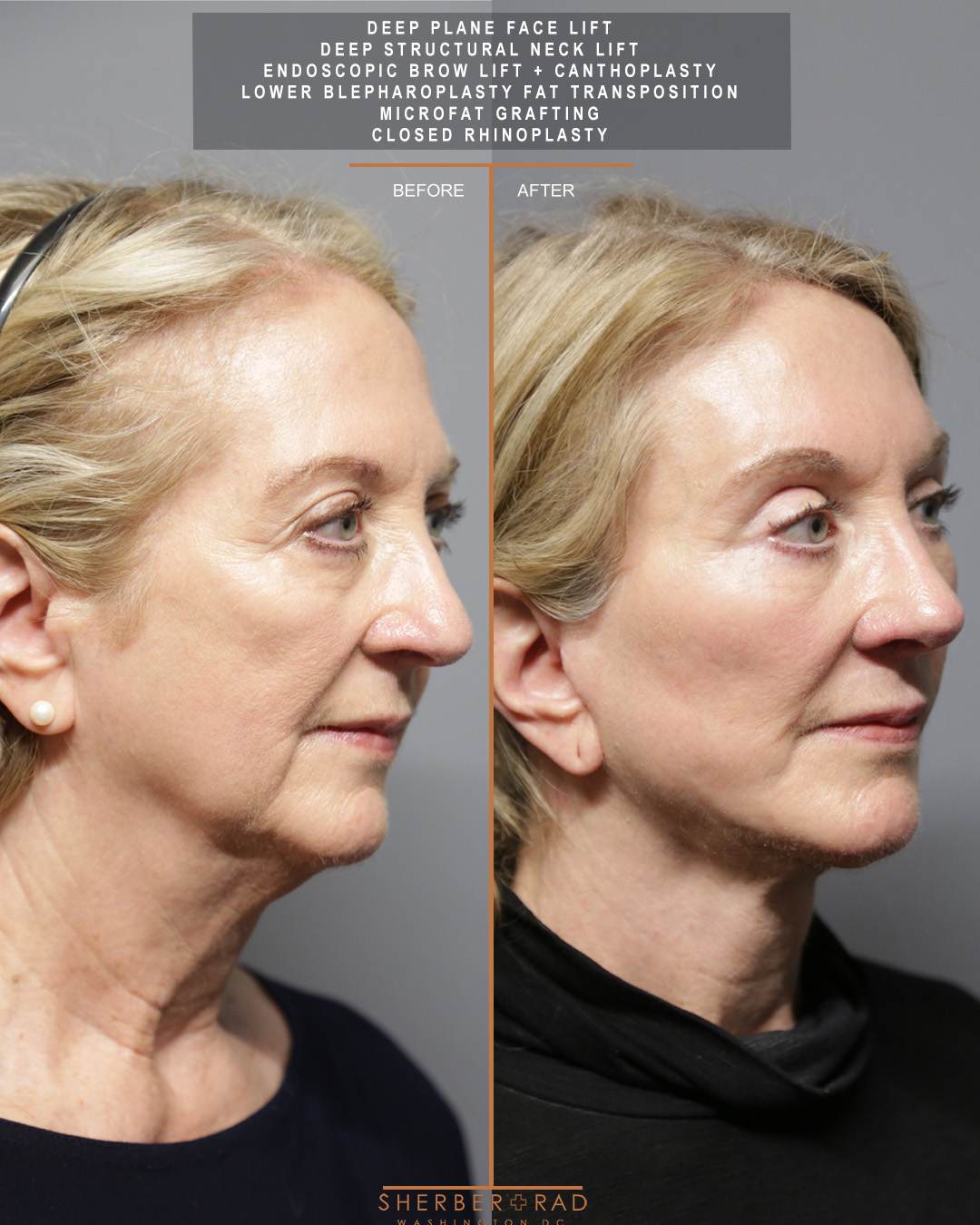
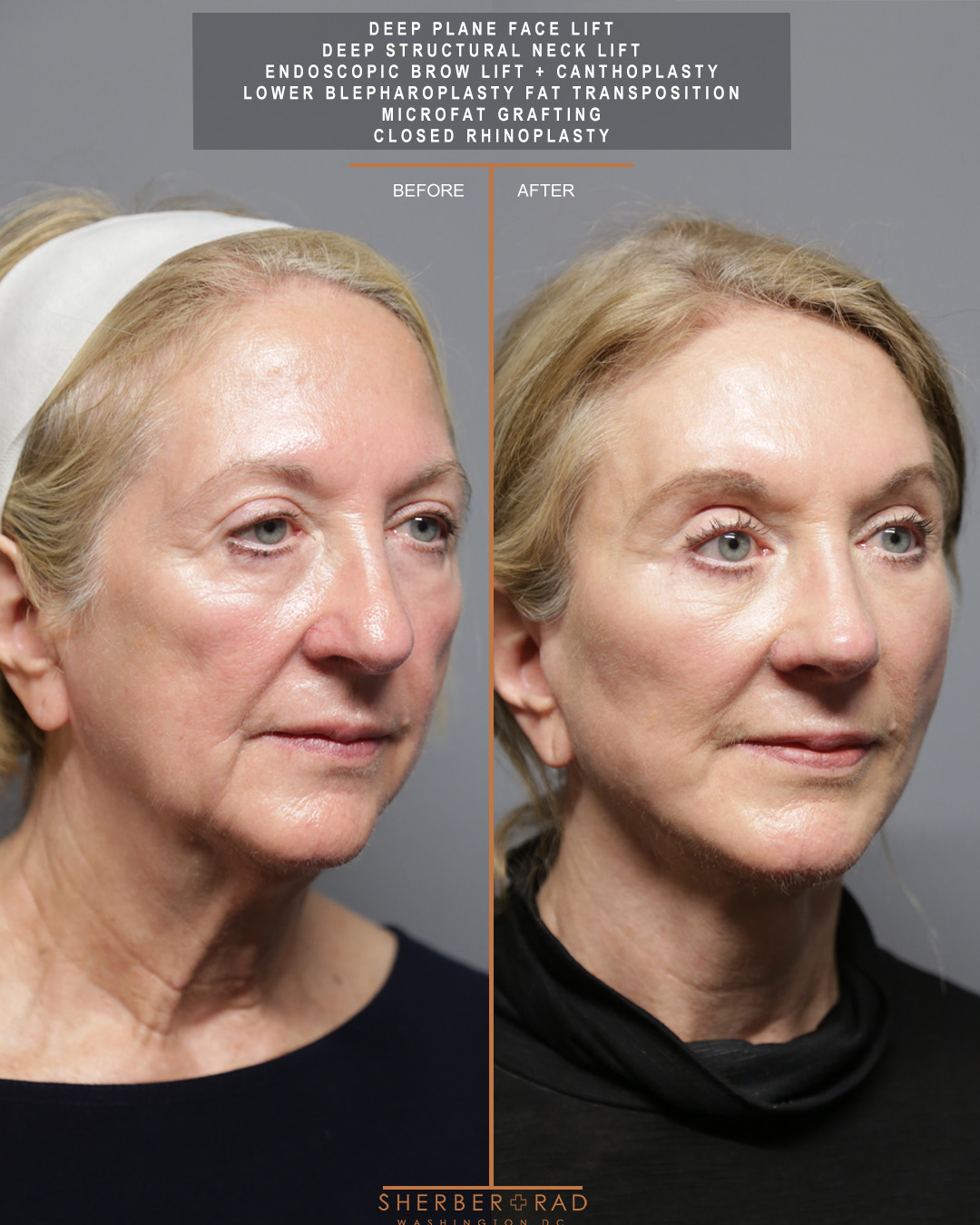
before
after
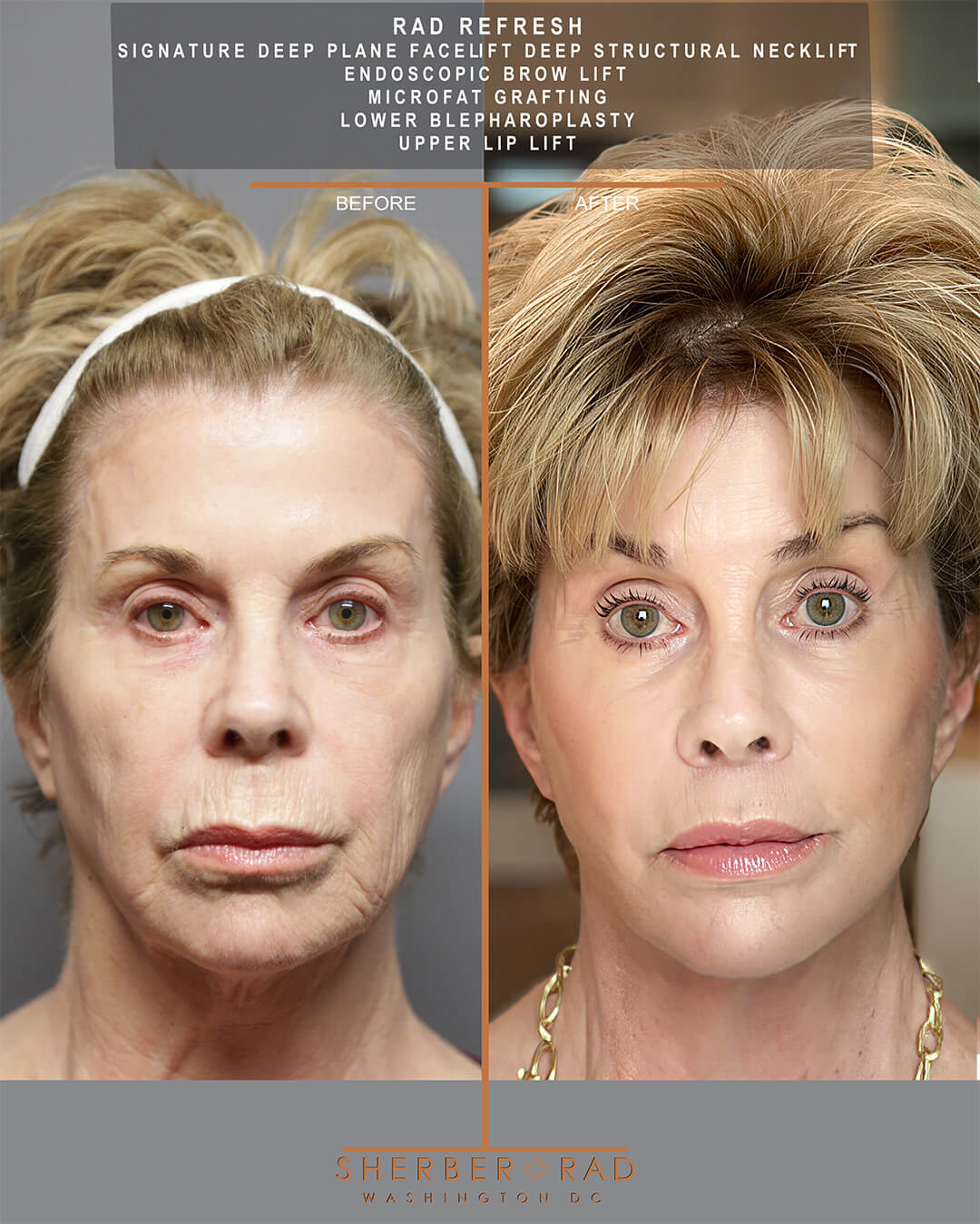
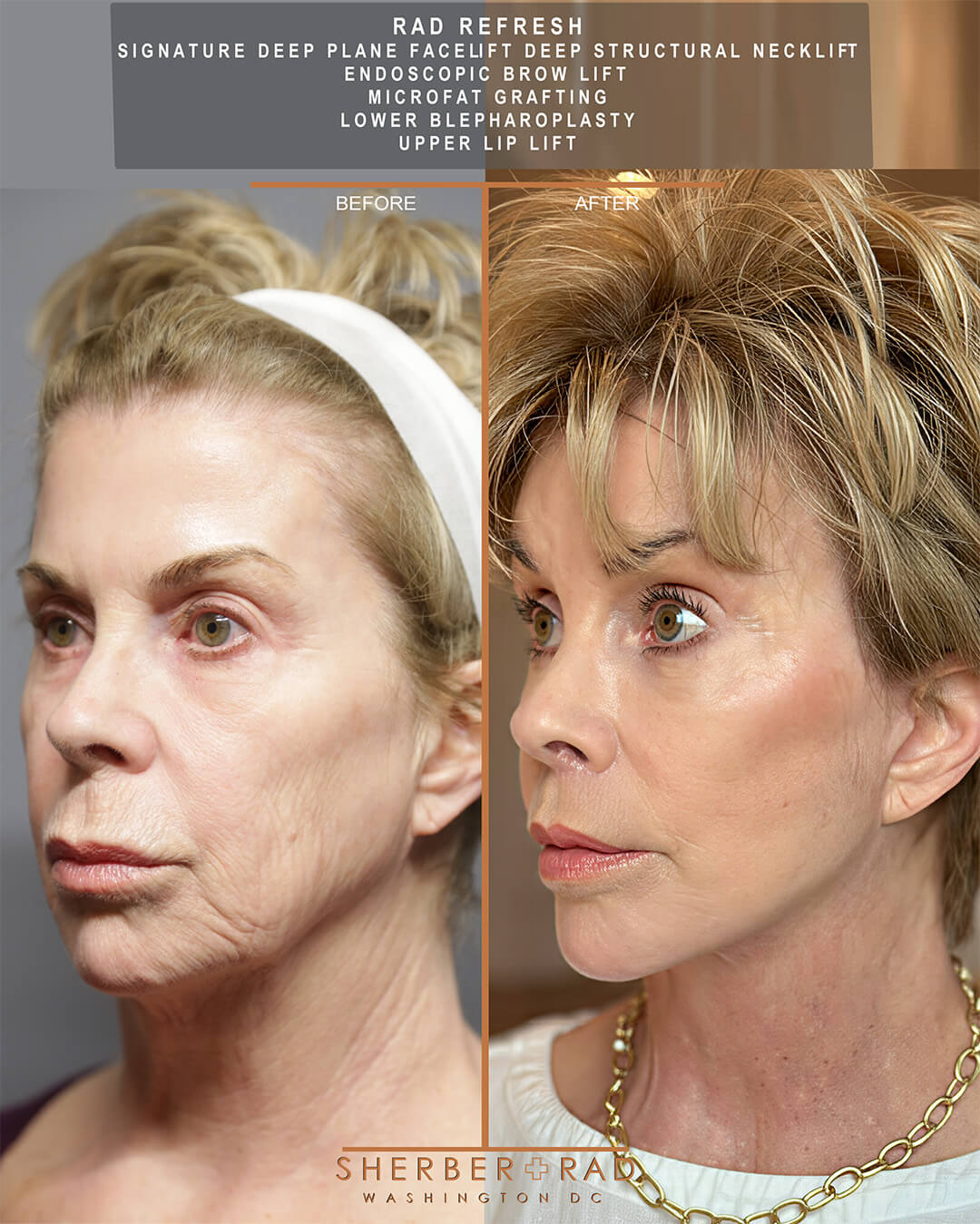
before
after
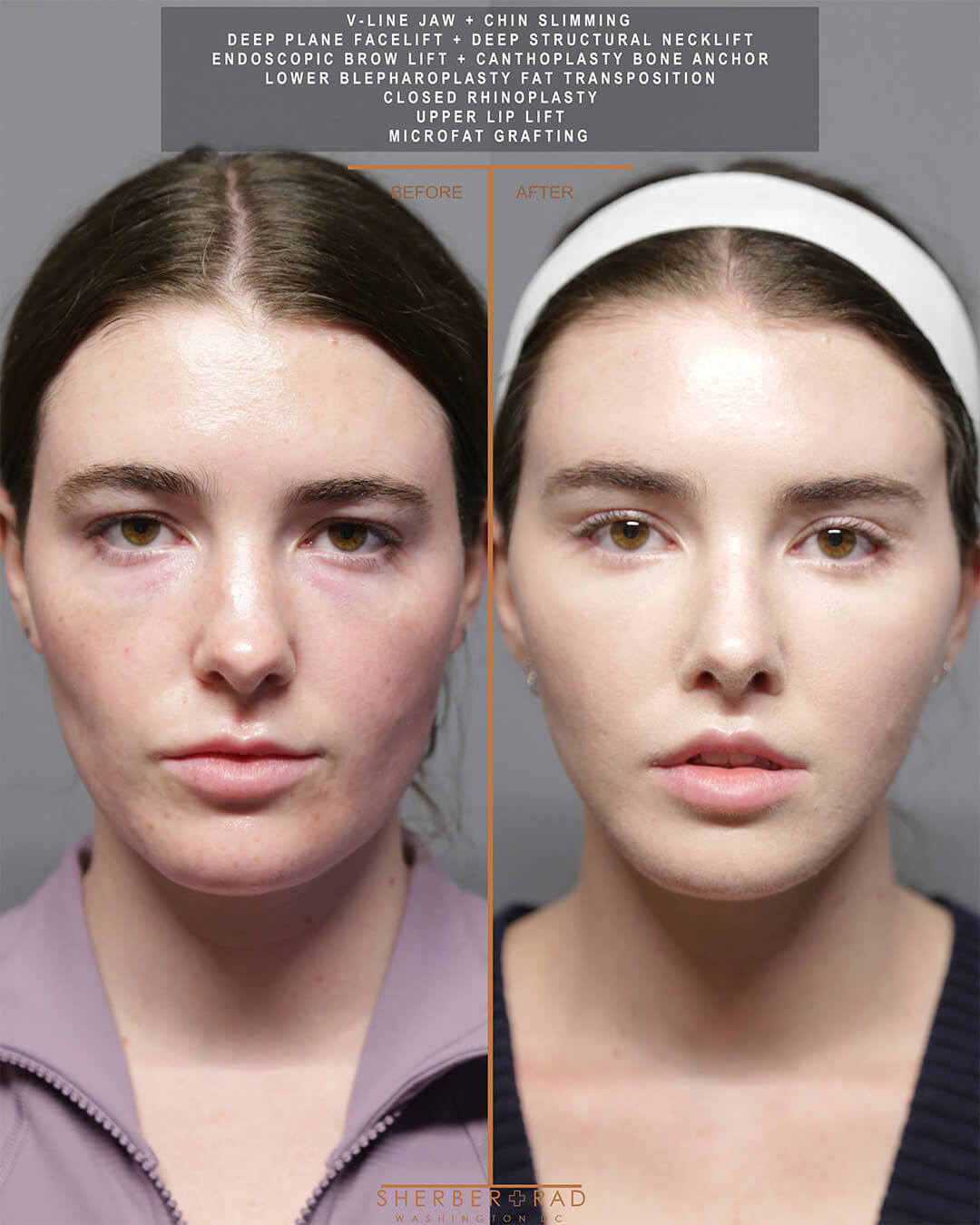
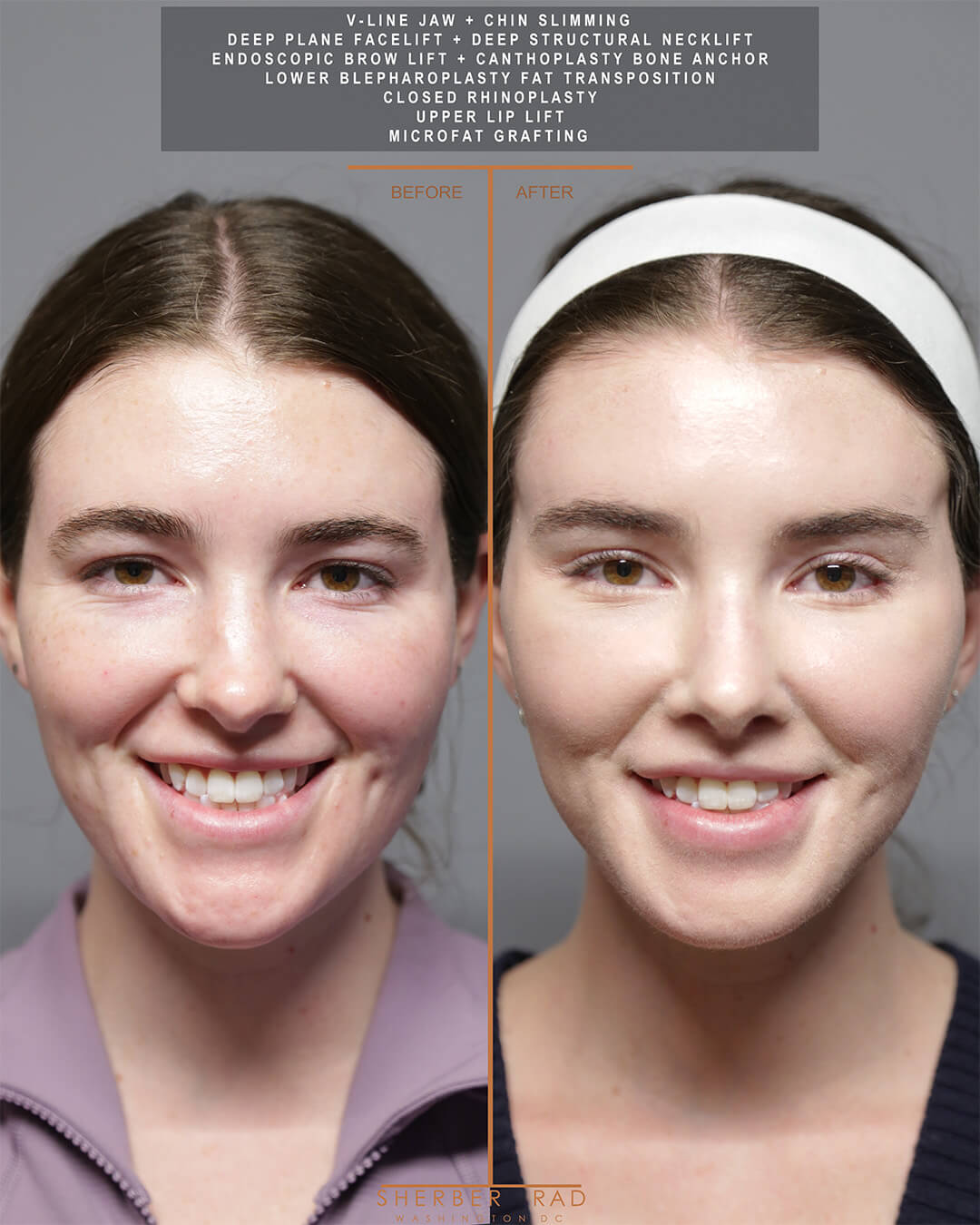
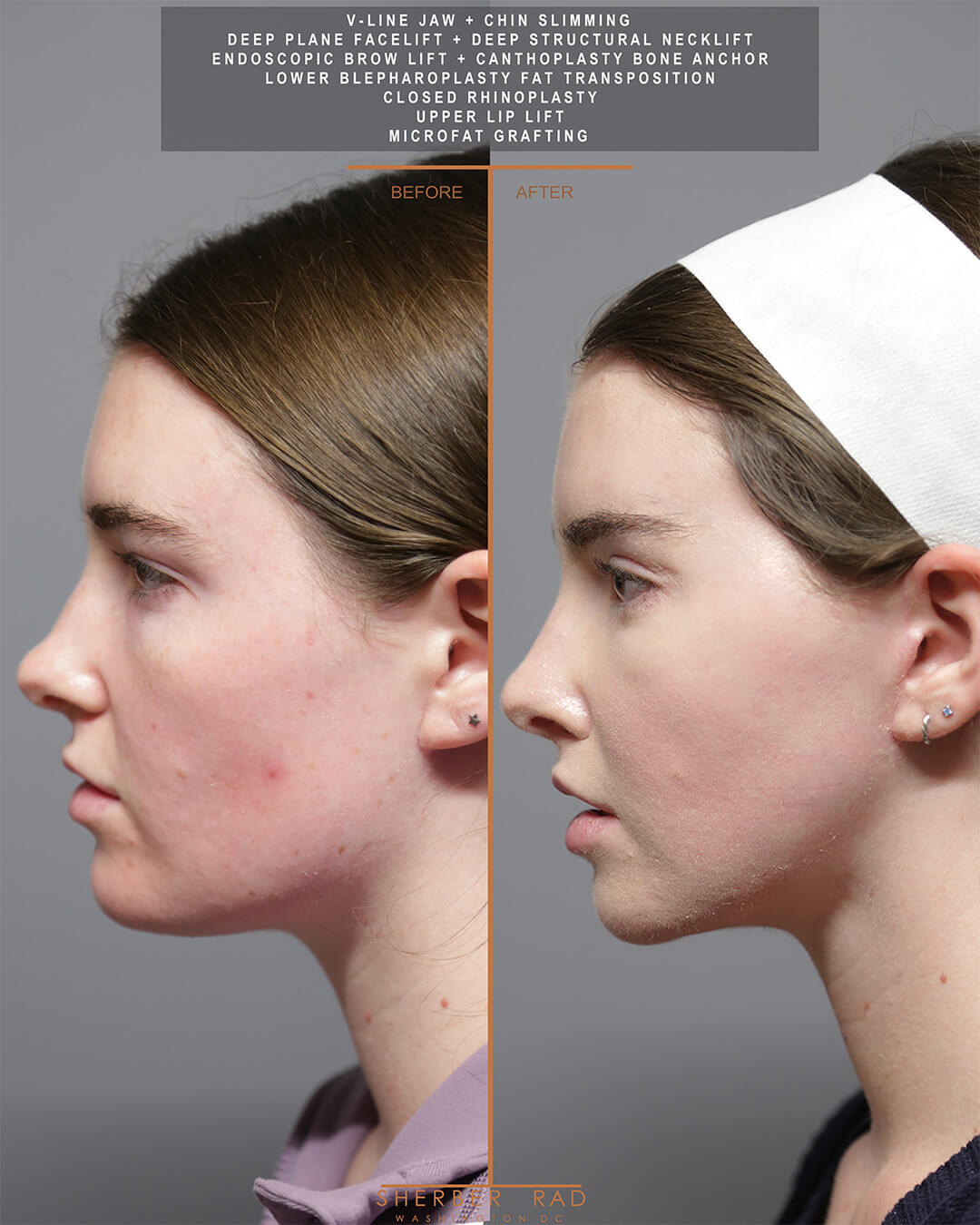
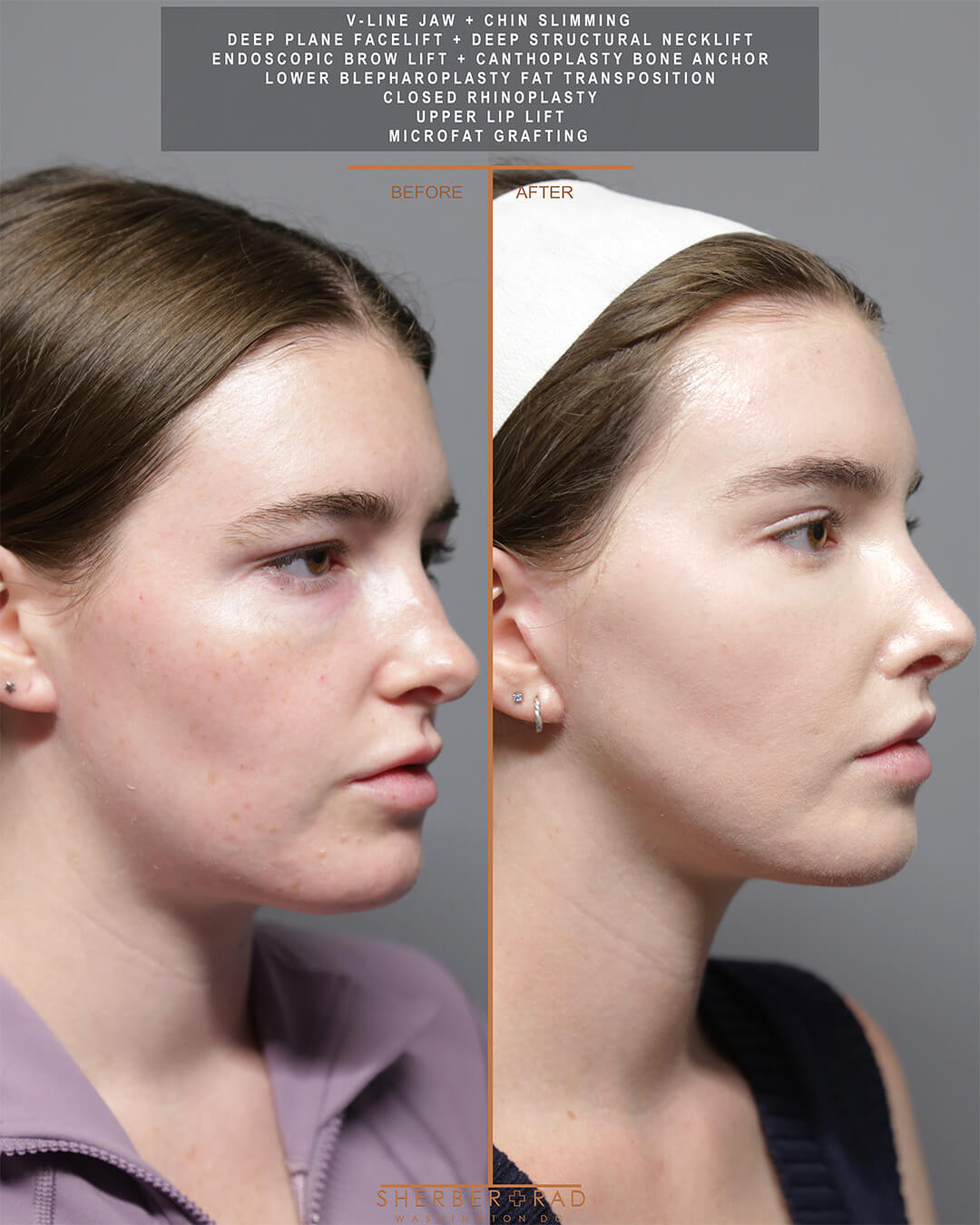
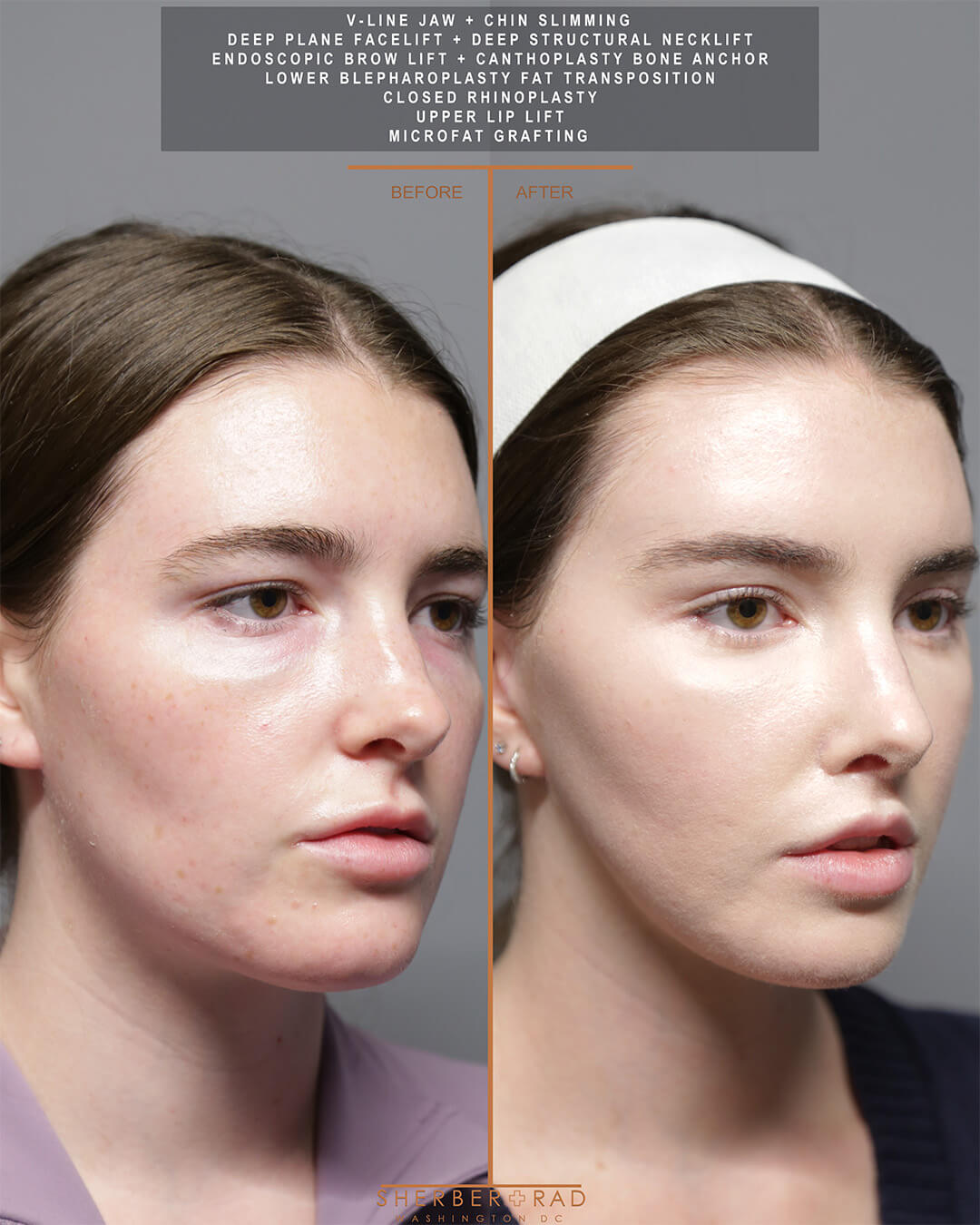
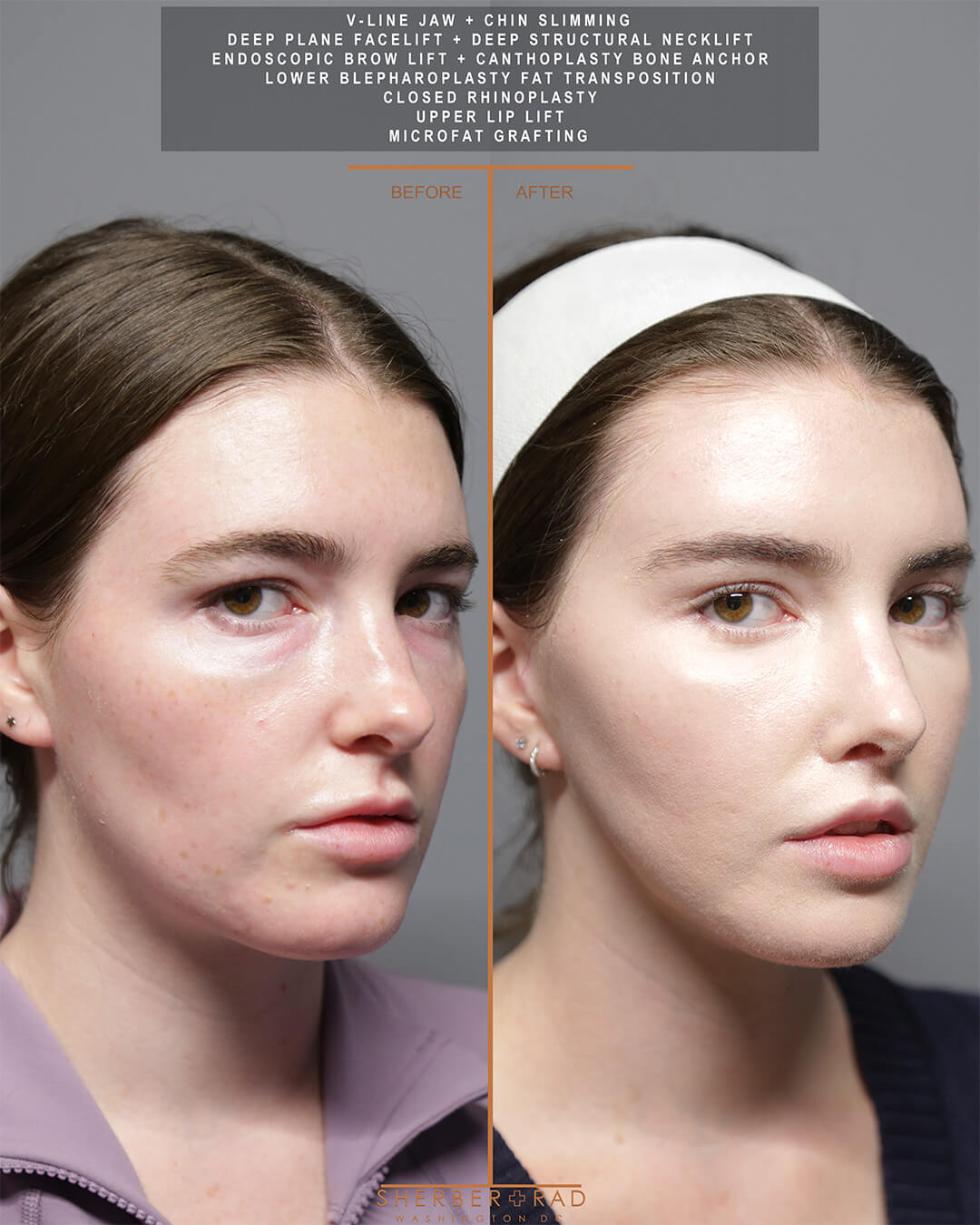
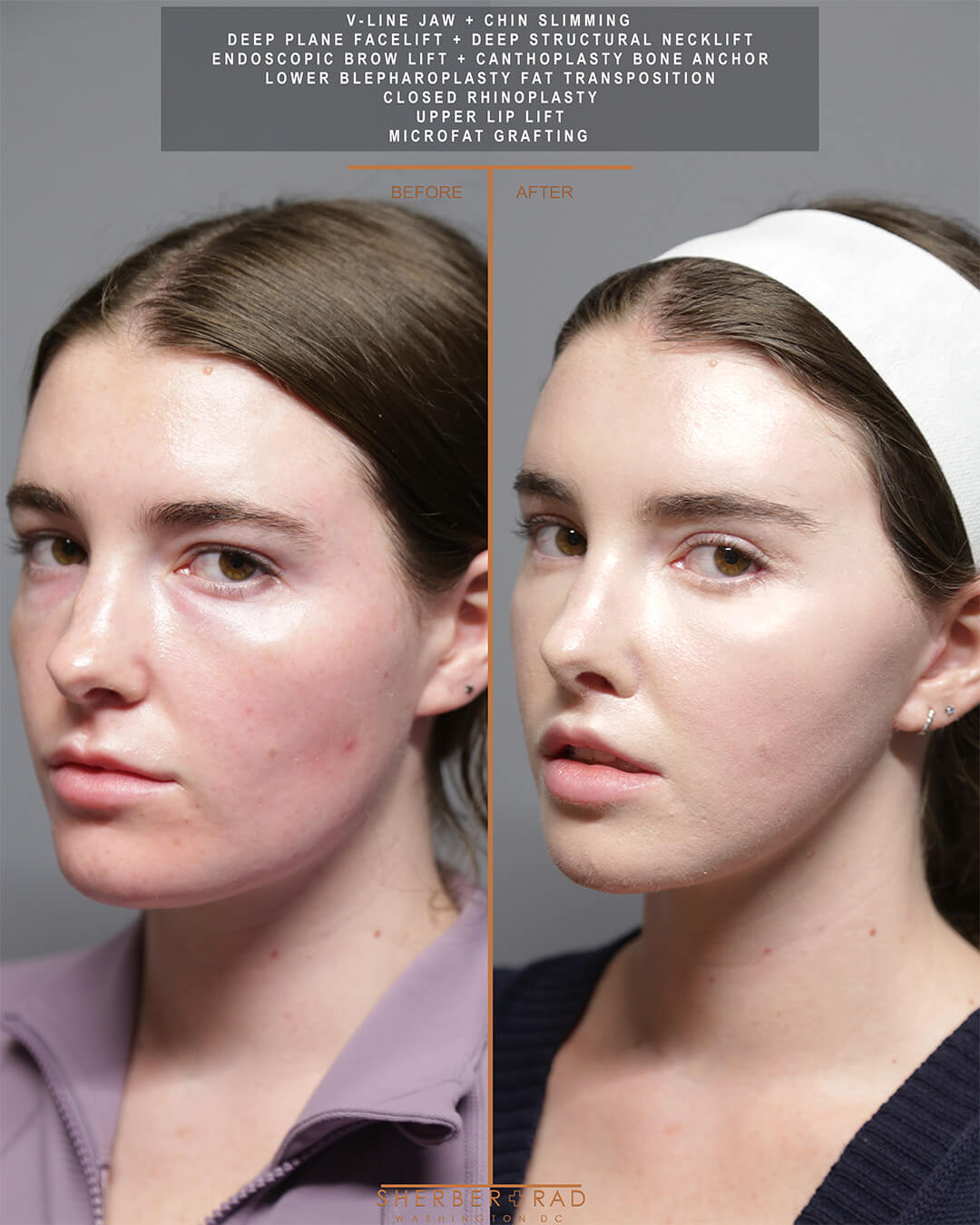
before
after
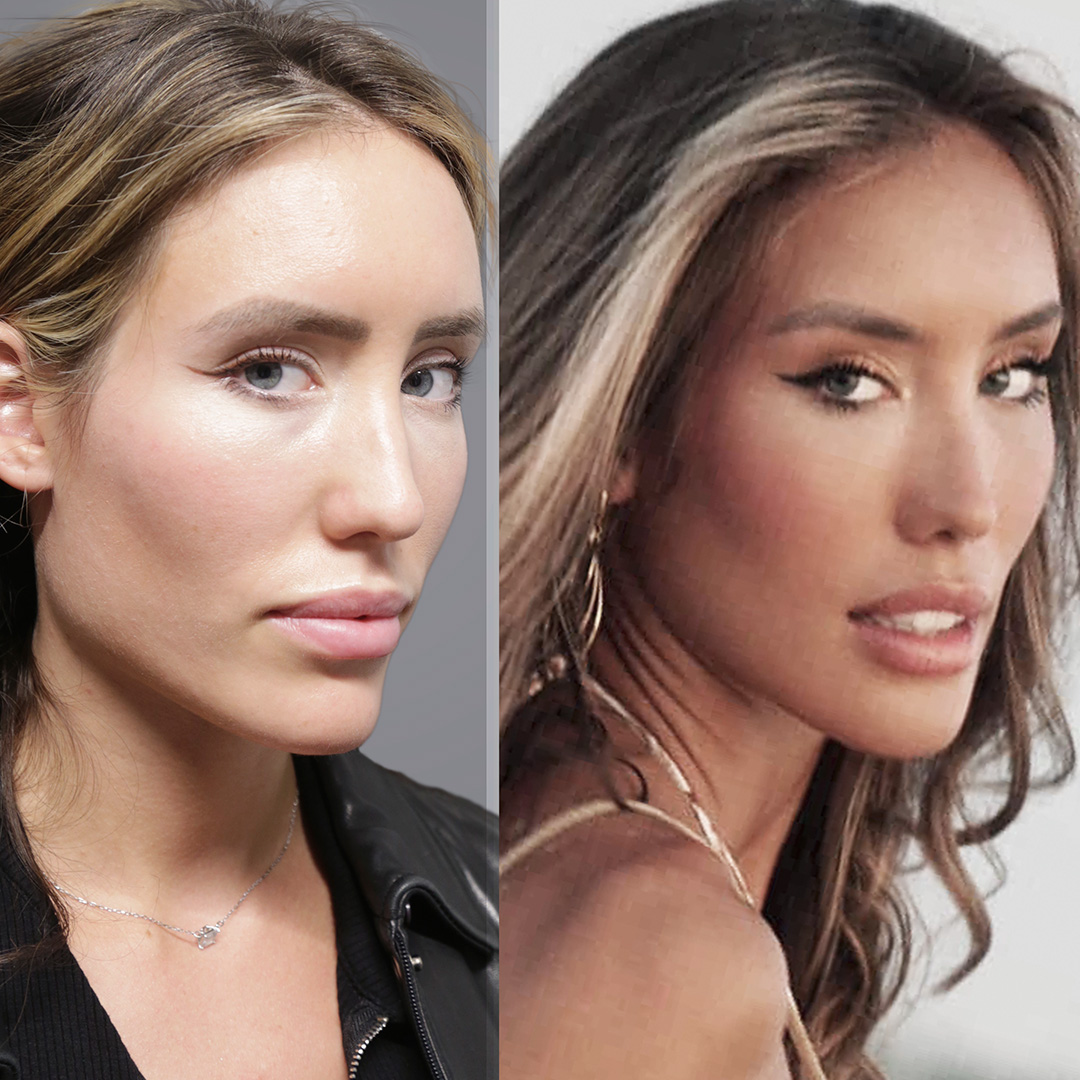
before
after
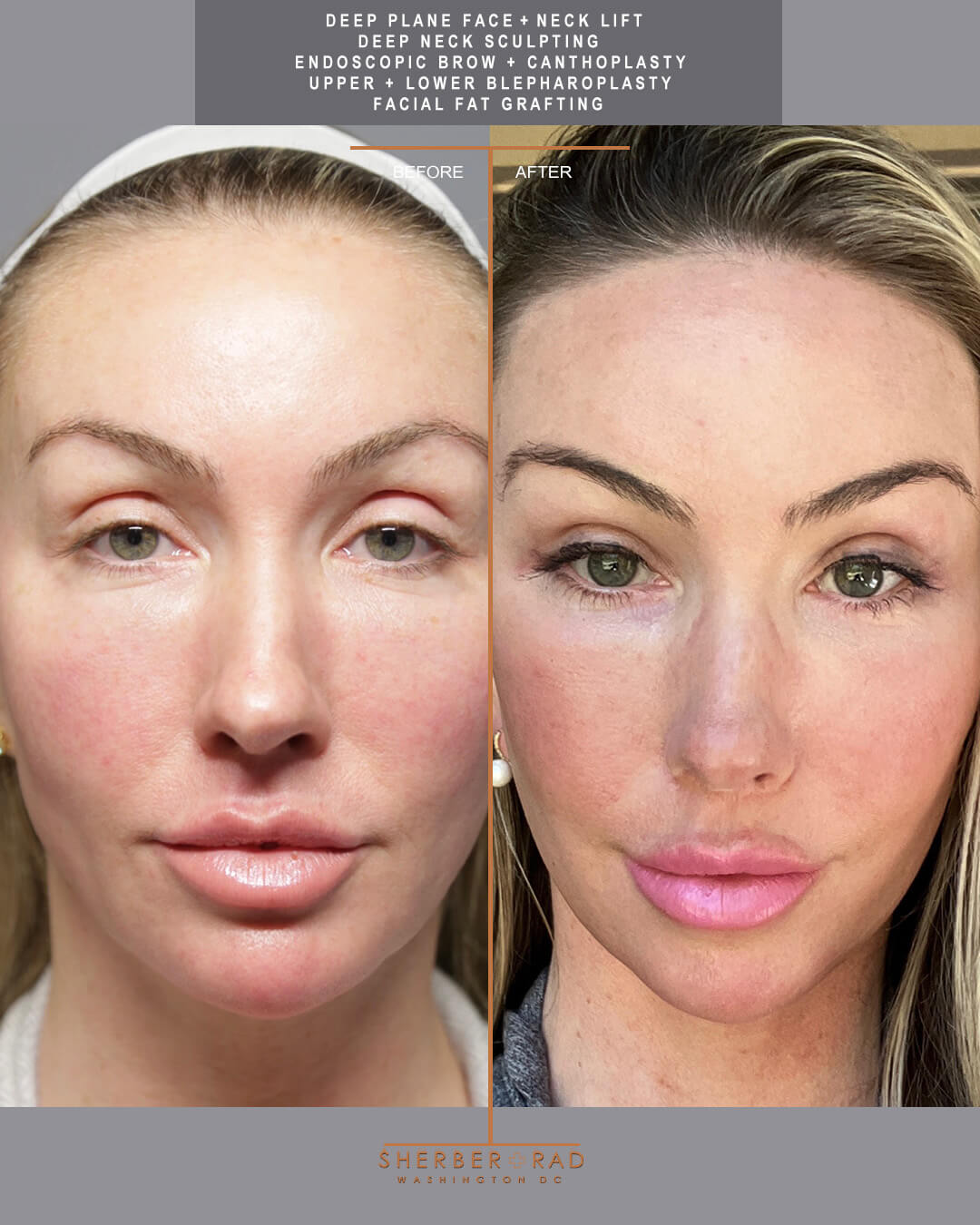
before
after
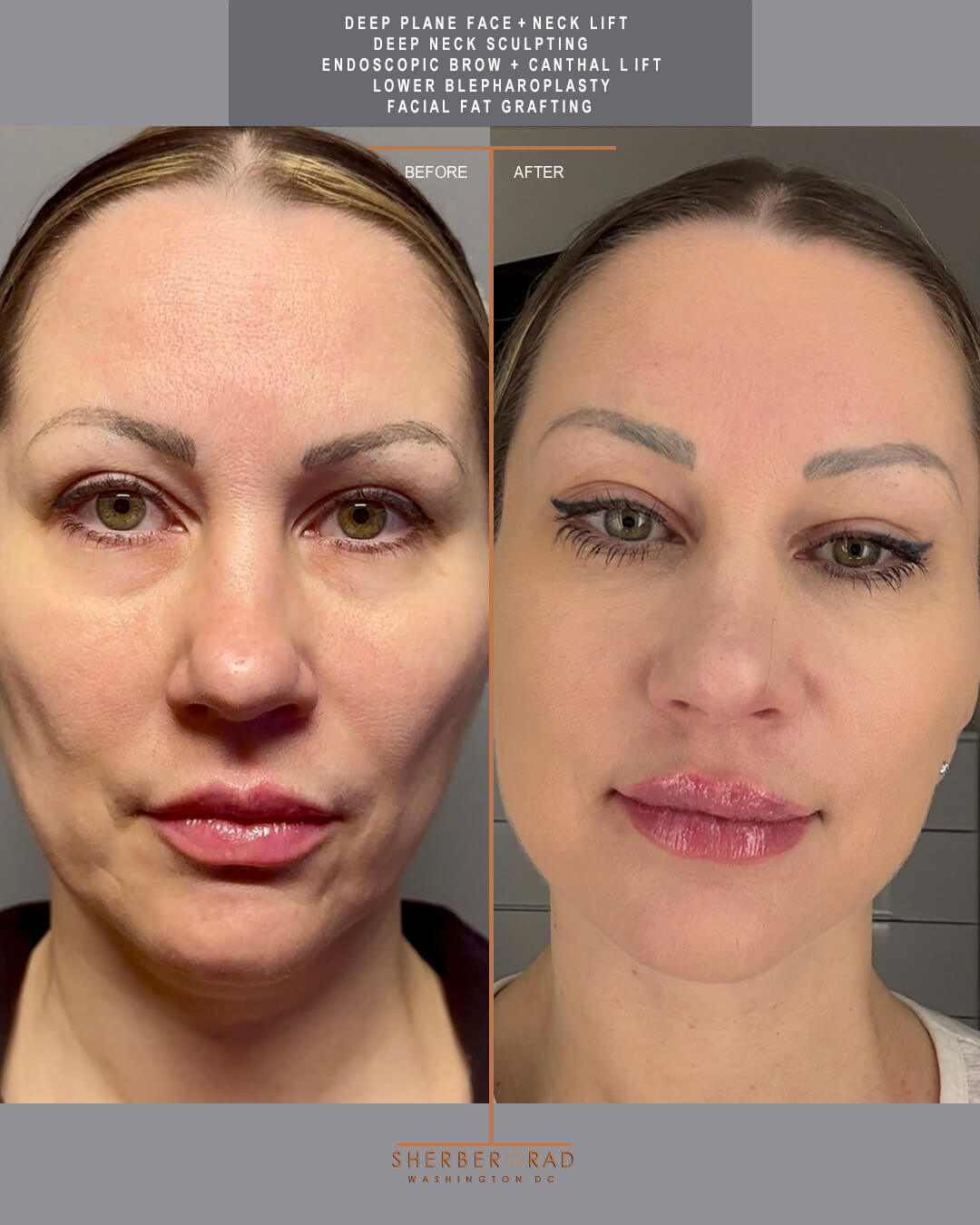
before
after
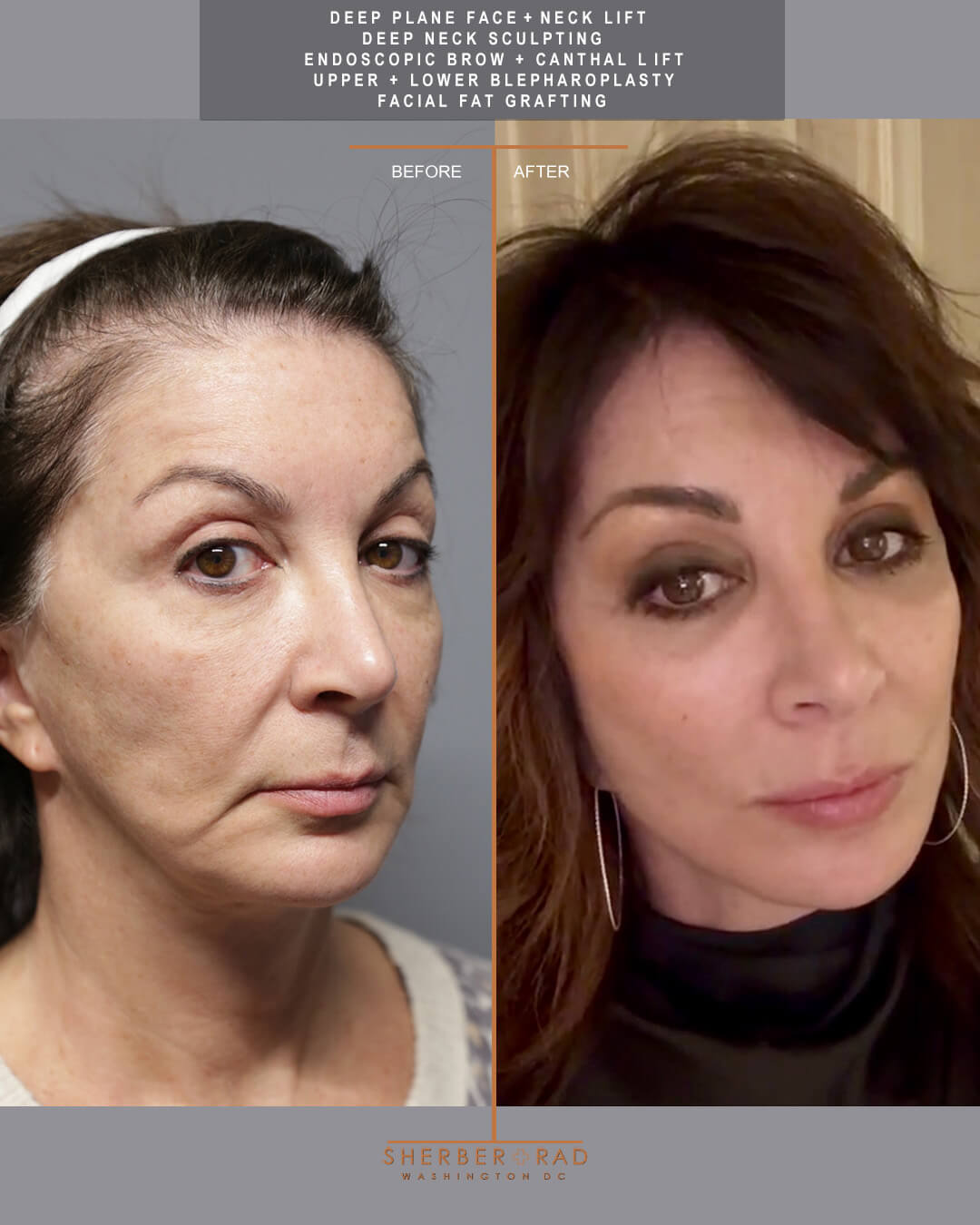
before
after
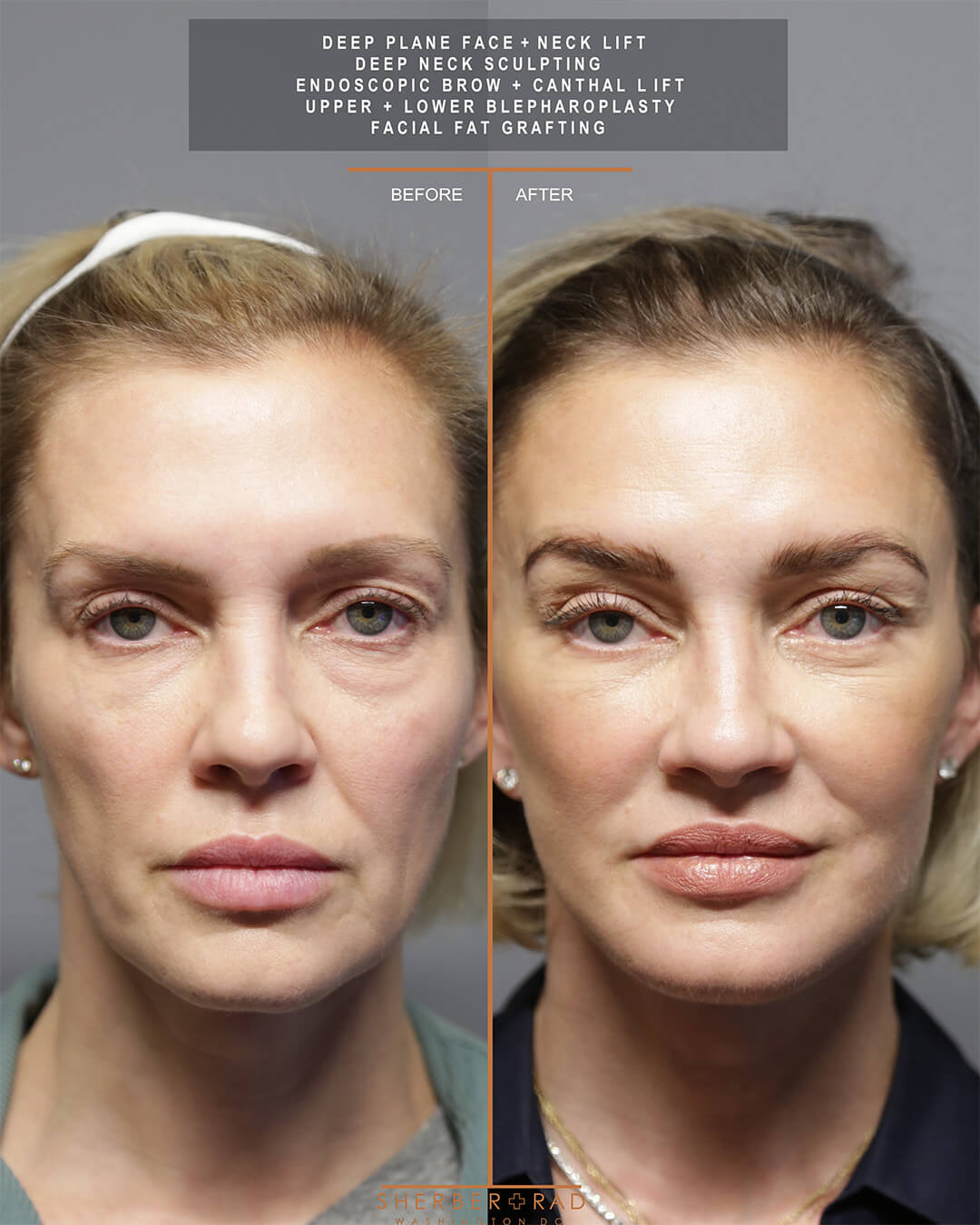
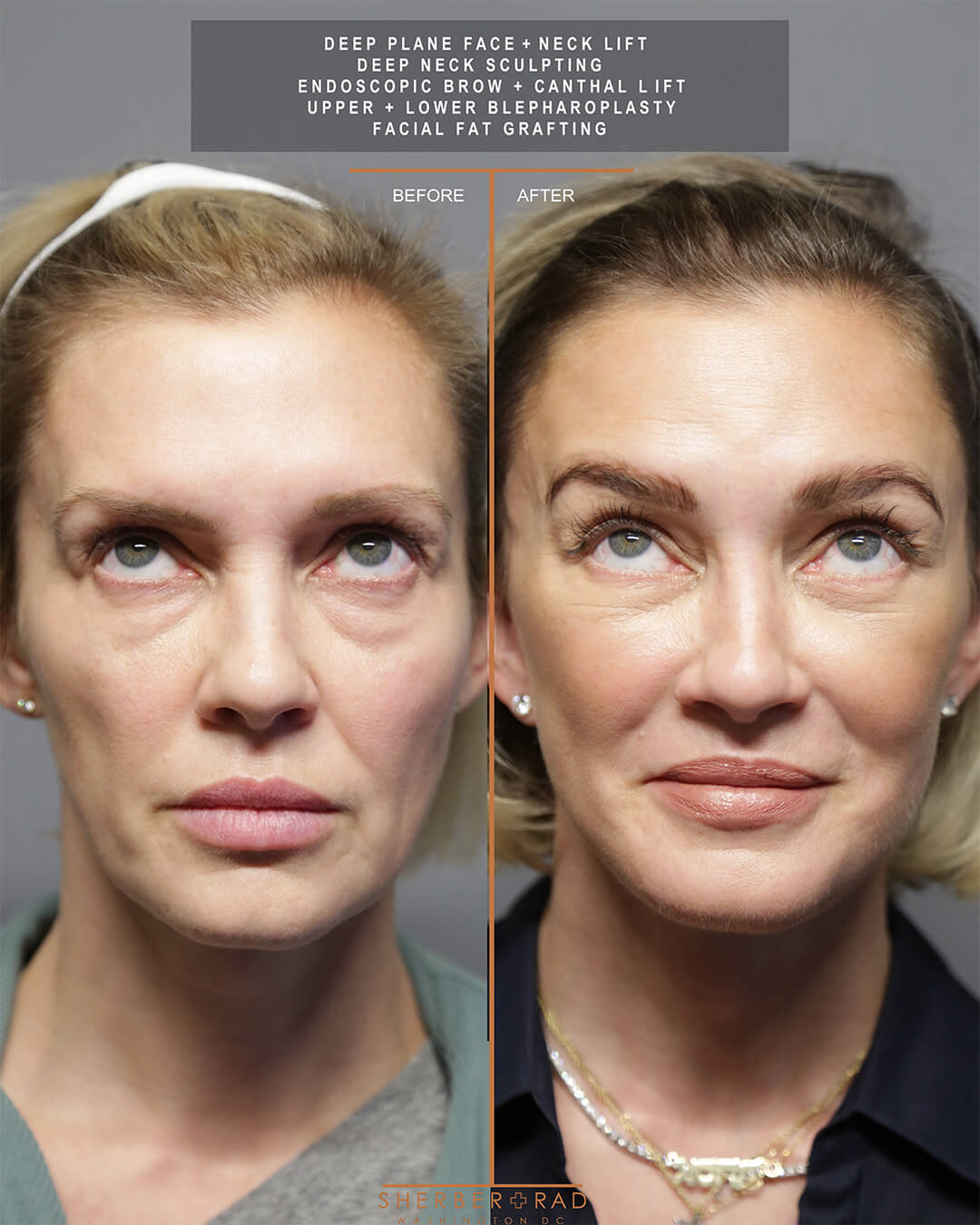
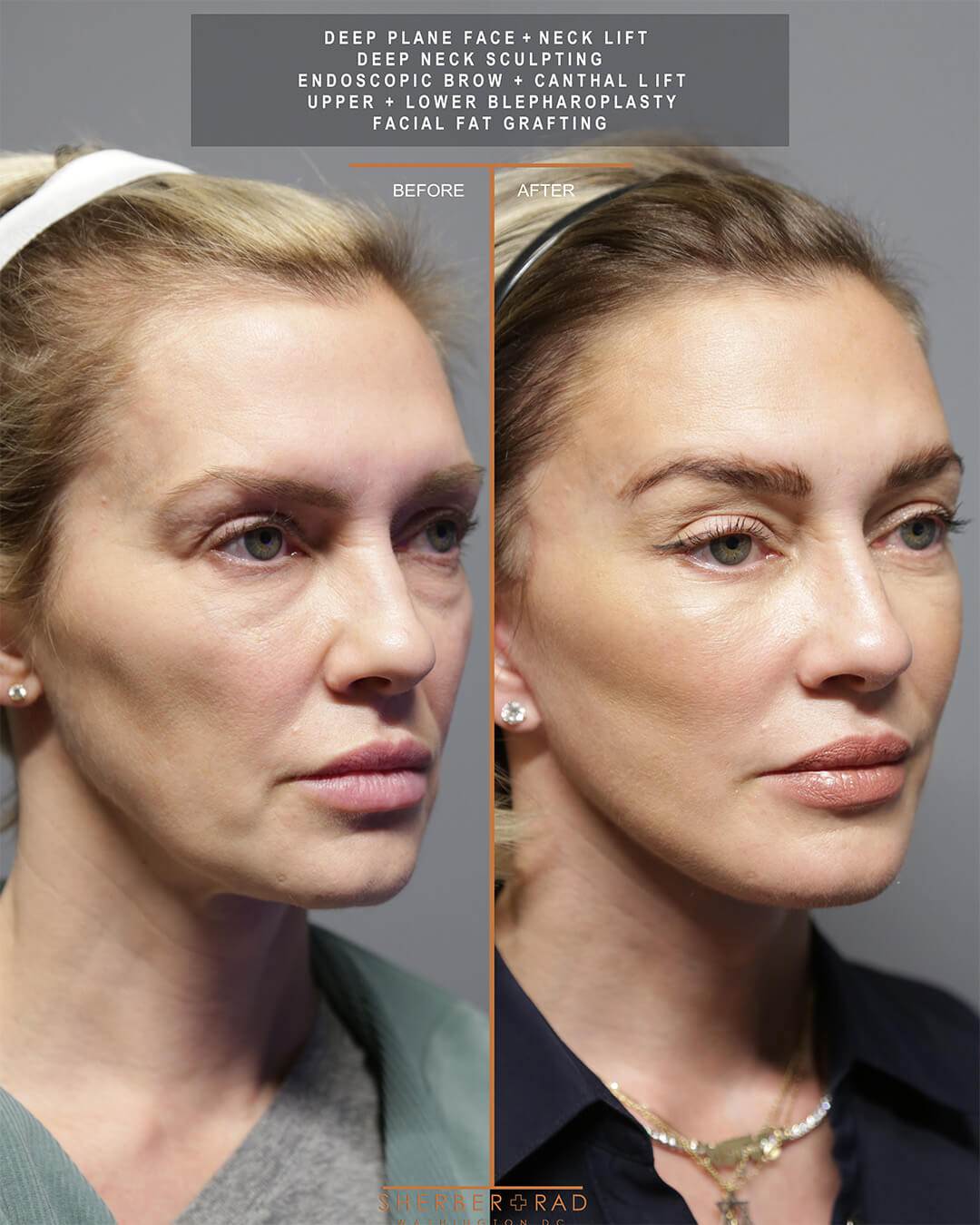
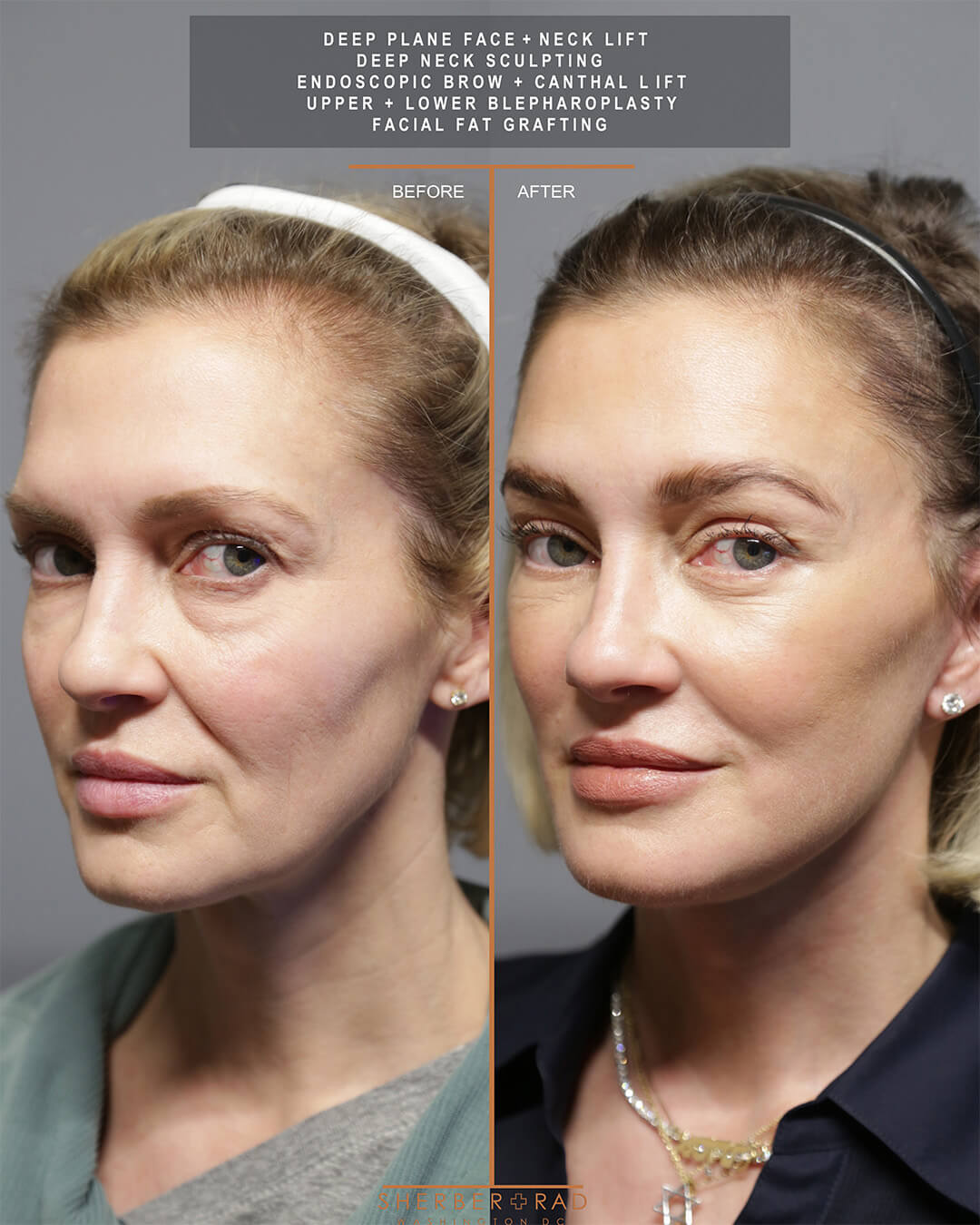
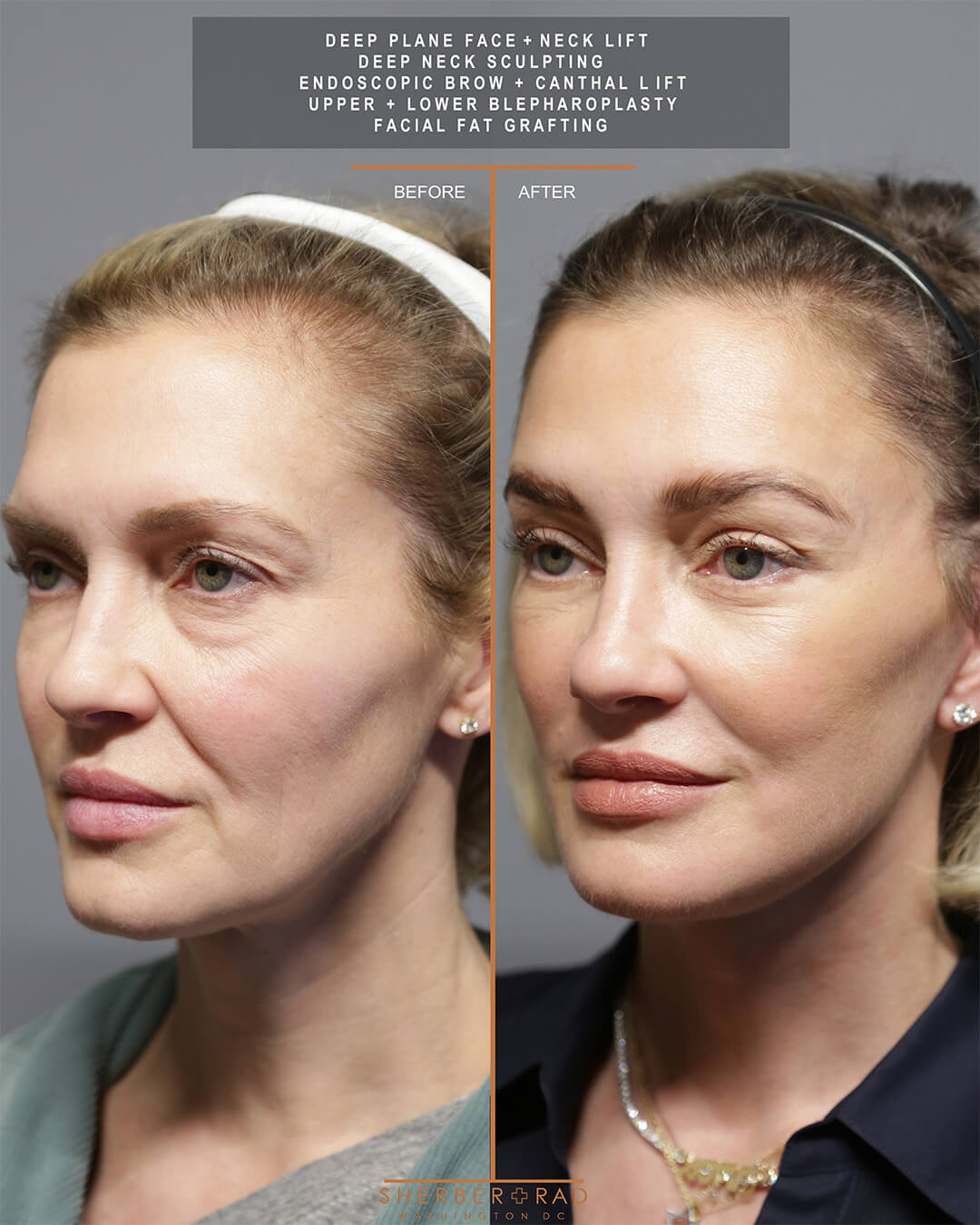
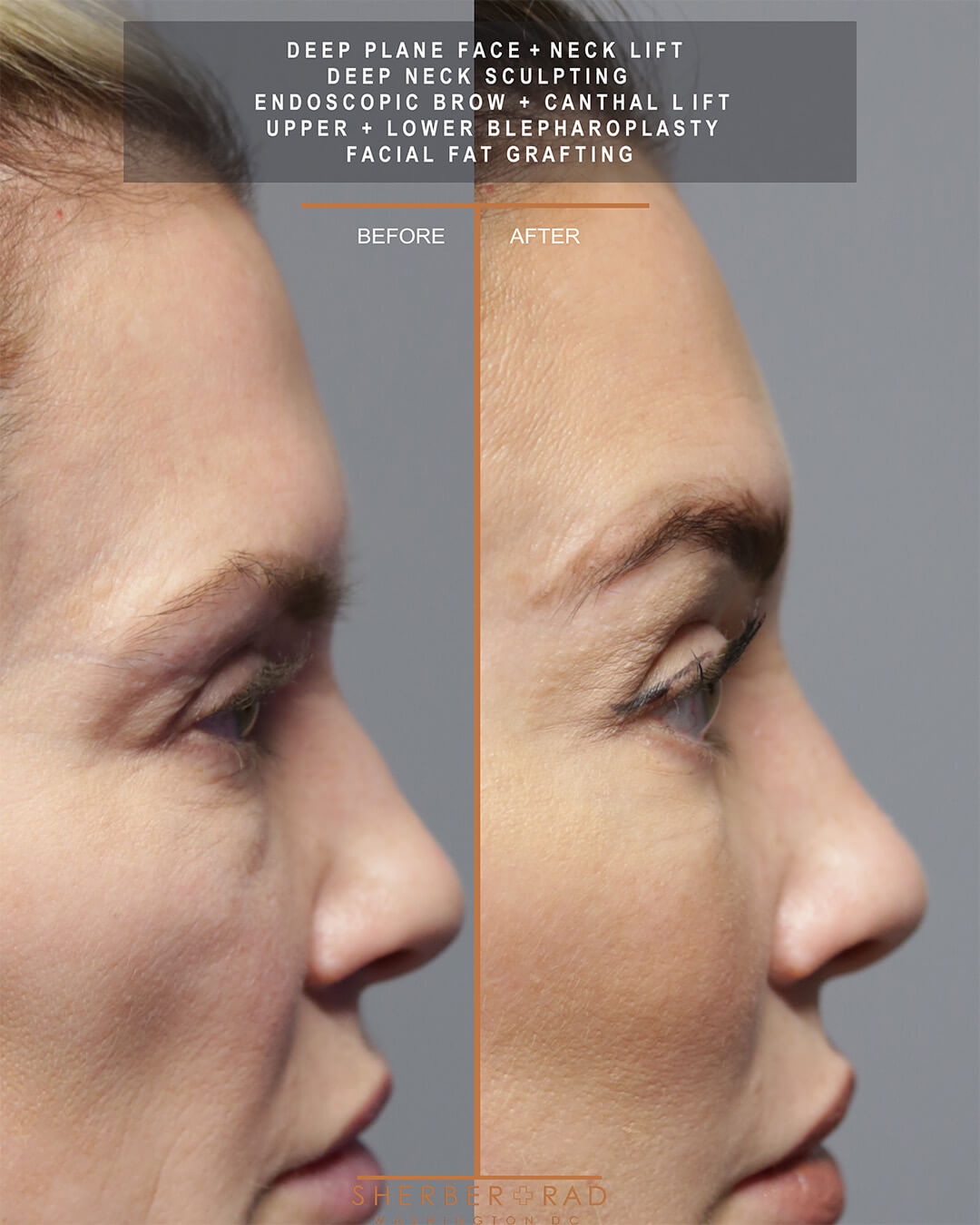
before
after
How Does Upper Blepharoplasty Work, and What Can It Improve?
Upper blepharoplasty surgery addresses excess skin and other age-related changes affecting the upper eyelids. During surgery, an incision is carefully positioned within the natural upper eyelid crease.
Excess skin is removed, and underlying tissues may also be addressed when appropriate for the patient’s anatomy. Because the incision follows the existing eyelid crease, it is designed to remain inconspicuous as it heals.
Upper blepharoplasty may improve:
- Heavy or hooded upper eyelids
- Excess skin obscuring the natural eyelid crease
- Sagging upper eyelid tissue
- Fine wrinkling associated with excess eyelid skin
- A tired, sad, or aged appearance around the eyes
- Imbalance caused by age-related upper eyelid changes
The objective is not to remove the maximum amount of tissue possible. It is to determine which tissues are contributing to the concern and make the changes necessary to restore a more refreshed, harmonious appearance.

How Do the Upper Eyelids Change With Age?
Upper eyelid aging involves more than loose skin. The skin surrounding the eyes is particularly thin, making age-related changes in elasticity more visible. Over time, changes can also occur in the underlying muscle, fat, brow position, and surrounding facial tissues. Together, these changes can alter the amount of visible upper eyelid, obscure the natural eyelid crease, and make the eyes appear heavier.
Because these structures are interconnected, two patients who both describe their eyes as “hooded” may not have the same underlying anatomy—or require the same operation.
Dr. Rad evaluates the upper eyelids as part of the face as a whole, considering not only excess skin but how the eyelids relate to the brows, lower eyelids, orbital area, and overall facial proportions.
How Do I Know if My Upper Eyelid Heaviness Is Caused by My Eyelids or My Brows?
What looks like excess upper eyelid skin is not always solely an eyelid problem. When the eyebrows descend, they can contribute to additional heaviness and skin redundancy over the upper eyelids. Some patients primarily have excess upper eyelid tissue, some have significant brow descent, and others have a combination of both.
This distinction matters because upper blepharoplasty and brow lift surgery address different anatomical concerns. Removing eyelid skin cannot reposition a descended brow, while lifting the brow does not necessarily eliminate true excess upper eyelid skin.
Dr. Rad evaluates the relationship between the eyelids and brows before recommending surgery so the treatment plan addresses the structures actually contributing to the patient’s appearance.
Who Is a Good Candidate for Upper Blepharoplasty?
Upper blepharoplasty may be appropriate for healthy adults who are bothered by excess or sagging upper eyelid tissue and want a more refreshed appearance without changing the fundamental character of their eyes.
You may be a good candidate if you:
- Have excess or drooping upper eyelid skin
- Notice increasing hooding of the upper eyelids
- Feel that your eyes appear tired, sad, or aged
- Have age-related changes obscuring the natural upper eyelid crease
- Want a surgical improvement that remains balanced with the rest of your face
- Are in good overall health
- Do not smoke or can follow Dr. Rad’s recommendations regarding smoking before and after surgery
- Have realistic expectations regarding surgery and recovery
Candidacy ultimately depends on more than the amount of visible eyelid skin. Your eyelid anatomy, brow position, surrounding facial structures, health, previous procedures, and goals all help determine whether upper blepharoplasty is the appropriate treatment.
Why Choose Dr. Ariel Rad for Upper Blepharoplasty?
Upper eyelid surgery involves relatively small anatomical changes in one of the most visually important areas of the face. Precision matters—not only in how much tissue is addressed, but in how the resulting eyelid contour relates to the eyes, brows, and face as a whole.
At Sherber + Rad, upper blepharoplasty is performed by Ariel N. Rad, MD, PhD, FACS, a board-certified plastic surgeon whose practice emphasizes advanced facial rejuvenation and individualized surgical planning.
Patients choose Dr. Rad because of his:
- Board certification in plastic surgery
- Advanced surgical training at Duke and Johns Hopkins
- Extensive focus on facial rejuvenation surgery
- Detailed understanding of facial anatomy and proportion
- Experience combining eyelid surgery with complementary facial procedures when appropriate
- Individualized approach to surgical planning
- Emphasis on minimizing surgery while achieving the desired correction
- Focus on natural, balanced results that preserve facial identity
Dr. Rad’s philosophy is that millimeter-level changes throughout the face can work together to create meaningful improvement. With upper blepharoplasty, that means considering not simply what can be removed, but what should be changed—and what should be preserved.
What Does Dr. Rad Evaluate During an Upper Eyelid Consultation?
Your surgical plan begins with understanding what is creating the changes you see around your eyes.
During consultation, Dr. Rad evaluates factors including:
- Amount and location of excess upper eyelid skin
- Natural eyelid crease and contour
- Eyelid symmetry
- Position of the eyebrows
- Relationship between the brows and upper eyelids
- Underlying eyelid tissues
- Changes affecting the lower eyelids and surrounding orbital area
- Overall facial proportions
- Previous facial or eyelid procedures
- Your individual aesthetic concerns and goals
This evaluation allows Dr. Rad to determine whether upper blepharoplasty alone is likely to achieve the desired result or whether another procedure should be considered. The goal is not to create a larger operation. In keeping with Dr. Rad’s philosophy of minimizing surgery to achieve the best result, the treatment plan should include only the procedures necessary to create balanced rejuvenation.
How Does Dr. Rad Achieve Natural-Looking, Upper Blepharoplasty Results?
Natural-looking eyelid surgery requires more than technical execution. Because the eyes play such an important role in expression, relatively small changes can influence how the entire face is perceived.
Dr. Rad approaches eyelid surgery with attention to both individual anatomy and facial harmony. The amount of tissue addressed, the position of the eyelid crease, brow position, surrounding contours, and relationship between the upper and lower eyelids all influence the final result.
For one patient, a subtle upper blepharoplasty may provide the appropriate correction. Another may have aging or volume changes affecting several structures around the eyes and benefit from a more comprehensive approach.
This is where Dr. Rad’s emphasis on artistry becomes particularly important. As he explains, “millimeter changes throughout the face can synergize beautifully into stunning yet natural results.” The procedure should therefore be designed around the individual face rather than an idealized or standardized eyelid shape. The goal is for the eyes to appear refreshed and harmonious—not surgically altered.
What Happens During Upper Blepharoplasty?
Patients meet with Dr. Rad a second time prior to surgery to review medical clearances, receive any necessary prescriptions, and have any remaining questions answered. Detailed post-operative instructions are provided at that time and then you are prepped for surgery.
Upper blepharoplasty is planned according to the patient’s individual anatomy and is performed with light sedation and local anesthesia, or general anesthesia. Dr. Rad places the incision within the natural crease of the upper eyelid, helping conceal the incision when the eyes are open. An appropriate amount of excess skin is removed, and sagging or underlying tissues may also be addressed when necessary.
The incision is then carefully closed to create a refined upper eyelid contour. Upper blepharoplasty is generally performed as an outpatient procedure, allowing patients to return home following surgery with a responsible adult.
What Is Upper Blepharoplasty Recovery Like?
Recovery varies according to the extent of surgery, whether upper blepharoplasty is performed alone or with other procedures, and individual healing. Mild bruising and temporary swelling are expected during the early recovery period. Many patients are comfortable returning to work or social activities approximately five to seven days after upper blepharoplasty, although residual swelling or bruising may still be present.
Following Dr. Rad’s postoperative instructions is an important part of recovery. Depending on your procedure, the aftercare instructions may include cold compresses, head elevation, activity restrictions, incision care, and other measures designed to support healing. Dr. Rad and the Sherber + Rad team follow patients throughout recovery and provide individualized recommendations based on the procedure performed and how healing progresses.
Can Upper Blepharoplasty Be Combined With Other Procedures?
Yes. The upper eyelids do not age independently from the rest of the face, and some patients have additional changes that upper blepharoplasty alone cannot address. Depending on your anatomy, Dr. Rad may recommend combining upper blepharoplasty with procedures such as:
Brow Lift: When descent of the brow is contributing to heaviness above the eyes, brow surgery can address the position of the brow rather than relying on eyelid surgery to correct a problem originating higher in the face.
Lower Blepharoplasty: Patients with under-eye bags, lower eyelid aging, or changes affecting both the upper and lower eyelids may benefit from treating both areas to create more balanced rejuvenation.
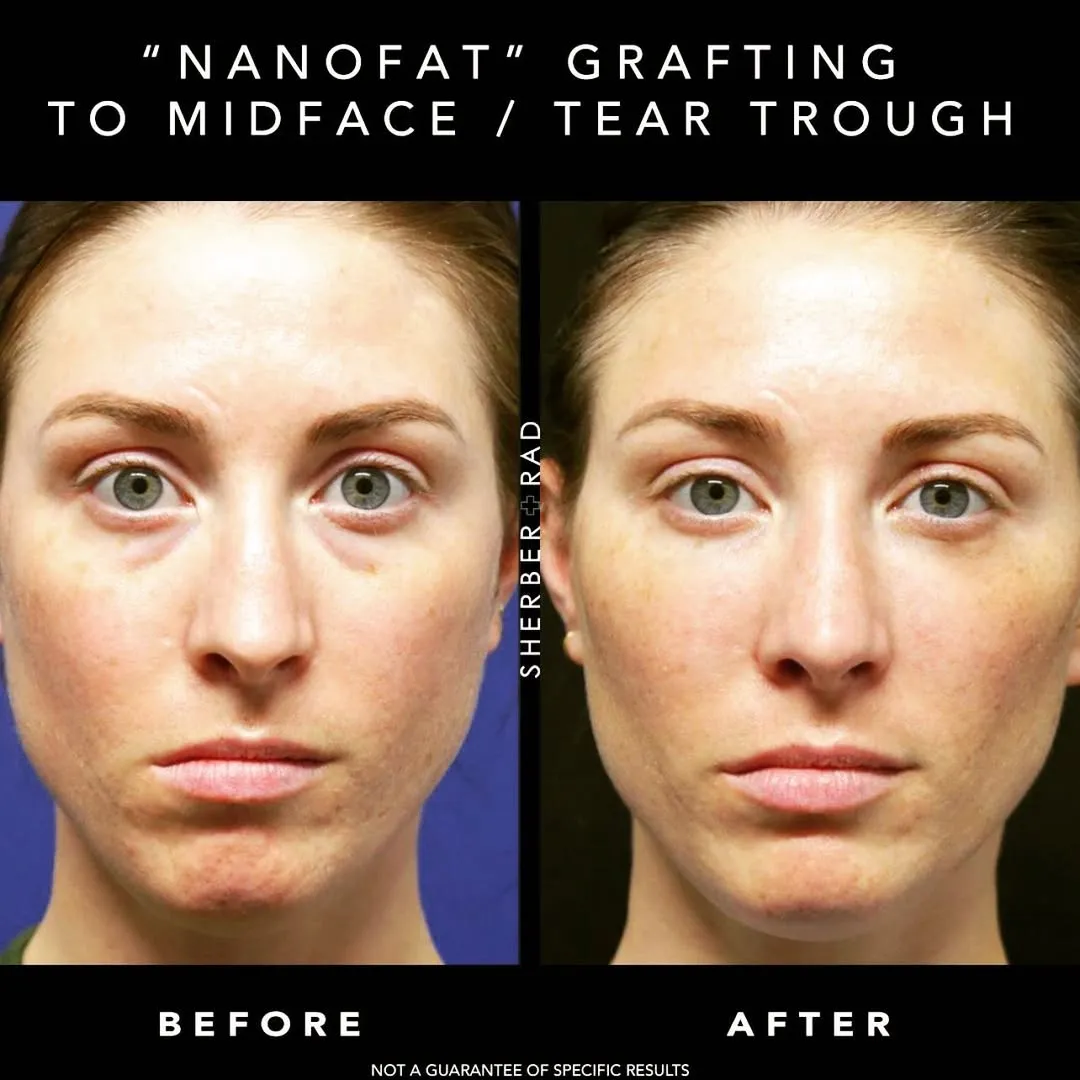
Fat Grafting: Age-related volume changes around the eyes can contribute to hollowing or transitions that cannot be corrected simply by removing tissue. Fat grafting may be used selectively to restore volume and create smoother surrounding contours.
Upper blepharoplasty may also be incorporated into a broader facial rejuvenation plan when aging affects additional areas of the face. The objective is not to combine procedures routinely. It is to identify which anatomical changes are contributing to the patient’s concerns and address those necessary to create a harmonious result.
How Long Do the Results of Upper Eyelid Surgery Last?
Upper blepharoplasty creates a lasting change in the tissues addressed during surgery, but it does not stop the natural aging process. Over time, the skin and surrounding facial structures will continue to change due to aging, genetics, gravity, sun exposure, lifestyle, and other individual factors.
This means new signs of upper eyelid aging can eventually develop even after a successful blepharoplasty. Dr. Rad’s objective is to create a durable improvement that remains harmonious with the face as you continue to age naturally.
Testimonials

FAQs About Upper Blepharoplasty in Washington, DC


Will upper blepharoplasty change the shape of my eyes?
The goal of upper blepharoplasty is not to create a different eye shape. Dr. Rad plans surgery around the patient's existing anatomy, addressing the tissues contributing to heaviness or aging while preserving the characteristics that make the eyes individually recognizable.
What is the difference between upper and lower blepharoplasty?
Upper blepharoplasty primarily addresses age-related changes affecting the upper eyelids, including excess or sagging skin and, when appropriate, underlying tissue.
Lower blepharoplasty addresses concerns beneath the eyes, which may include under-eye bags, excess or displaced fat, skin laxity, and changes in the transition between the lower eyelids and cheeks. Some patients benefit from upper or lower eyelid surgery alone, while others may benefit from treating both areas.
Do I need upper blepharoplasty or a brow lift?
It depends on the anatomy creating the heaviness around your eyes. Upper blepharoplasty addresses excess tissue of the upper eyelids, while a brow lift addresses descent of the eyebrows and forehead tissues.
Because brow descent can make the upper eyelids appear heavier, Dr. Rad evaluates both areas before recommending surgery. Some patients benefit from one procedure, while others have changes affecting both.
Will I have visible scars after upper blepharoplasty?
Upper blepharoplasty requires an incision, but Dr. Rad positions it within the natural upper eyelid crease so that it is concealed when the eyes are open and can become increasingly inconspicuous as healing progresses. Scar appearance and healing vary between patients.
What are the risks of upper blepharoplasty?
As with any surgical procedure, upper blepharoplasty carries potential risks. These can include bleeding, infection, scarring, asymmetry, temporary or persistent changes in sensation, dry-eye symptoms, difficulty with eyelid closure, changes in eyelid position, and anesthesia-related complications.
Your individual risks depend on your health, anatomy, surgical plan, and other factors. Dr. Rad reviews the potential benefits and risks of surgery with you before treatment so you can make an informed decision.
What are my non-surgical options for upper eyelid rejuvenation?
Non-surgical treatments may help improve certain concerns around the eyes, particularly those involving skin quality, fine lines, or early signs of aging. Depending on your needs, options may include laser treatments, medical-grade skincare, or other aesthetic treatments available through Sherber + Rad.
However, non-surgical treatments cannot remove significant excess upper eyelid skin. Dr. Rad can help determine whether a non-surgical approach is appropriate or whether surgery is necessary to achieve your goals.
How much does upper blepharoplasty cost in Washington, DC?
The cost of upper blepharoplasty varies because Dr. Rad's surgical plans are individualized according to anatomy, goals, complexity, and whether additional procedures are included.
Following your consultation, Sherber + Rad will provide pricing based on the surgical plan Dr. Rad recommends.
Request an Upper Blepharoplasty Consultation with Dr. Ariel Rad in Washington, DC
Upper eyelid surgery begins with determining what is creating the heaviness or aging you see—not simply deciding how much skin can be removed.
Dr. Ariel Rad evaluates the upper eyelids in relationship to the brows, surrounding eye area, and overall face to develop a surgical plan designed around your anatomy. Whether upper blepharoplasty alone is appropriate or another procedure would create a more balanced result, the objective remains the same: meaningful rejuvenation that preserves the natural character of your eyes.
Next Steps
PLAN YOUR VISIT
Related Procedures
Lower Blepharoplasty
Canthoplasty (Fox Eye Lift)
Tear Trough Correction