


Lower Blepharoplasty (Eyelid) Surgery in Washington, DC
Smooth Under-Eye Bags and Restore a More Rested Appearance With Dr. Ariel Rad
Under-eye bags, lower-eyelid puffiness, loose skin, and tear-trough hollows can make the eyes appear tired or older regardless of how well-rested you feel. Although these concerns are often grouped together, they may result from very different changes in fat, skin, muscle, eyelid support, and facial volume.
At Sherber + Rad in Washington, DC, board-certified plastic surgeon Dr. Ariel Rad performs lower blepharoplasty, or lower eyelid surgery, using an individualized approach based on each patient’s lower-eyelid anatomy, skin quality, facial structure, and aesthetic goals.
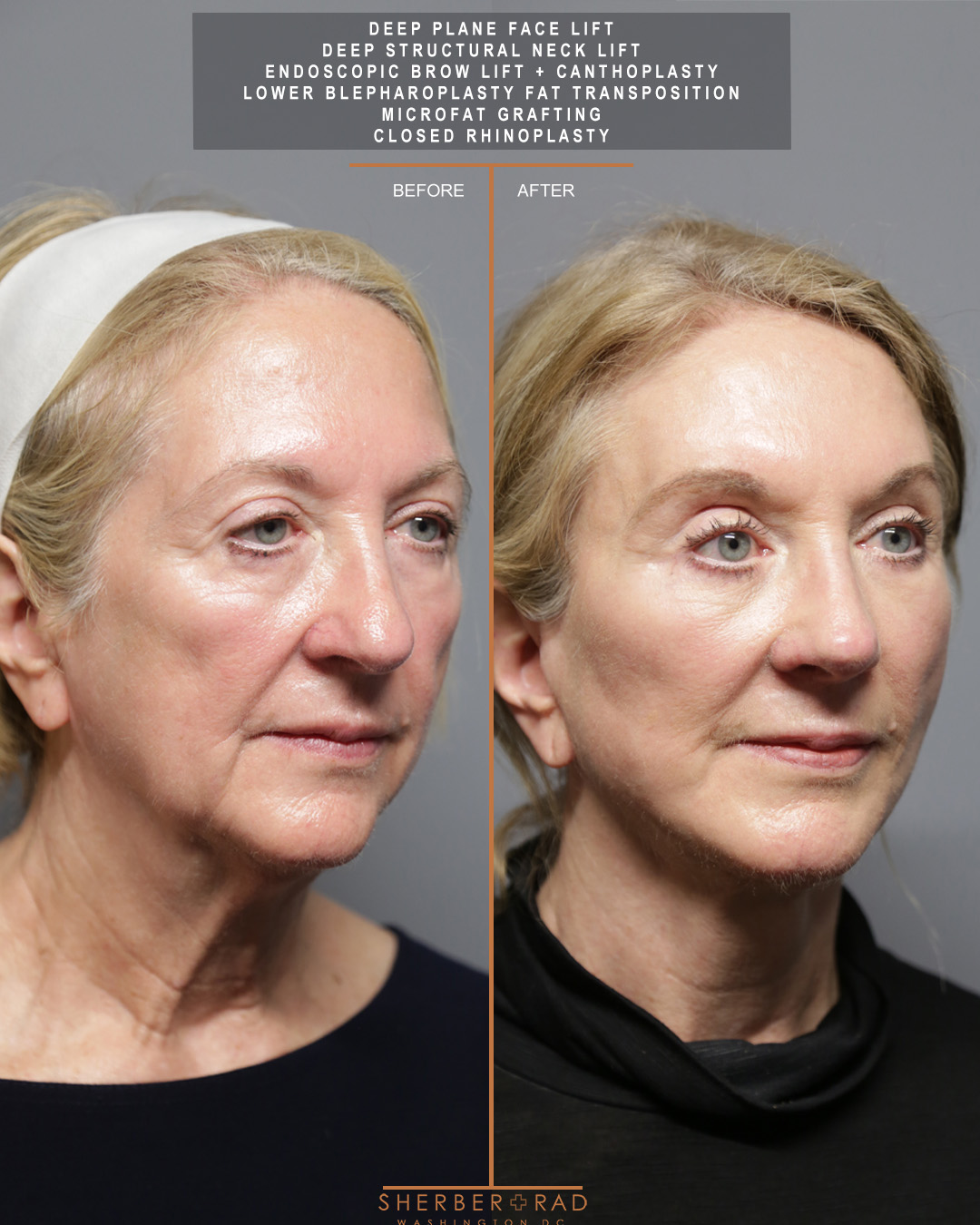
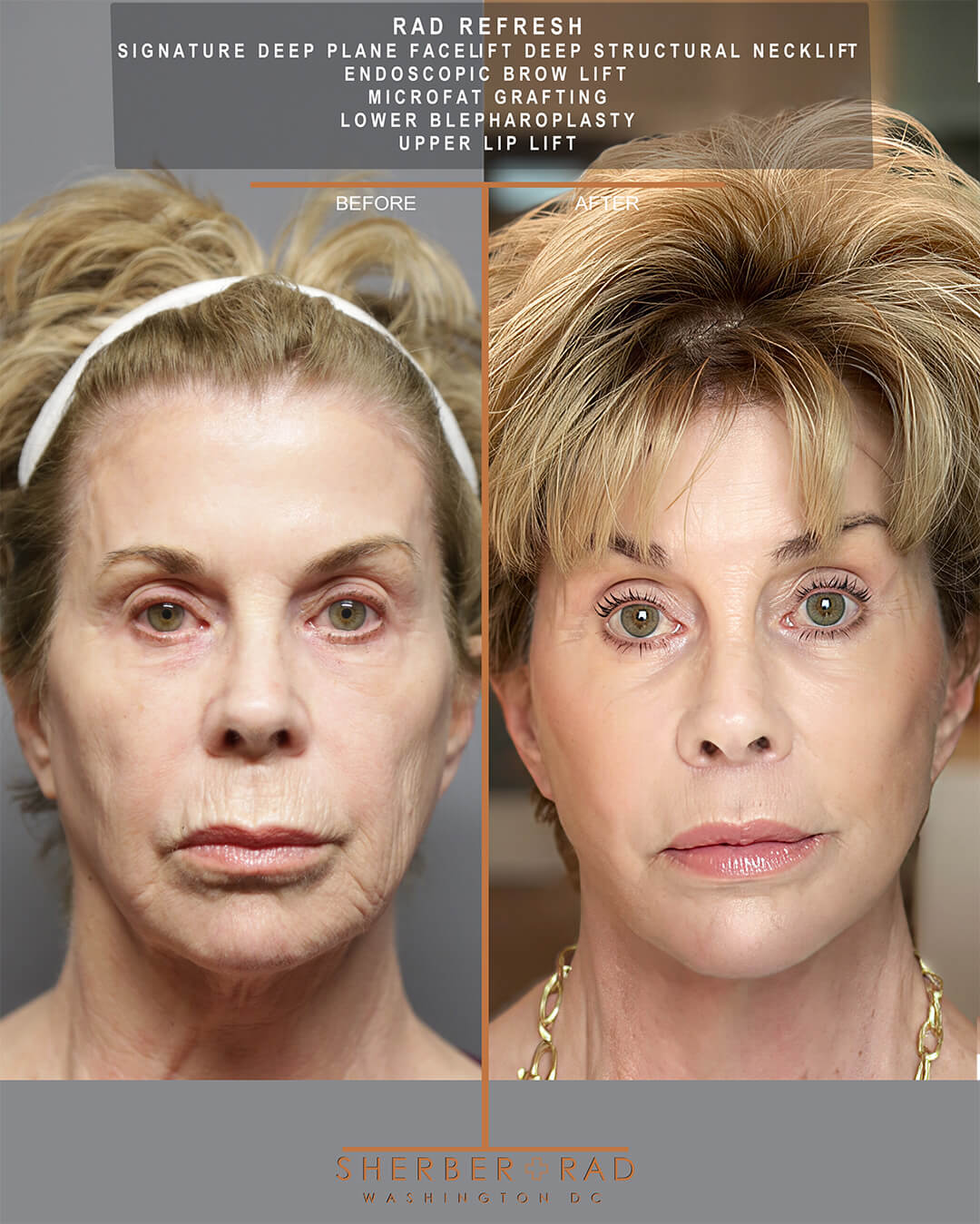
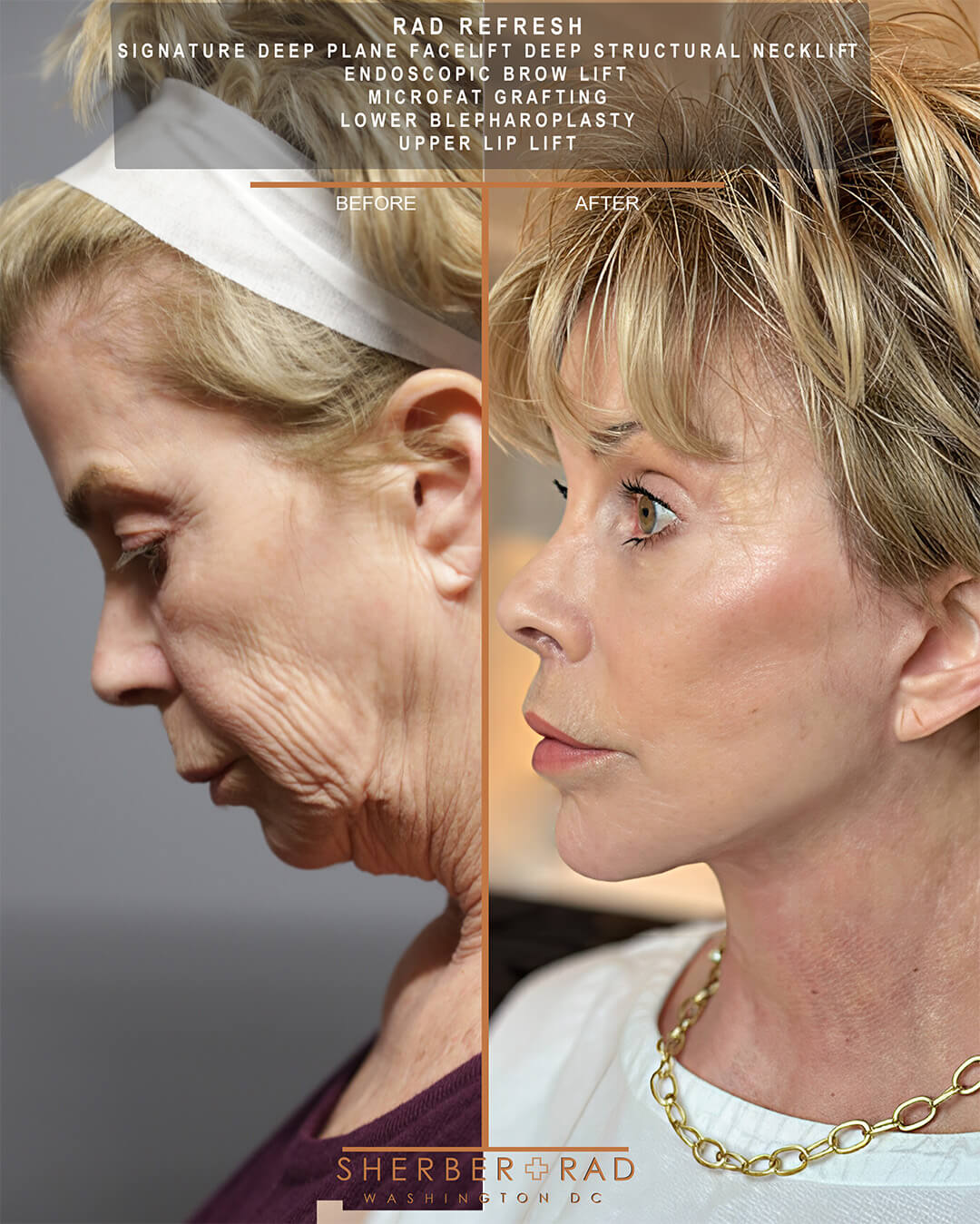
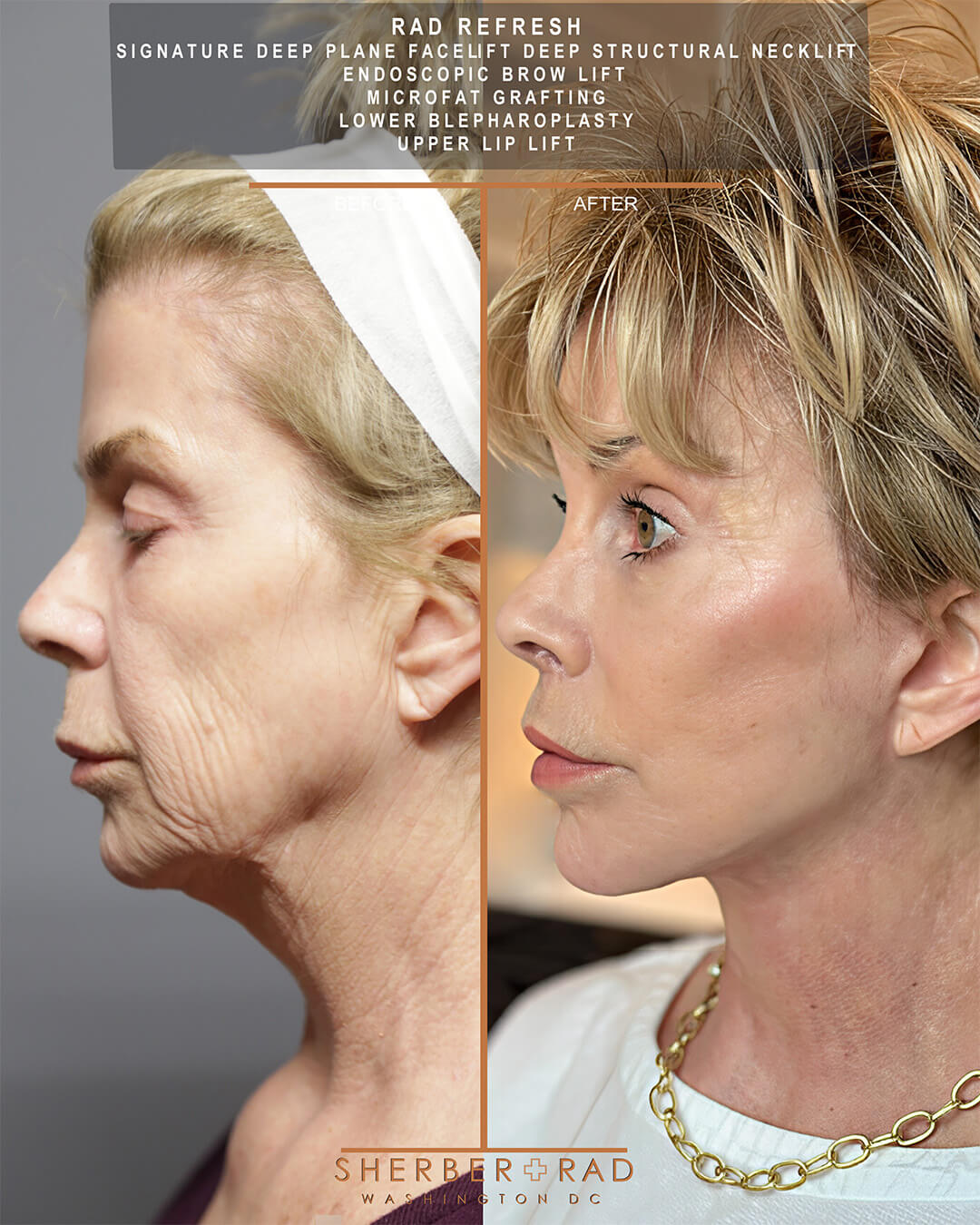
Depending on the anatomy creating the concern, surgery may involve conservative fat removal, fat repositioning, skin redraping, or complementary fat grafting. Dr. Rad’s objective is not simply to remove under-eye fat. It is to create a smoother transition between the lower eyelids and cheeks while preserving natural eye shape, facial expression, and appropriate supporting tissue.
“Plastic surgery is the craft of enhancing beauty without the evidence.”
- Ariel N Rad, MD, PhD, FACS
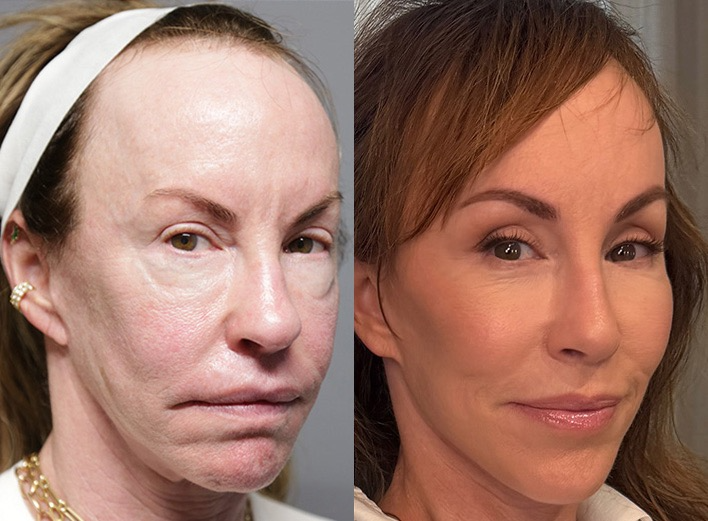
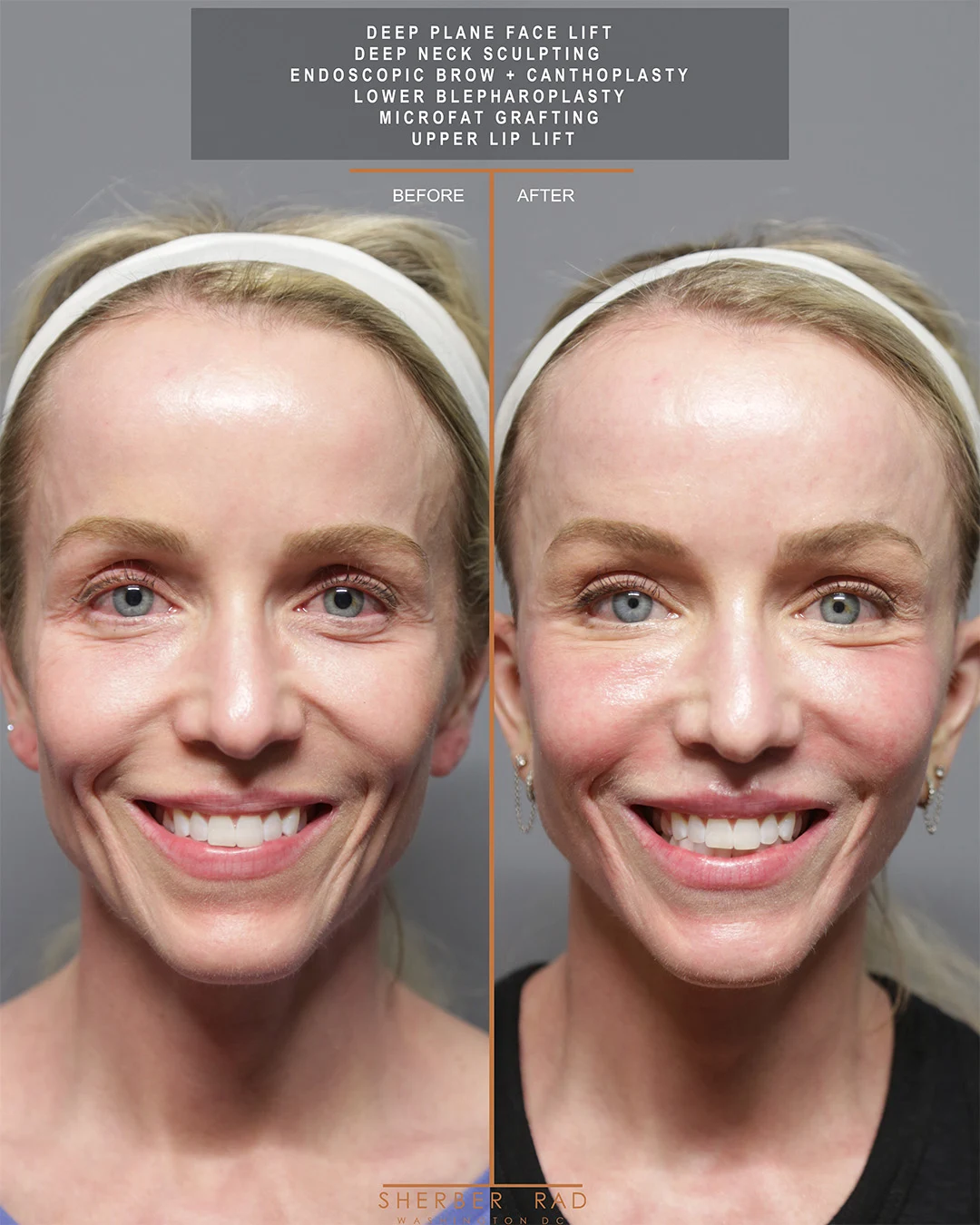
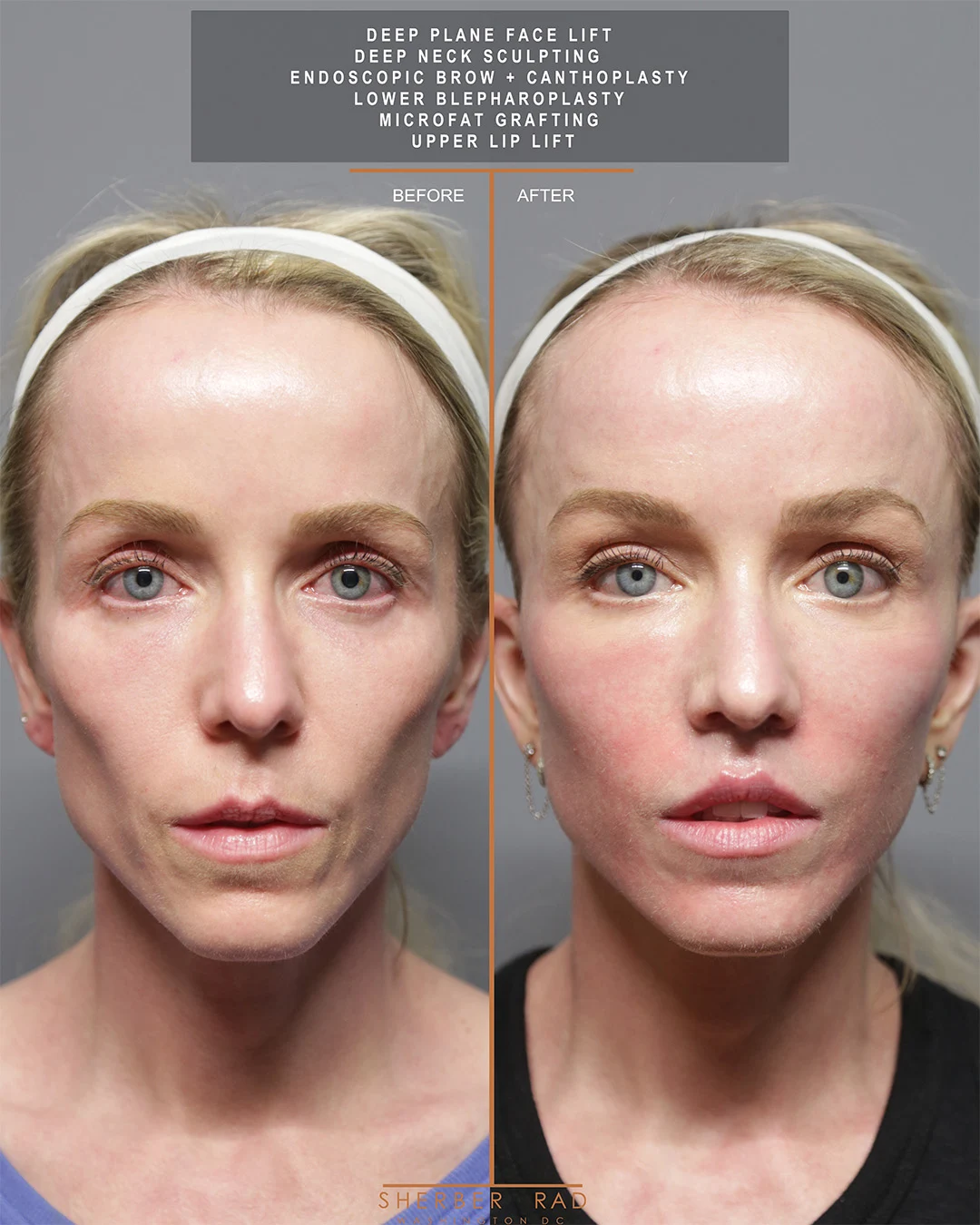
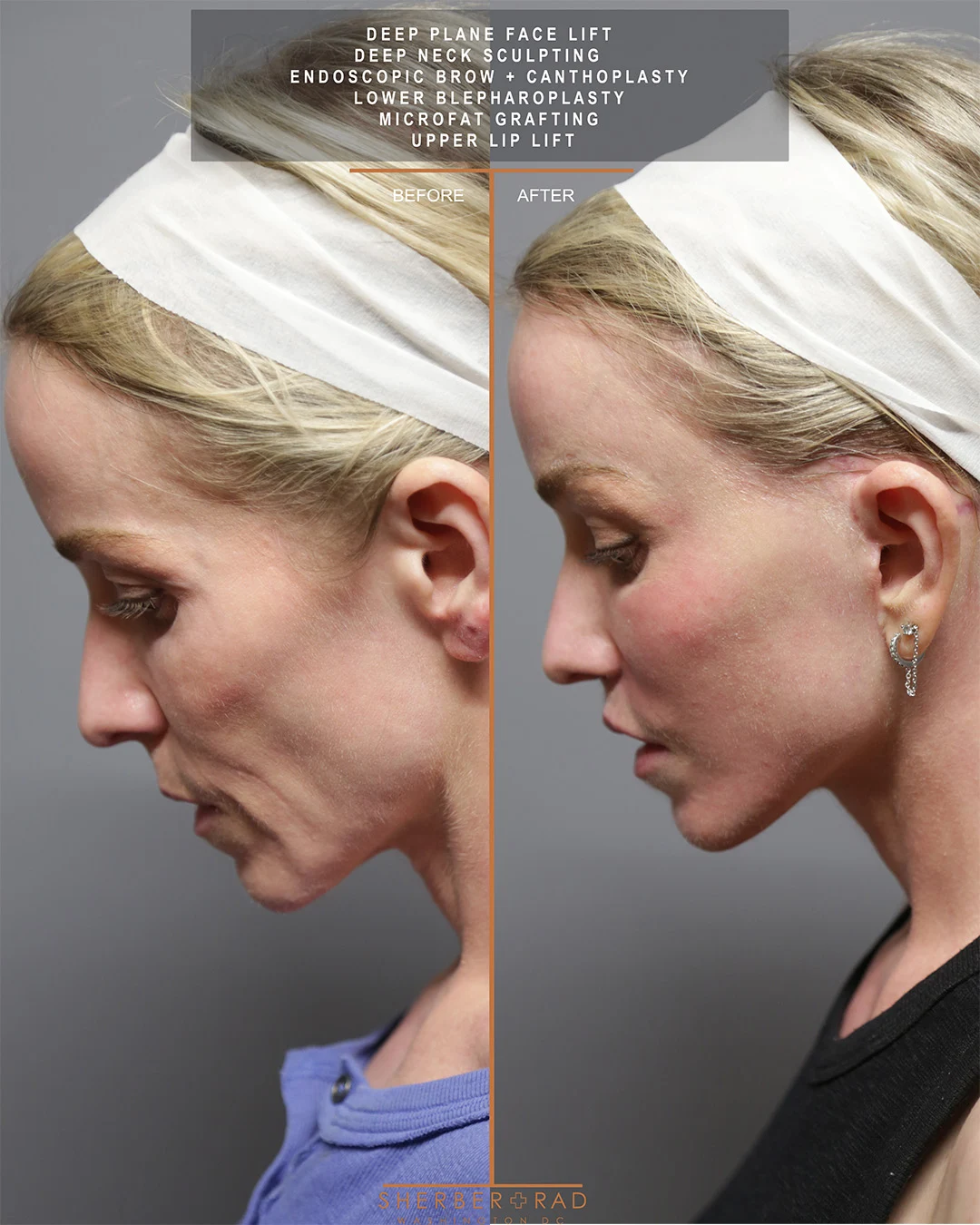
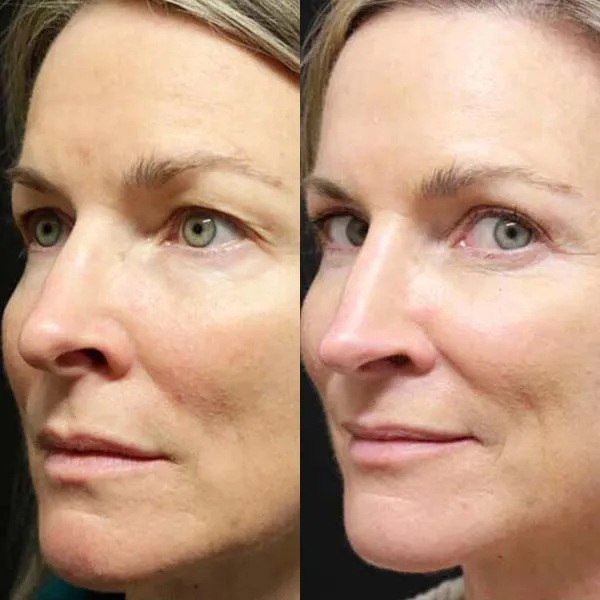
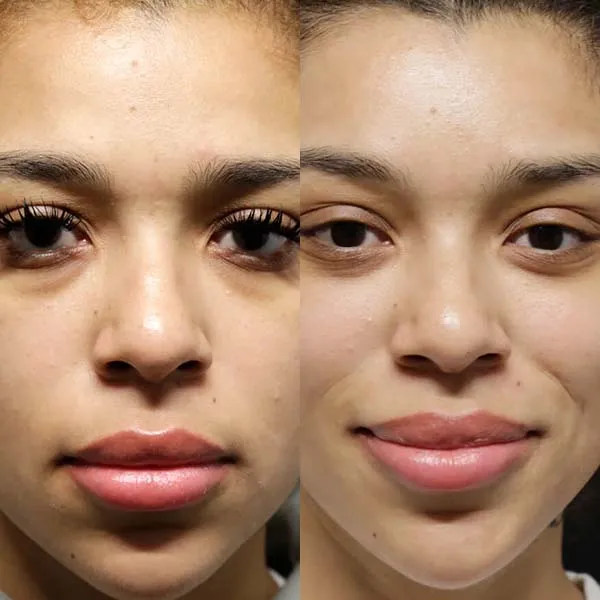
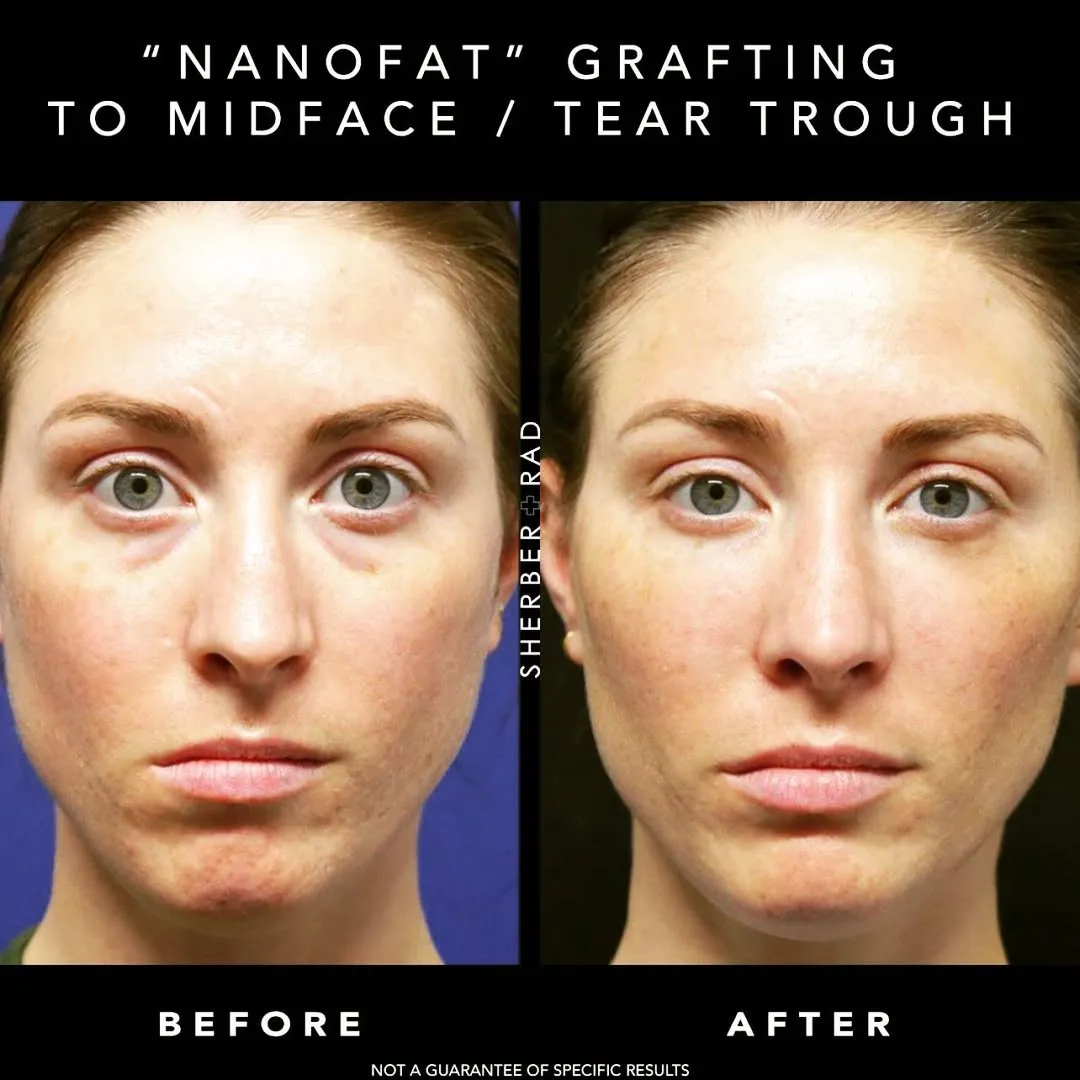
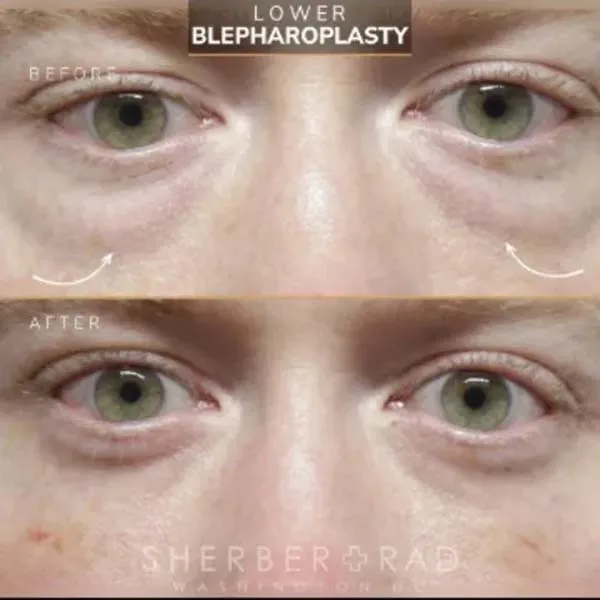
real patient resultsgallery
before
after
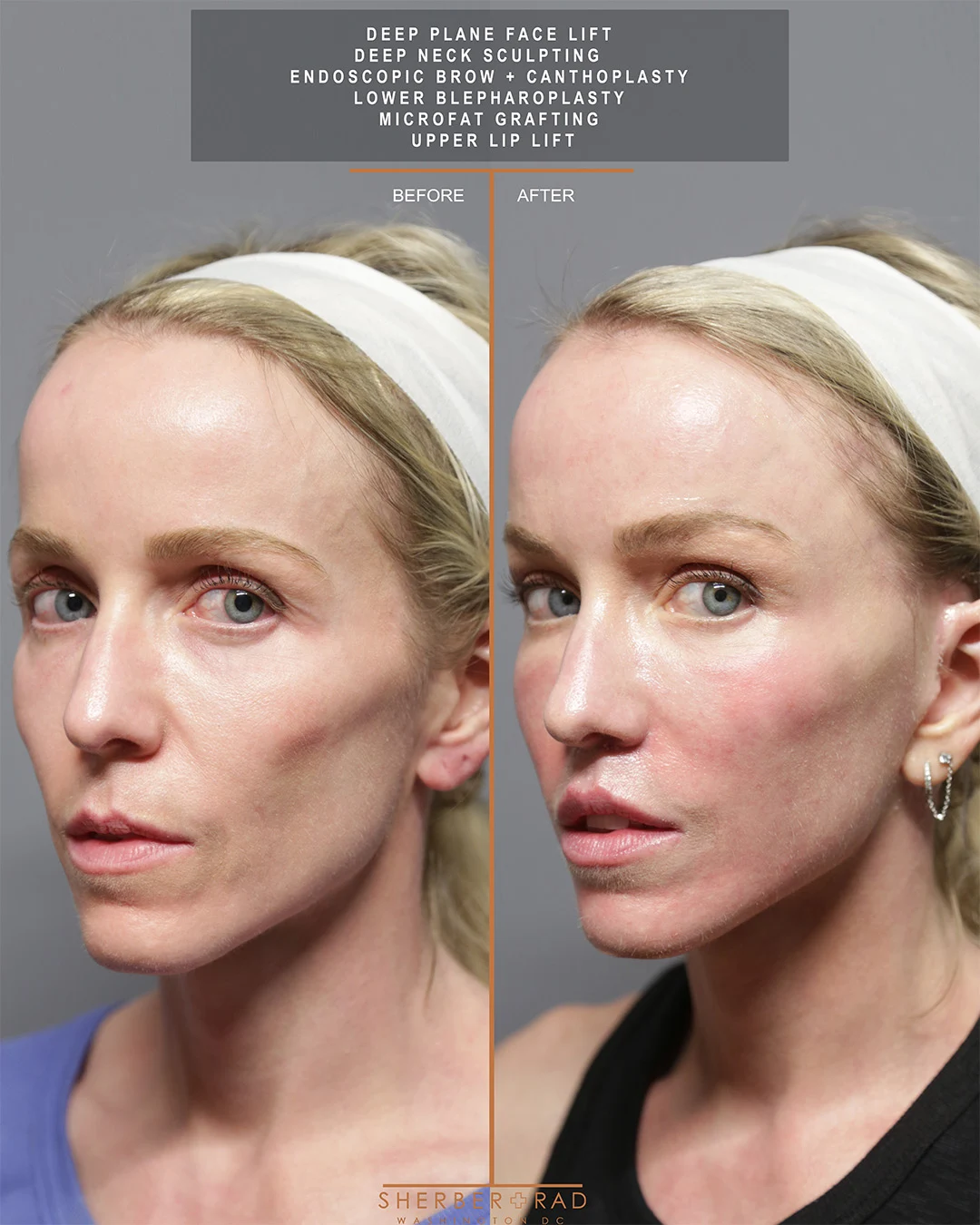
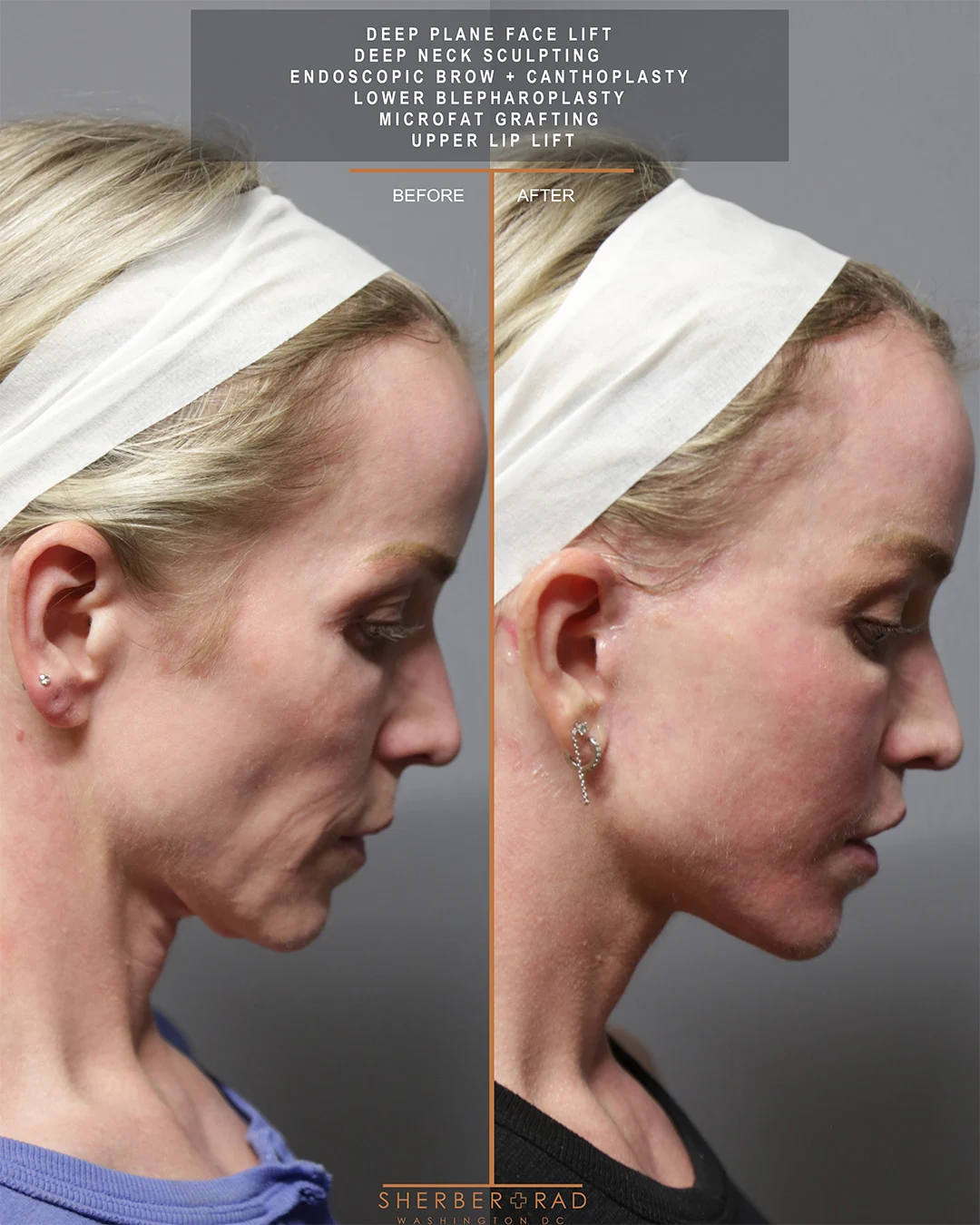
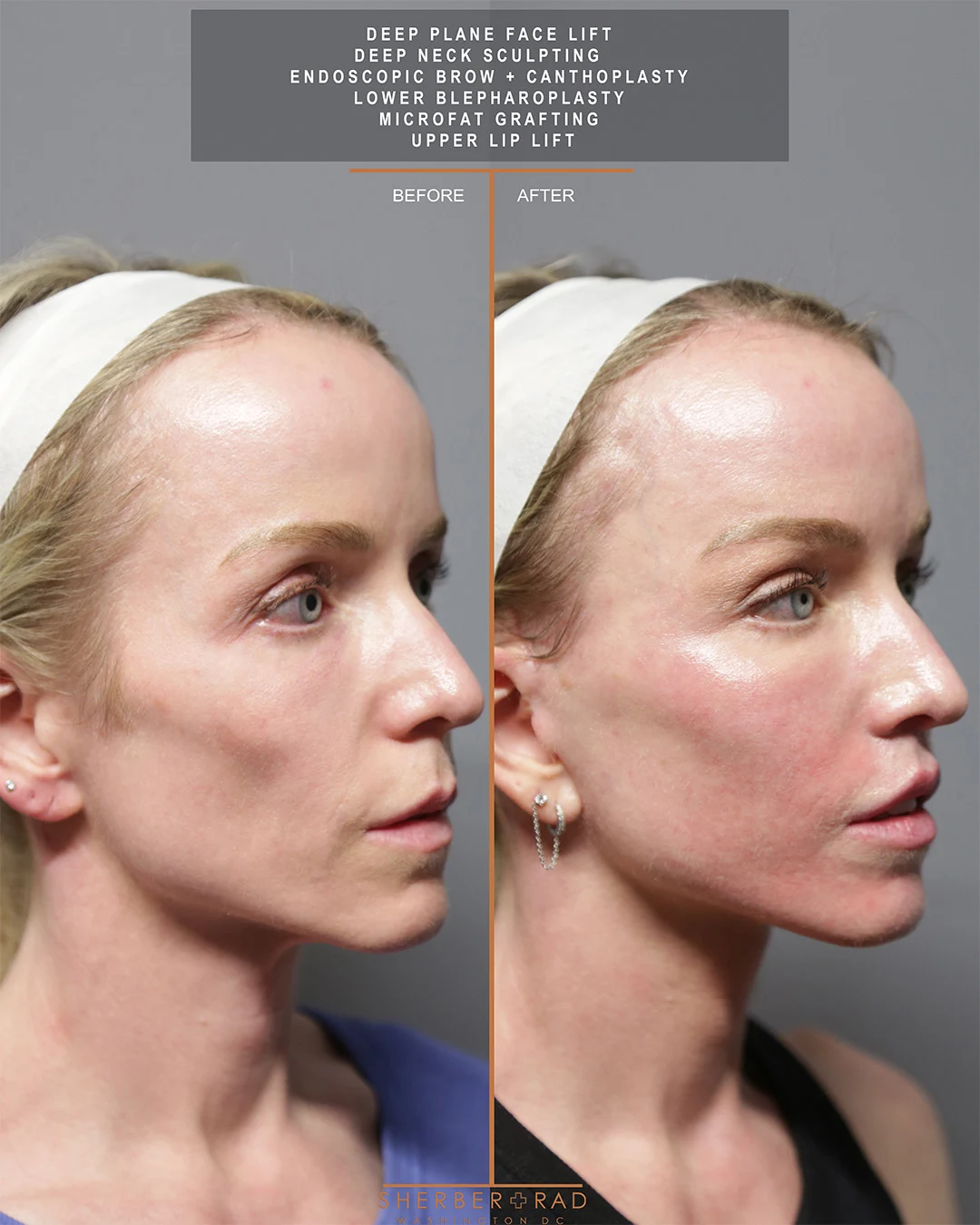
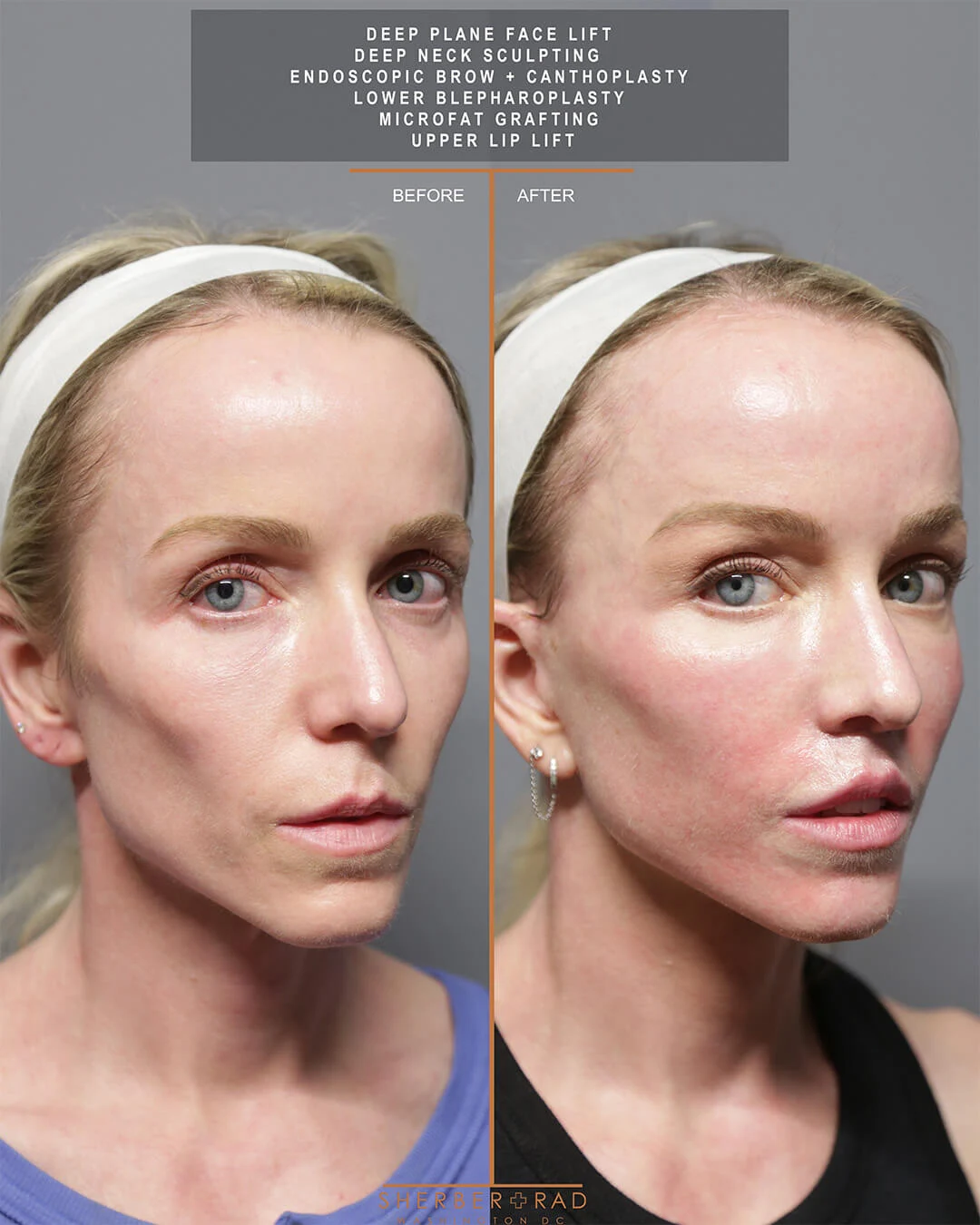
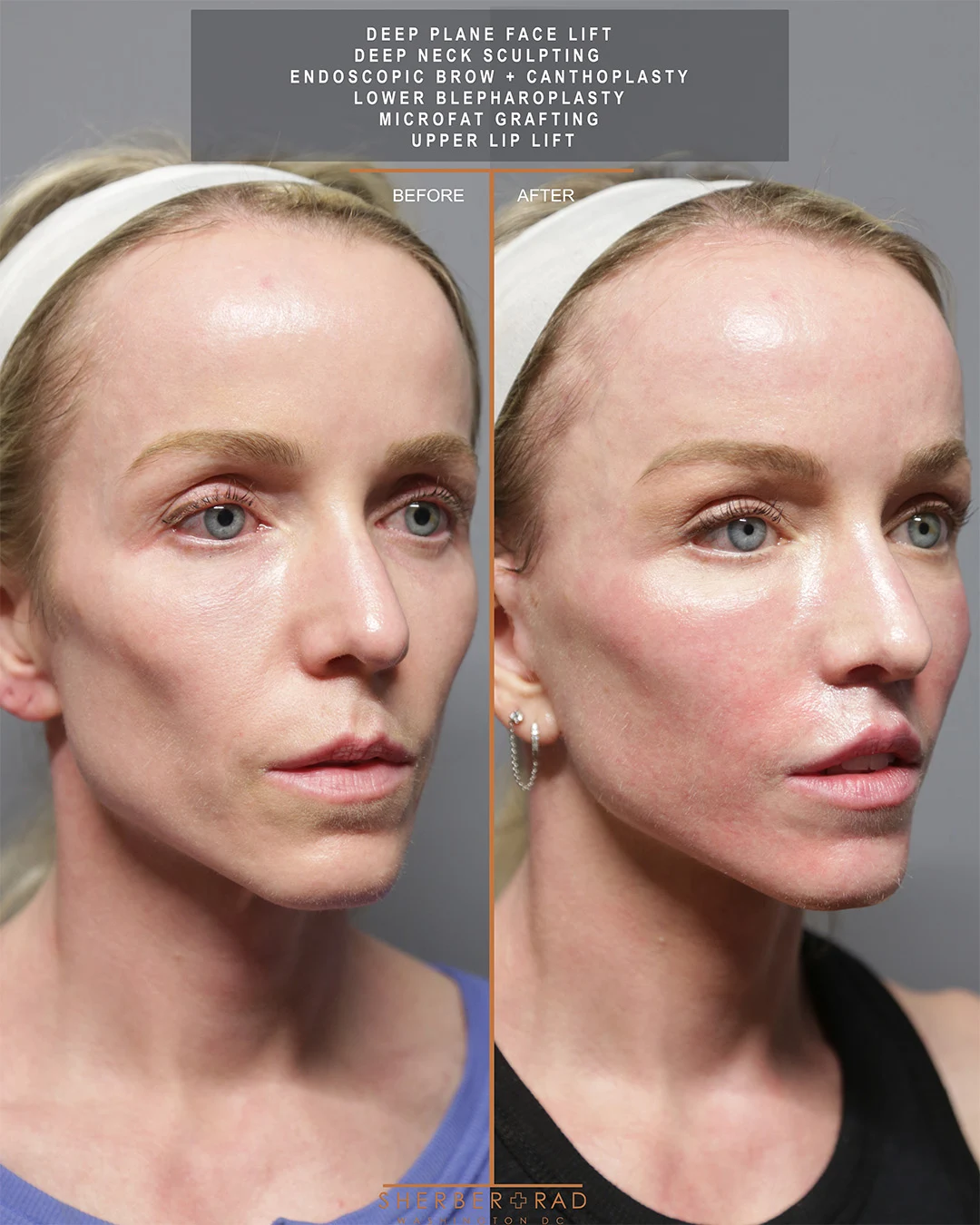
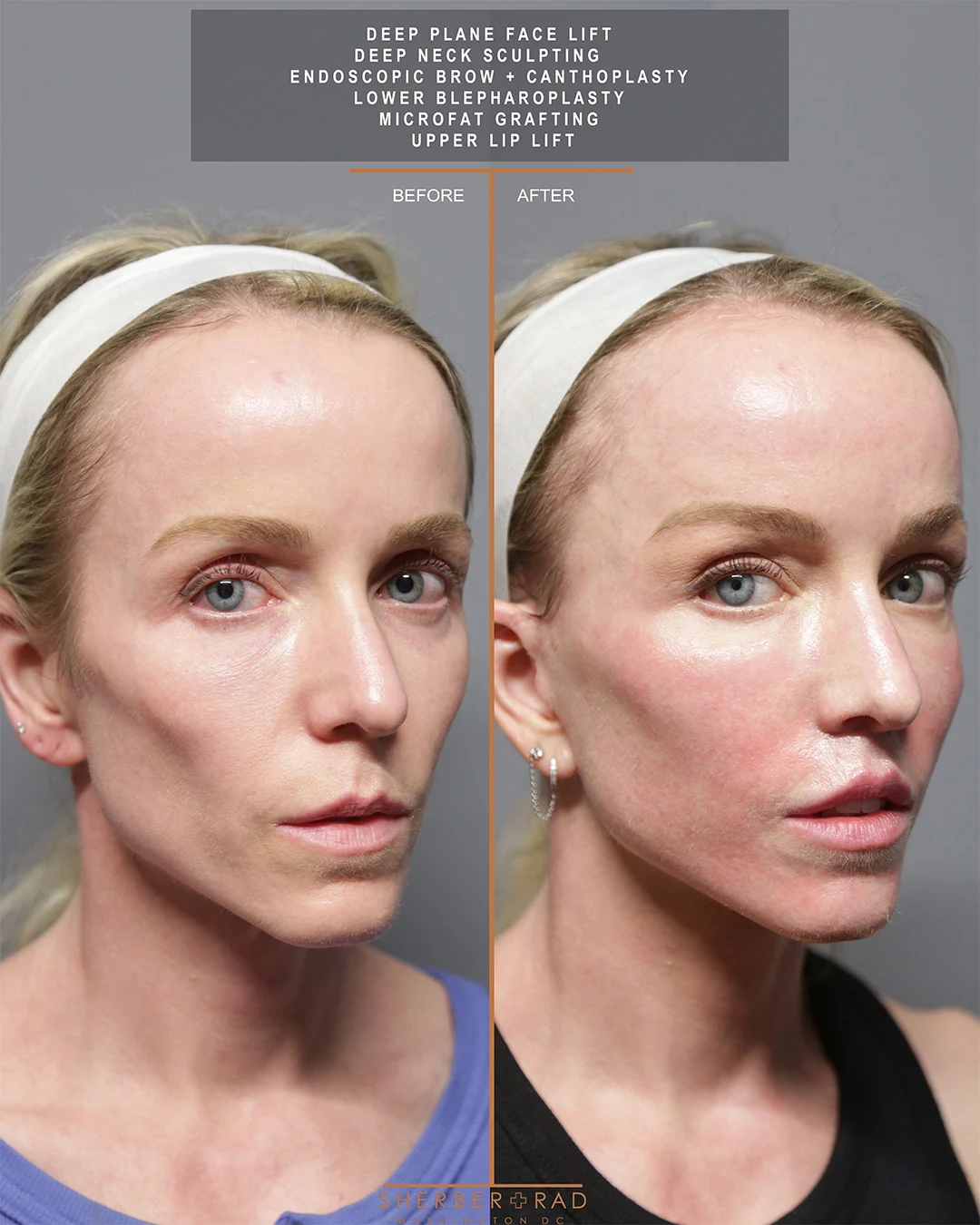
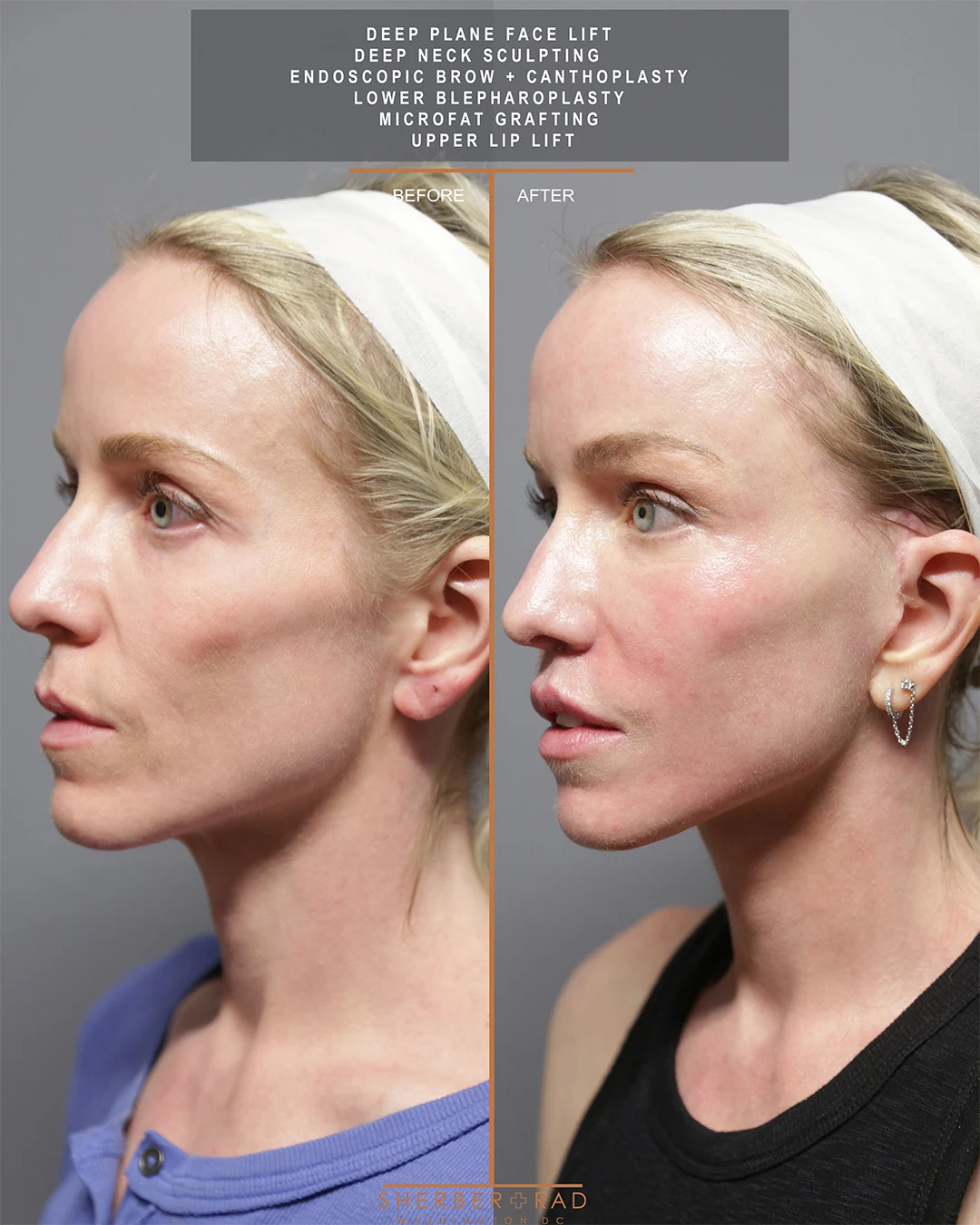
before
after
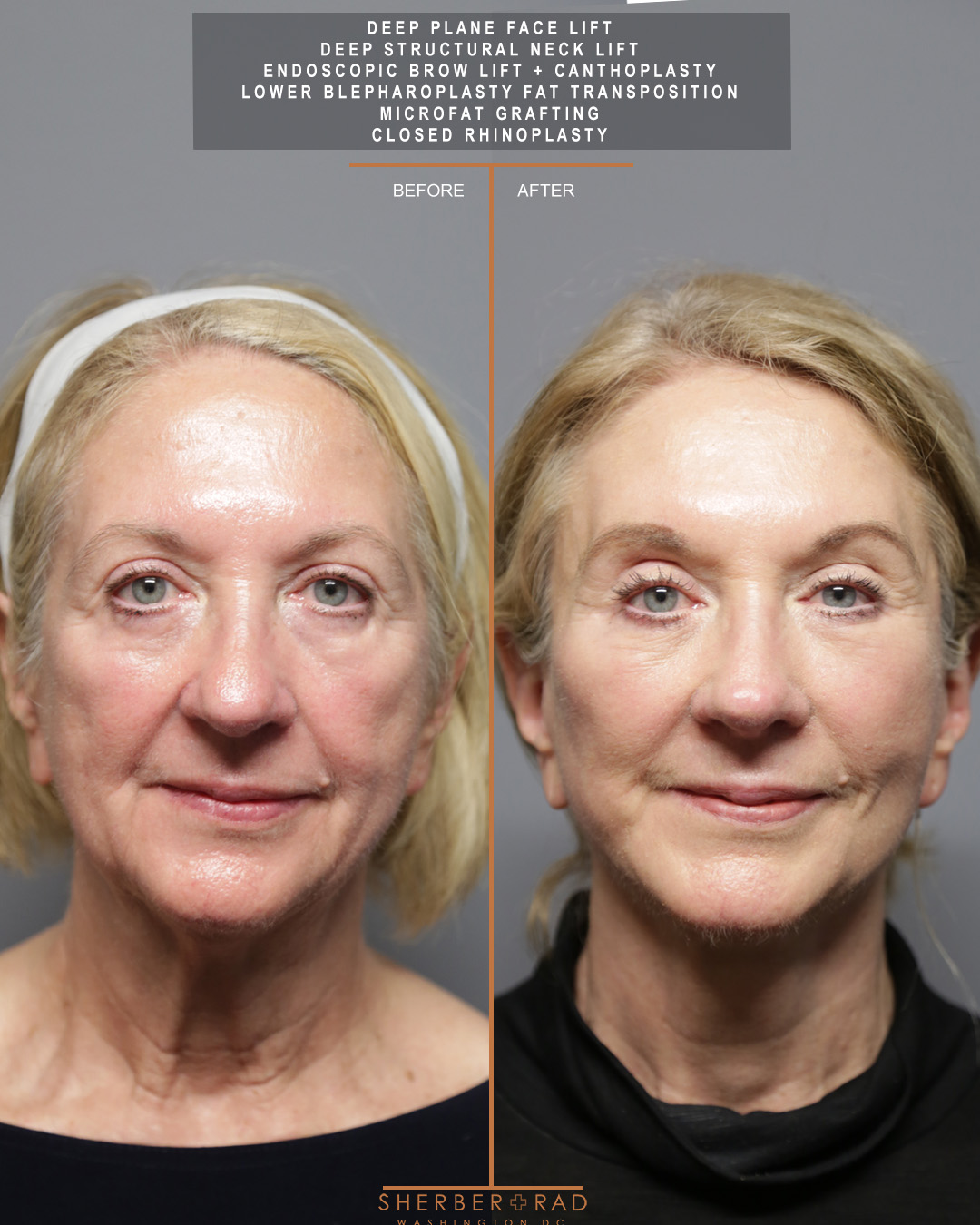
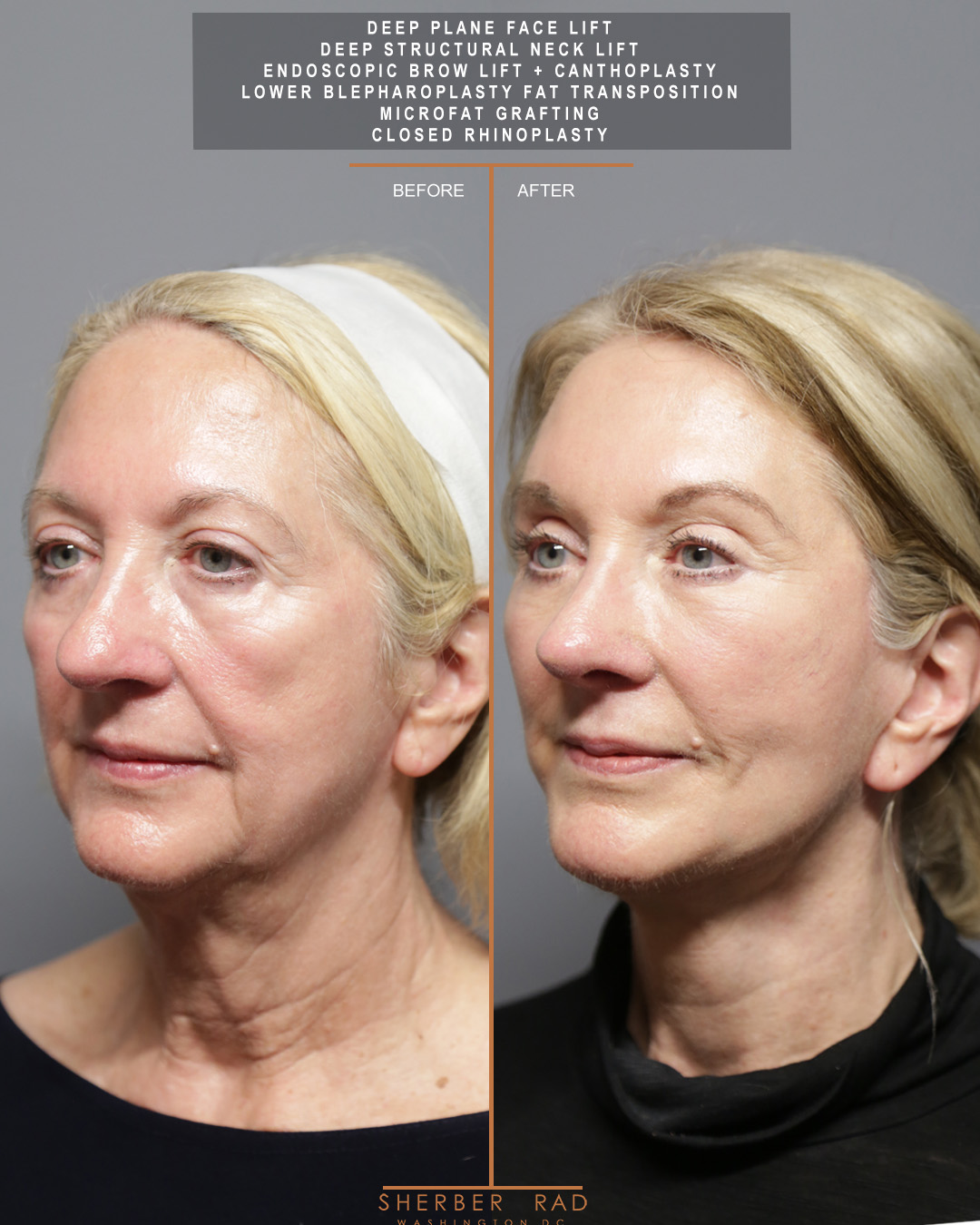
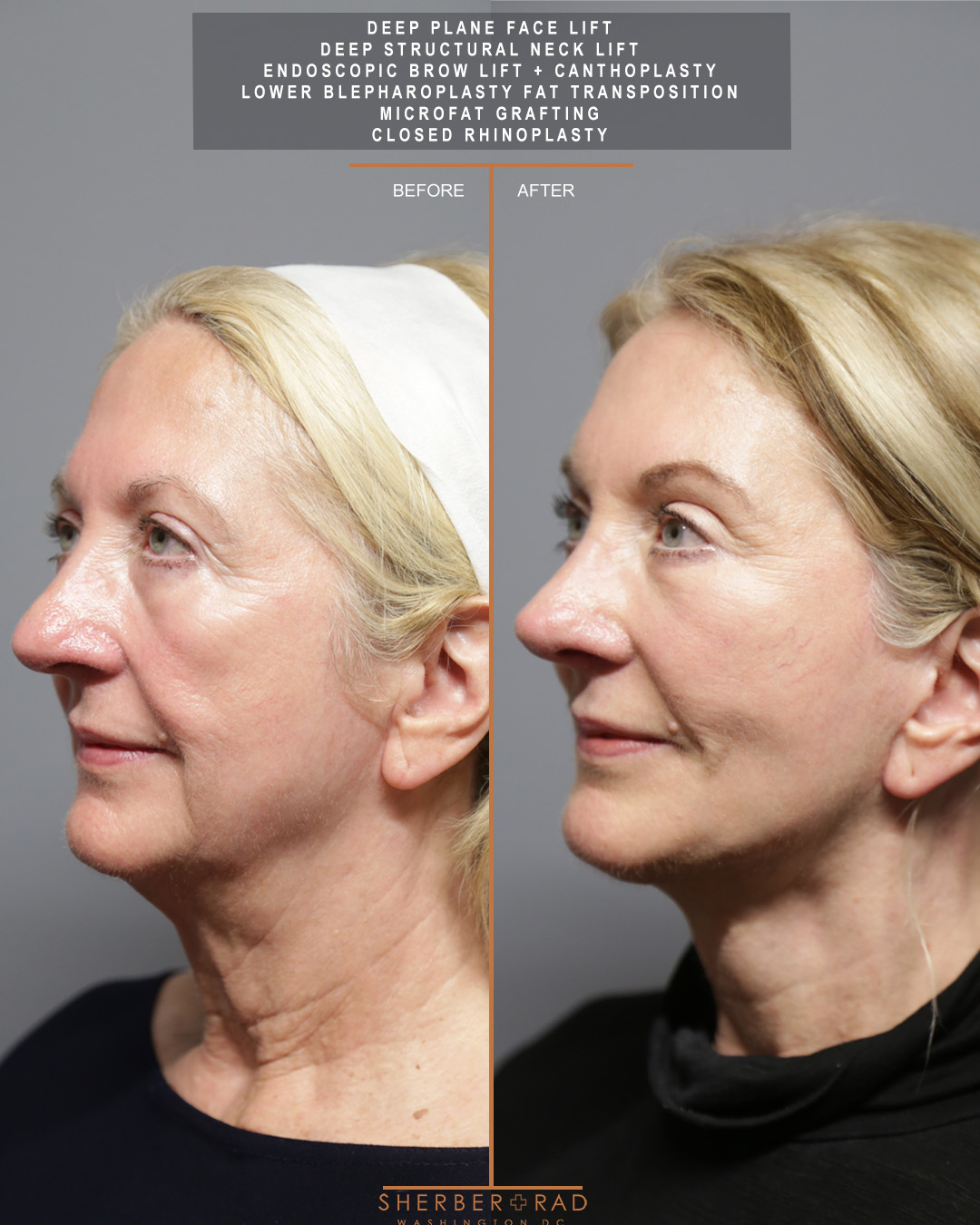
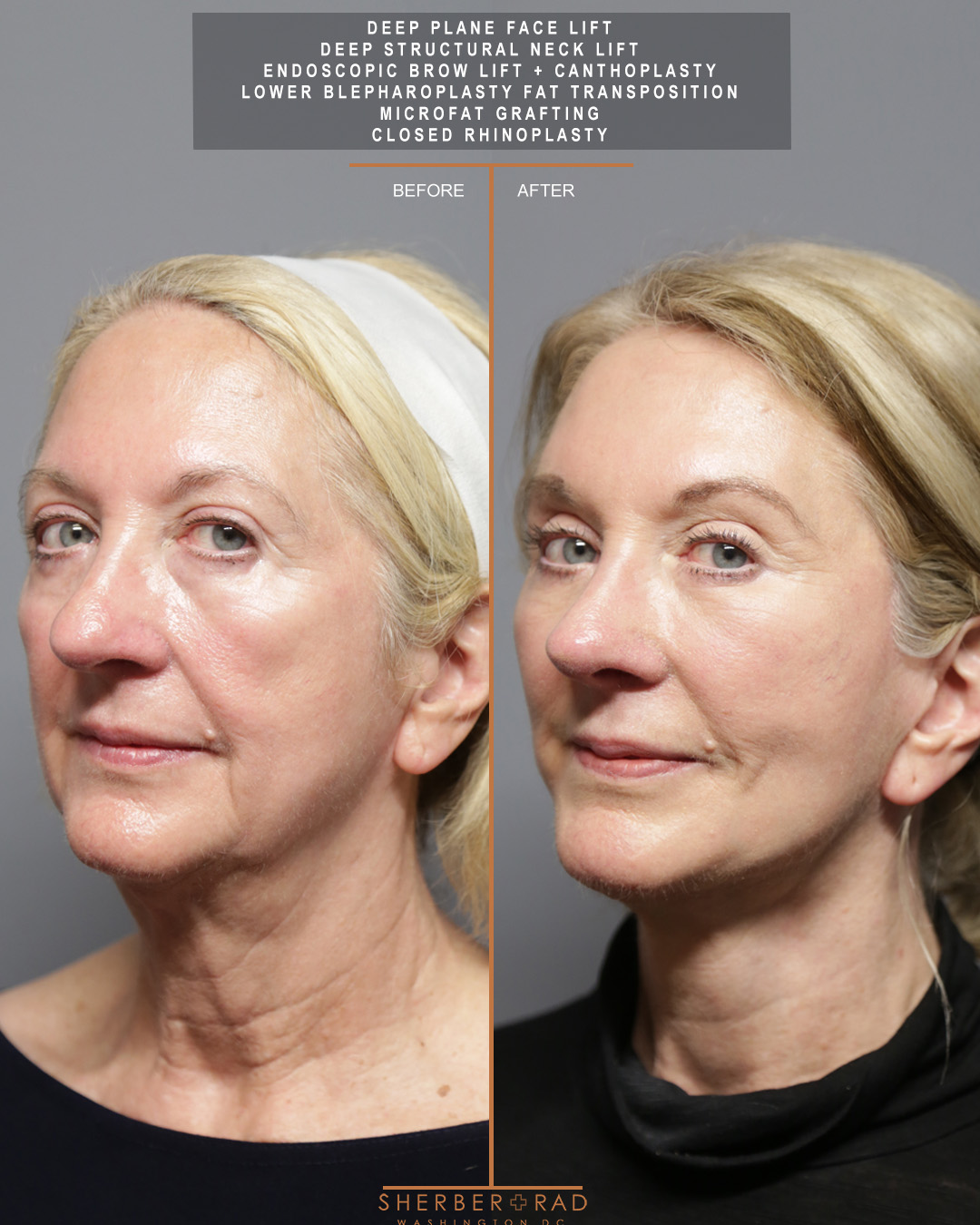
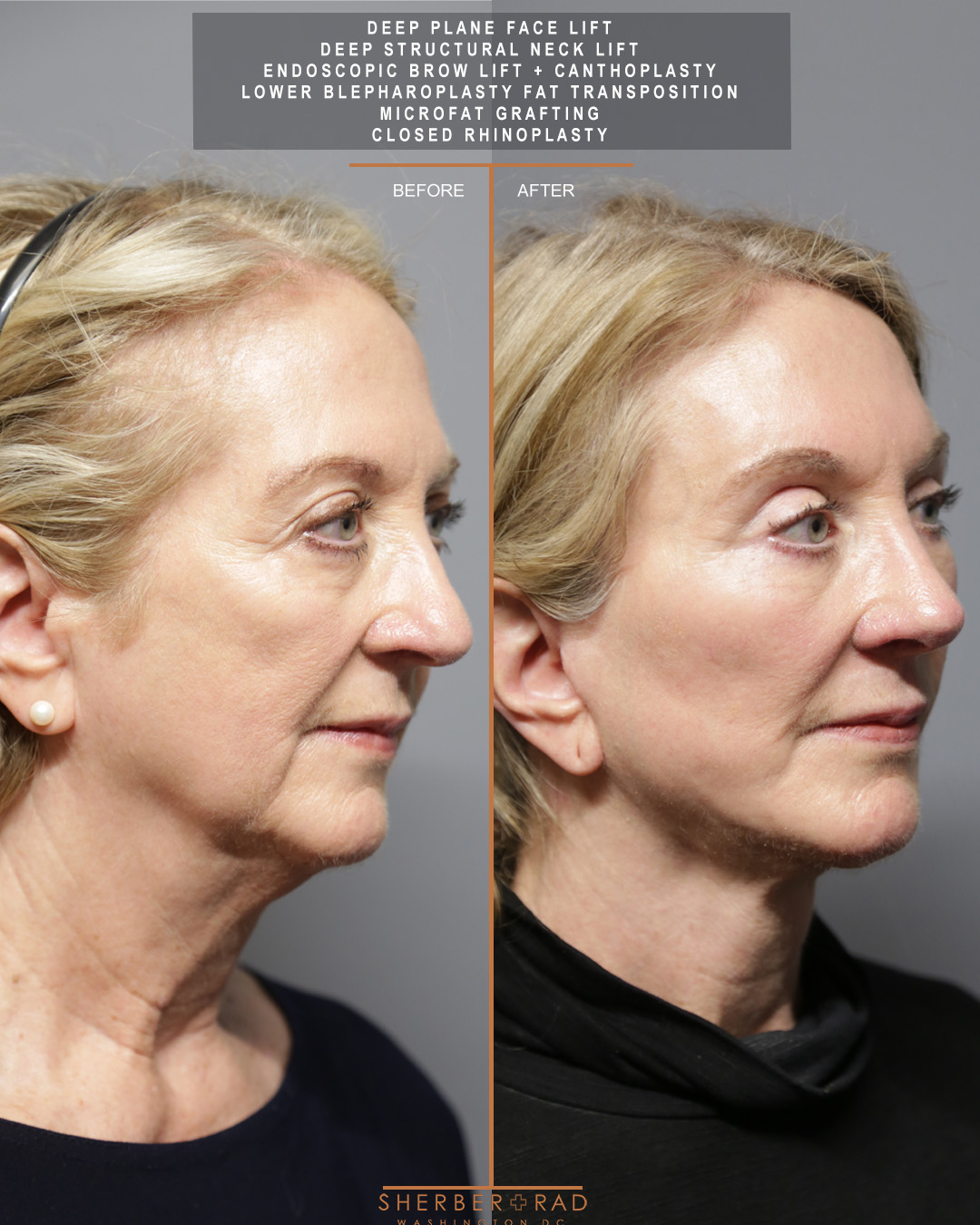
before
after
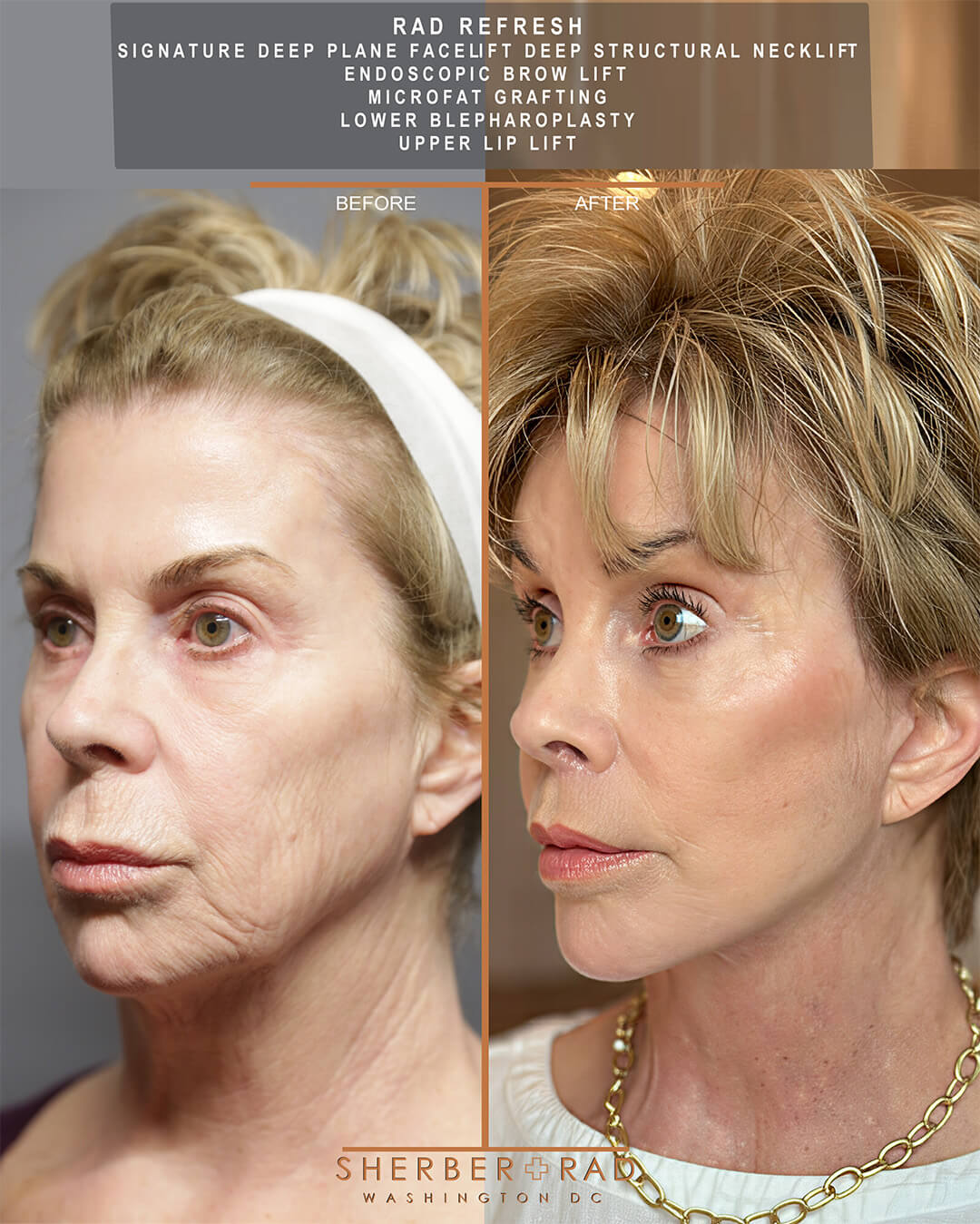
before
after
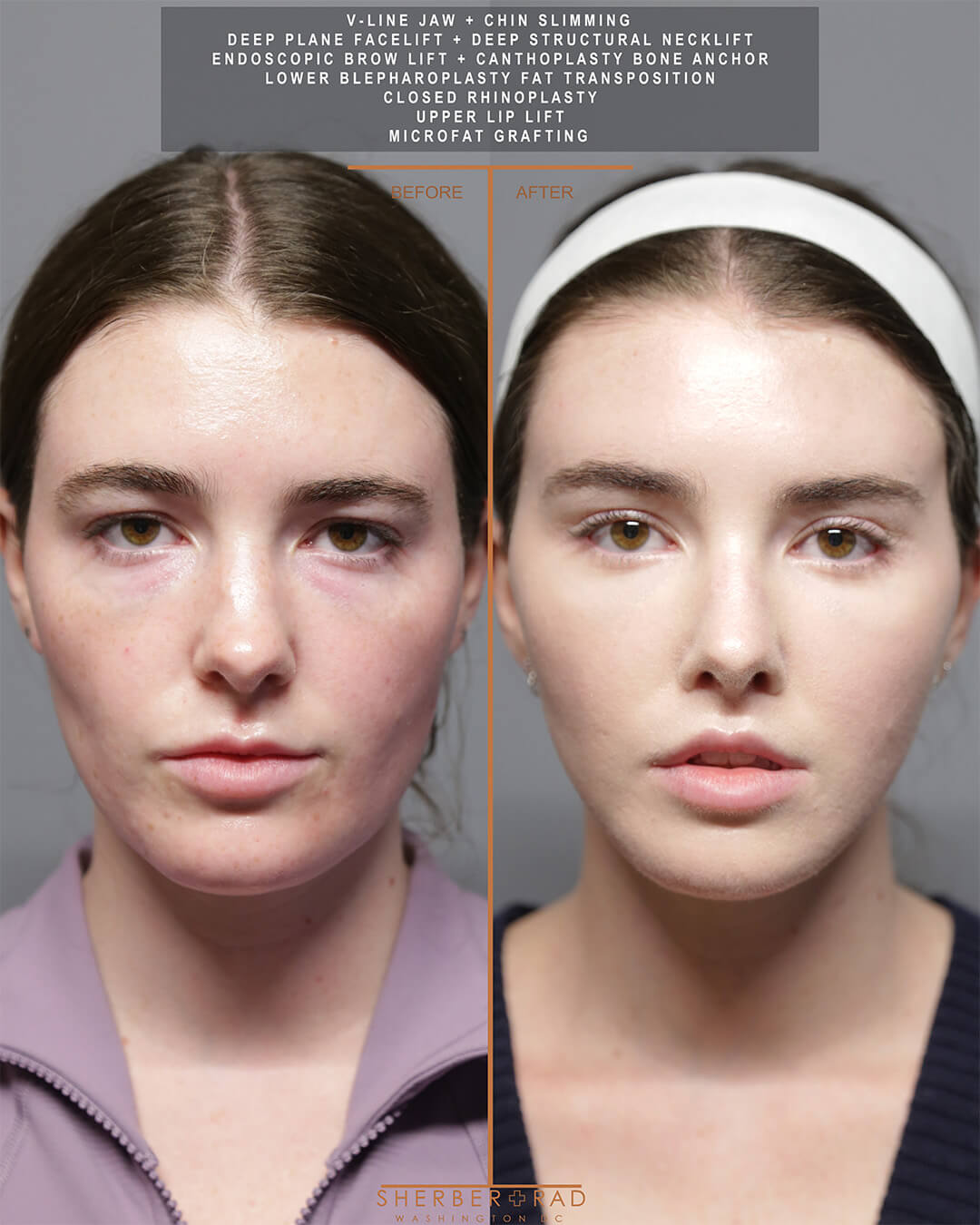
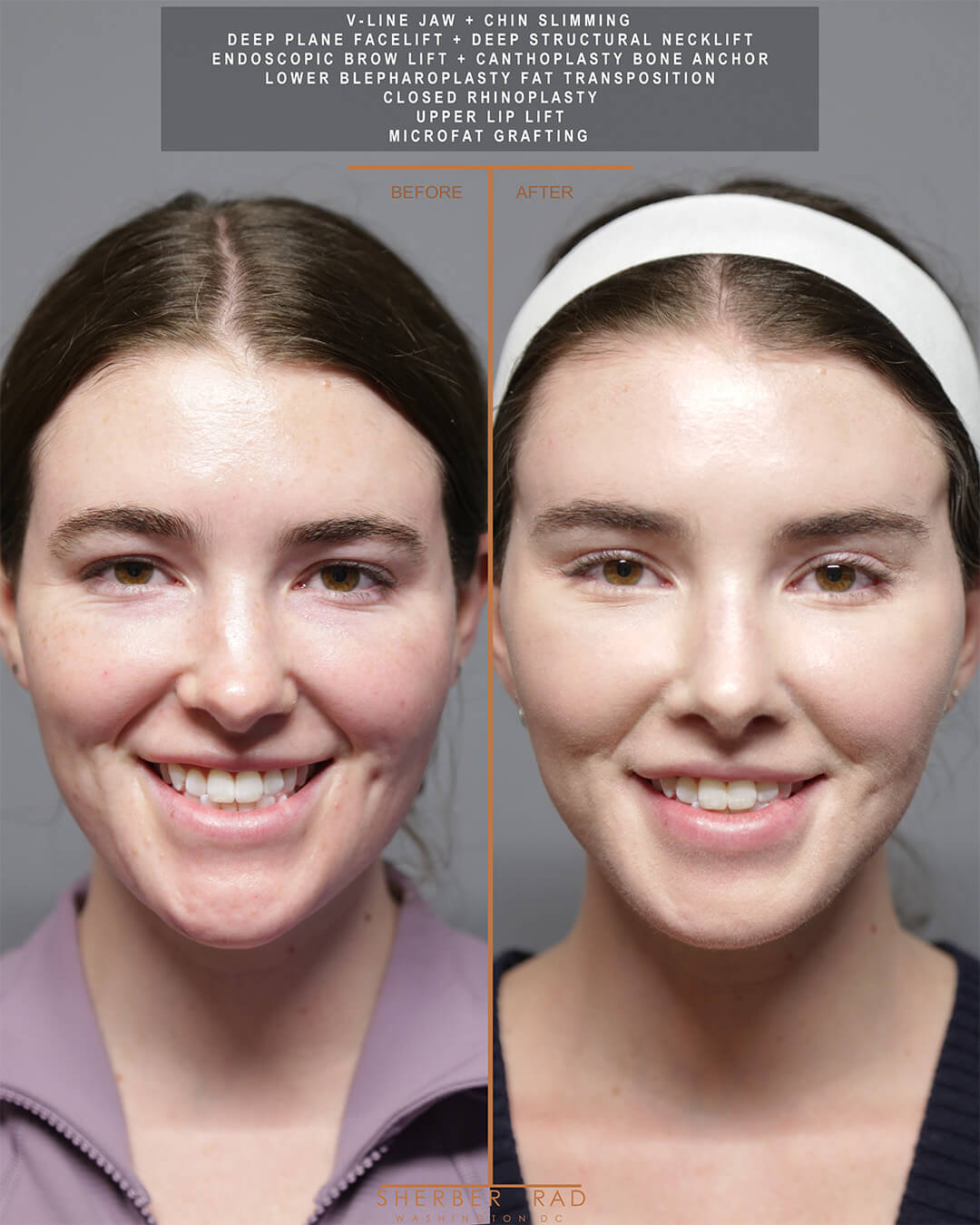
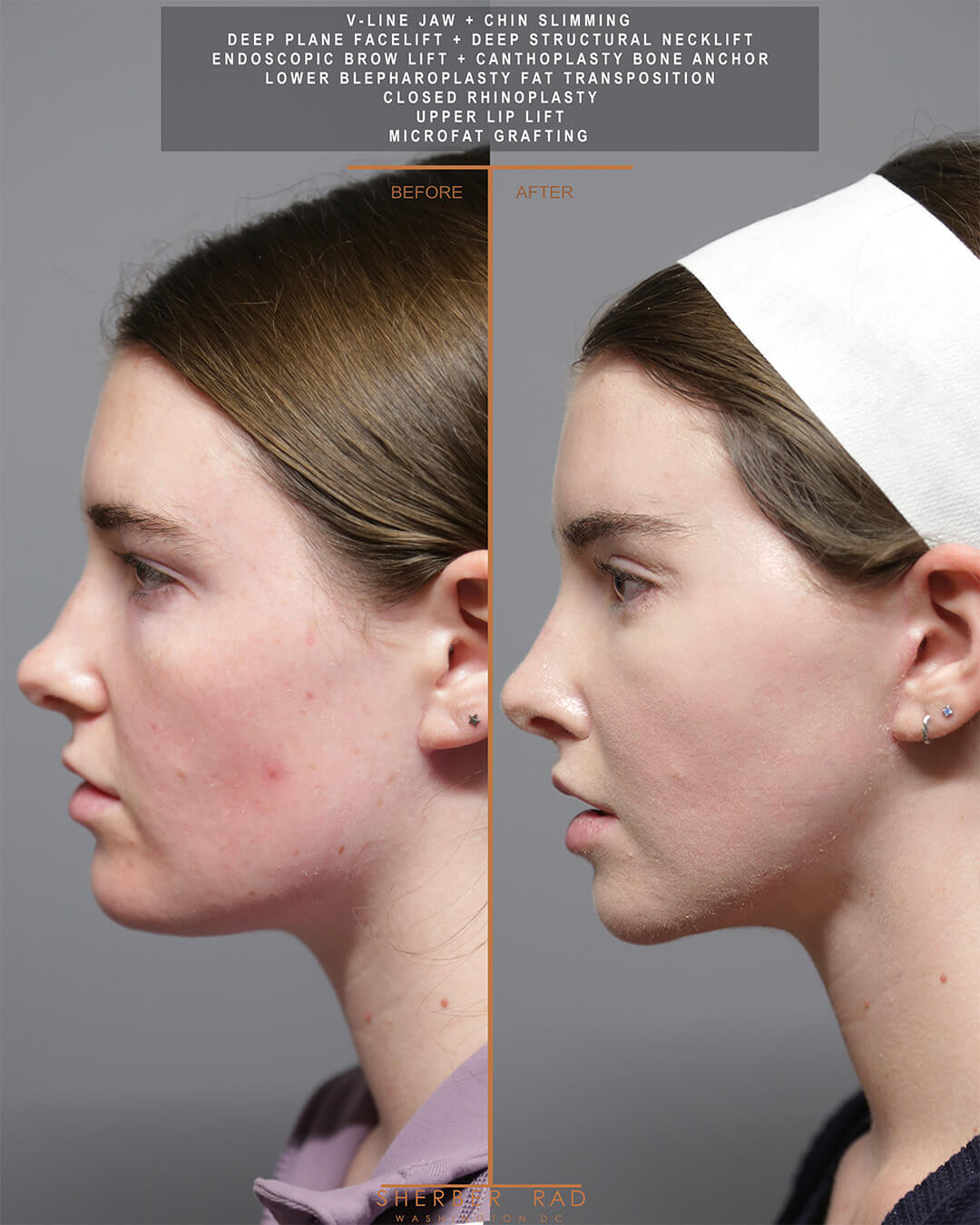
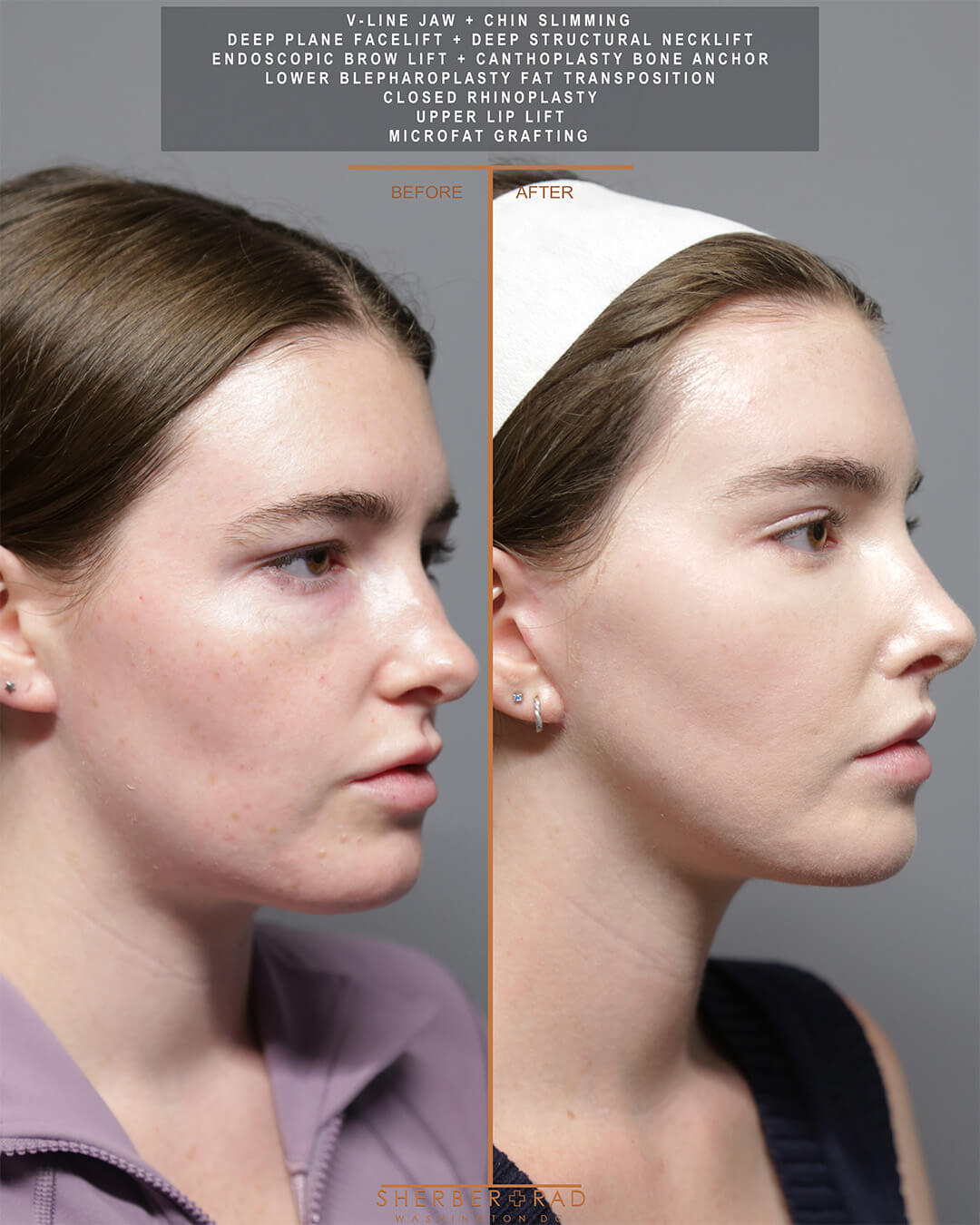
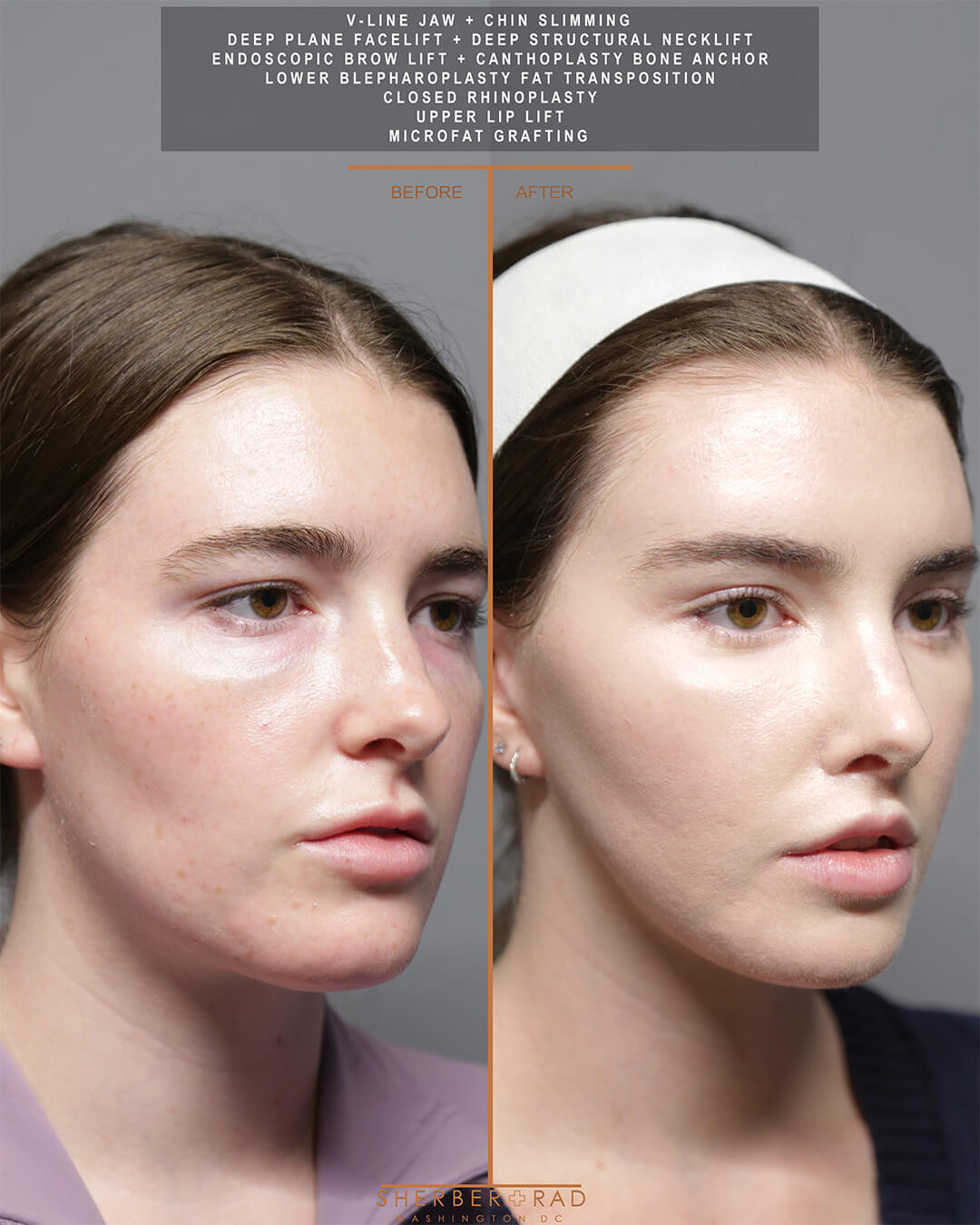
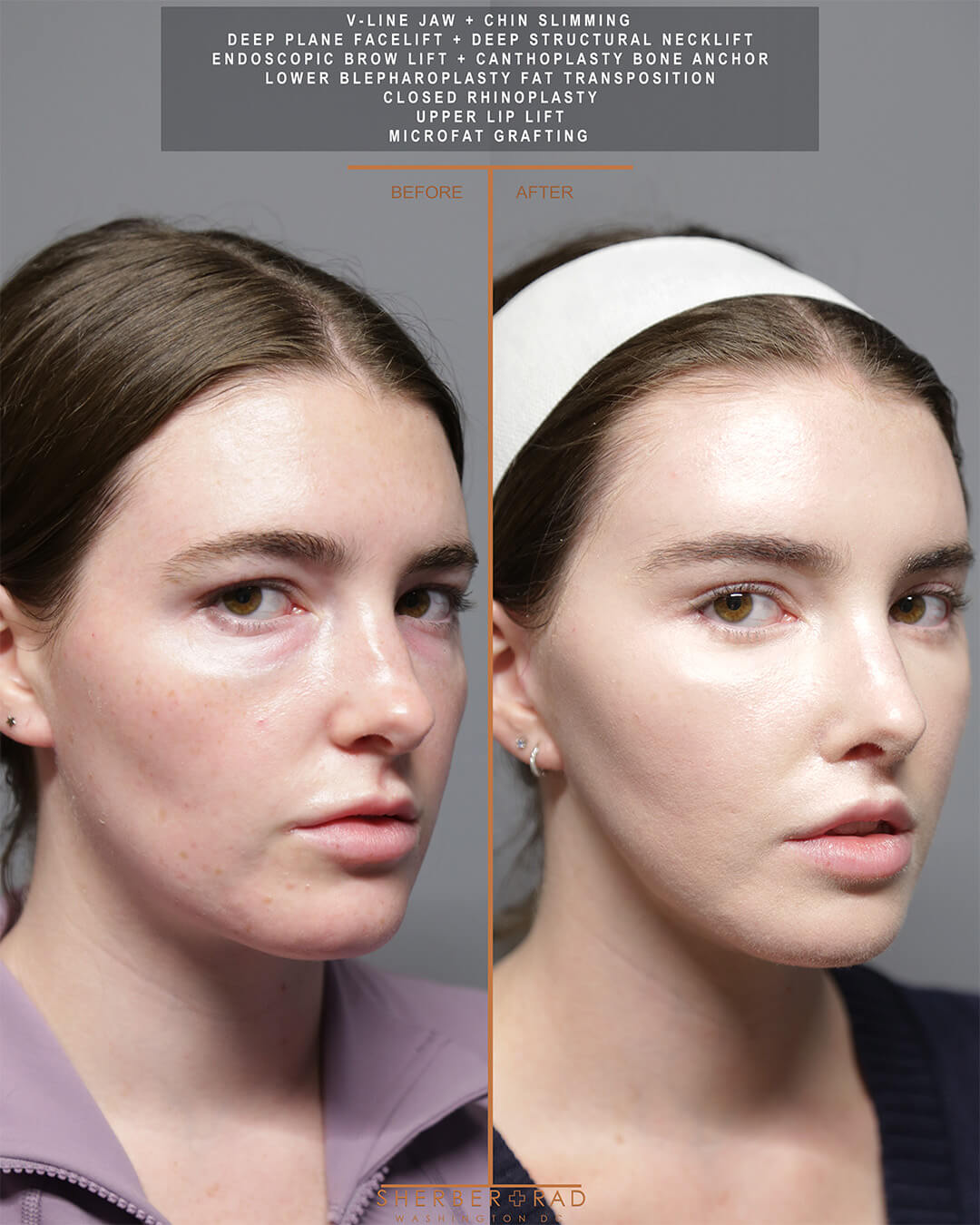
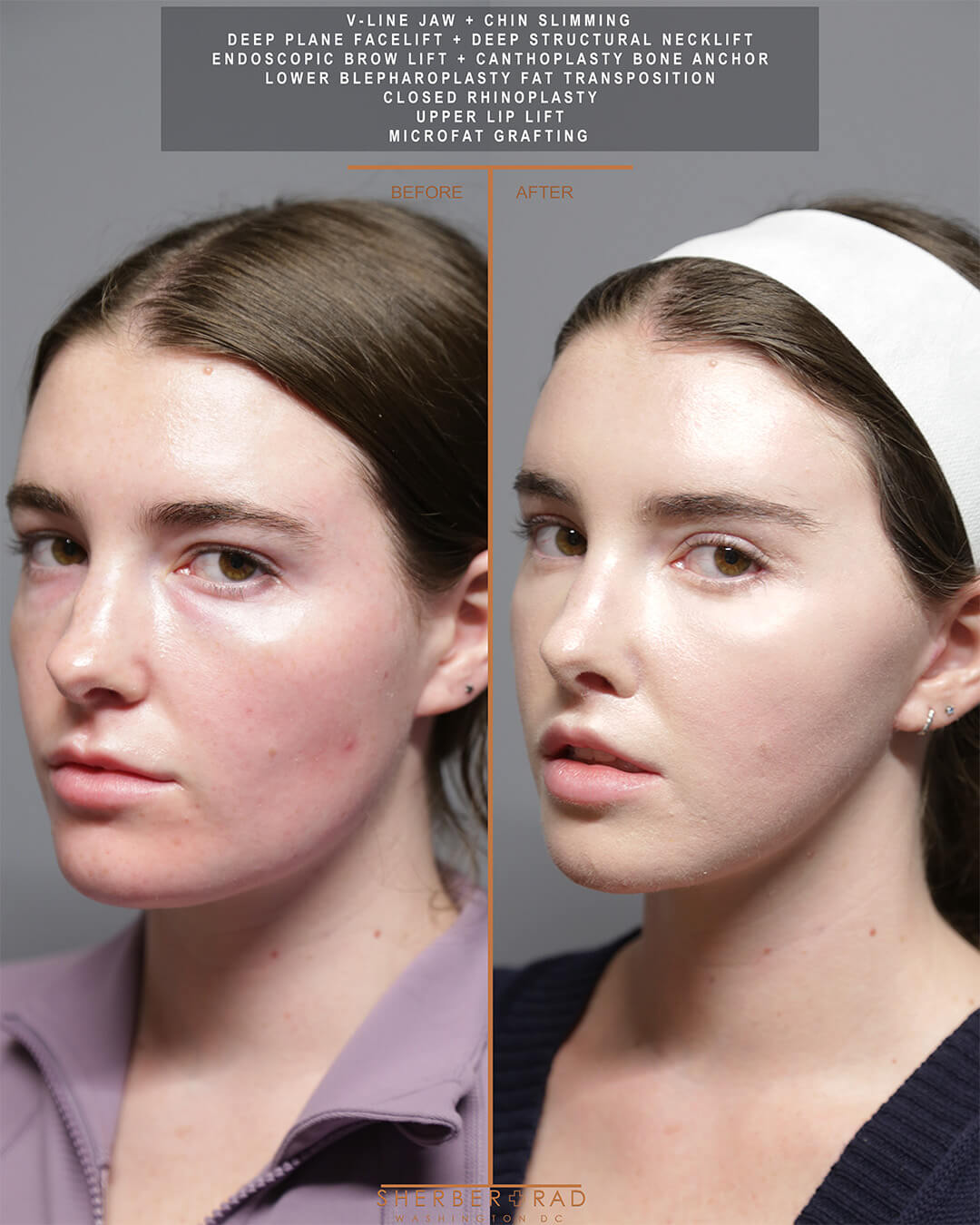
before
after
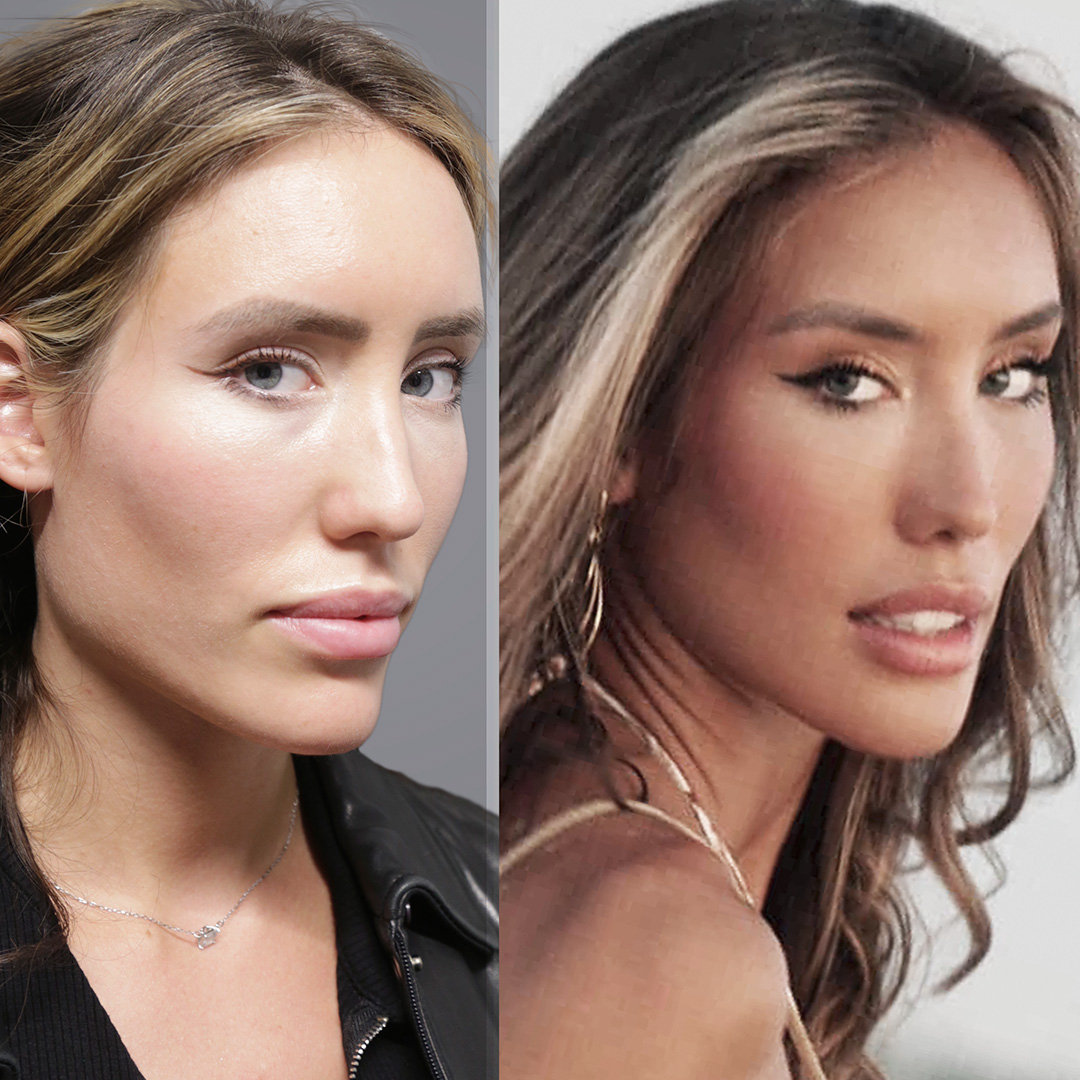
before
after
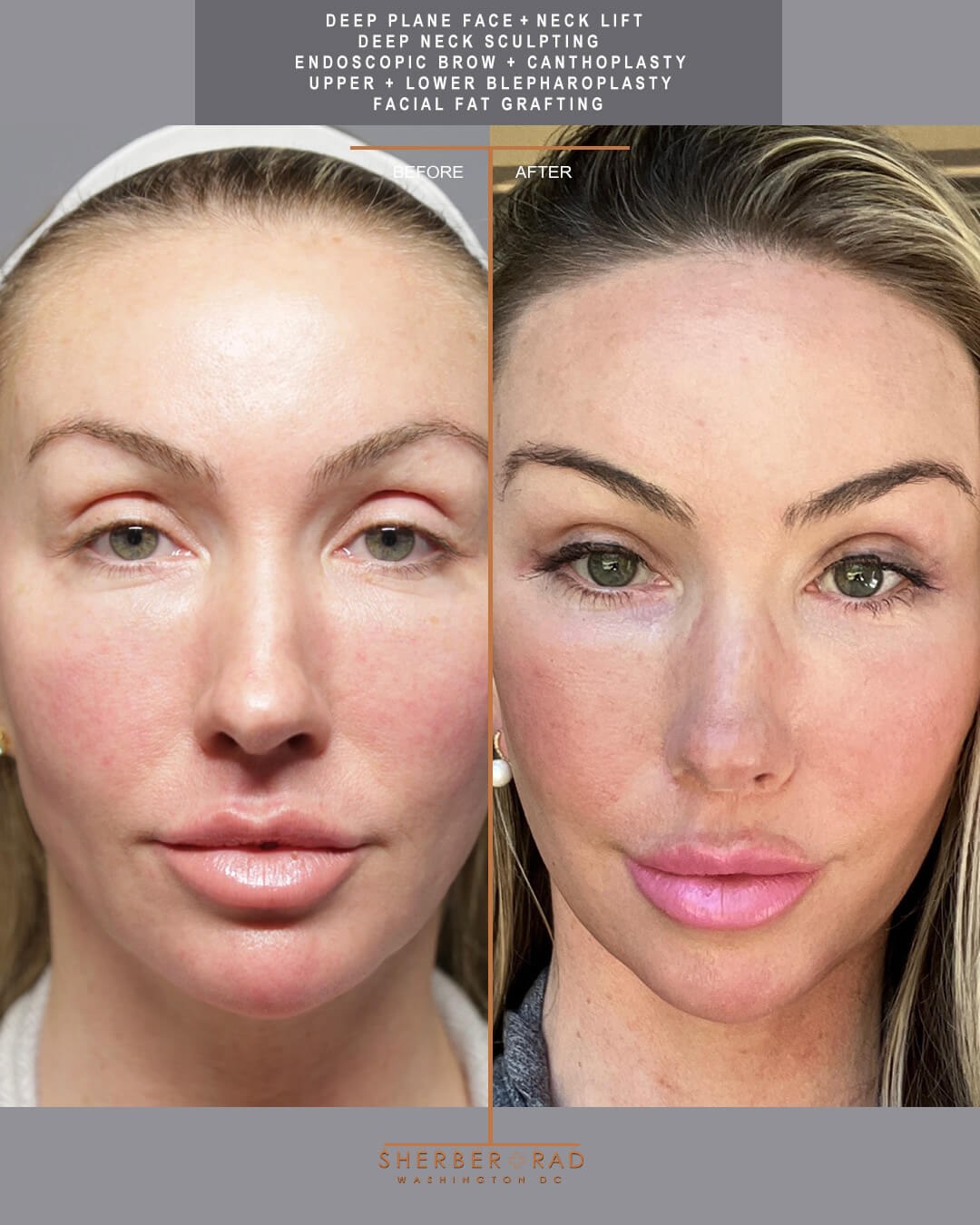
before
after
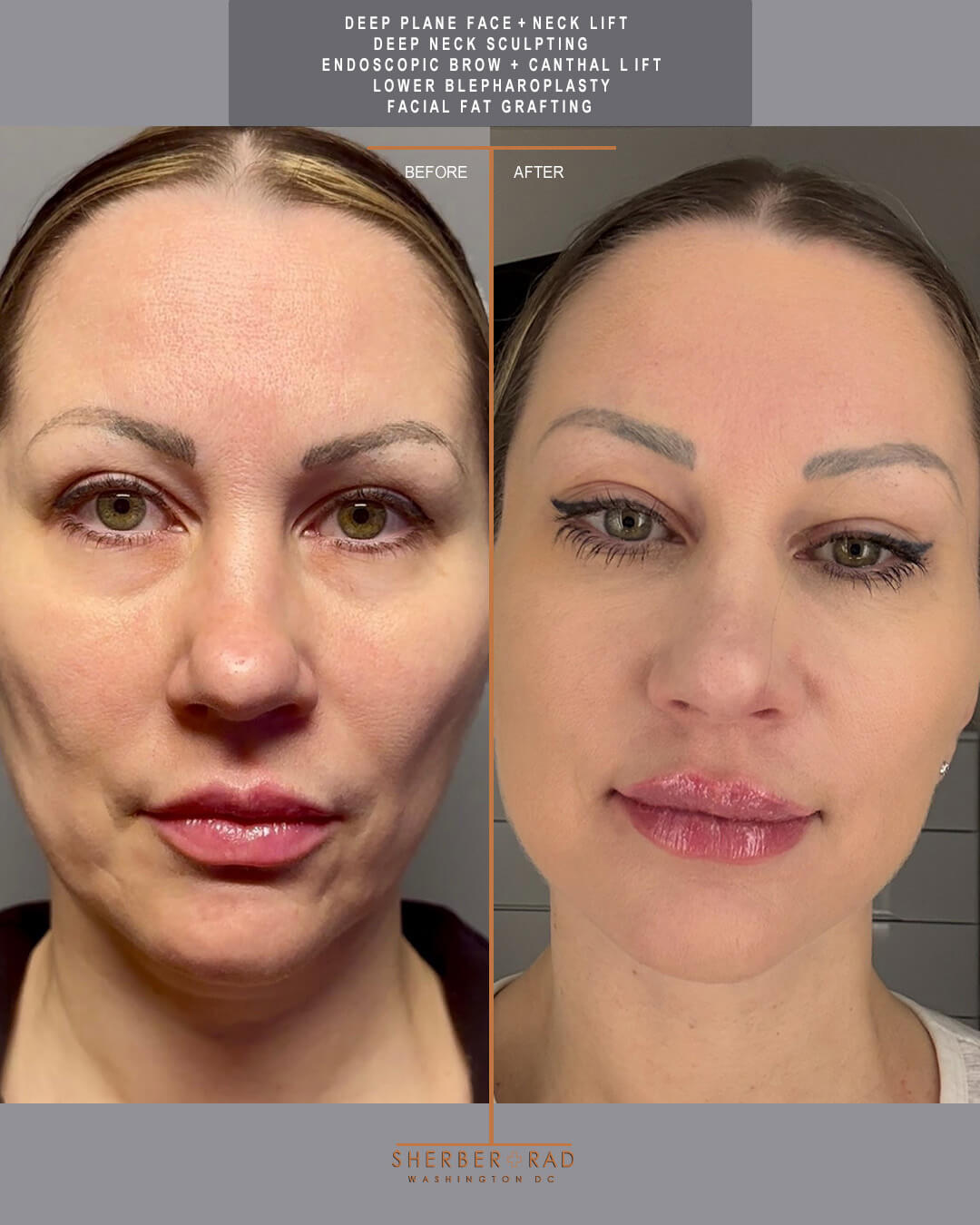
before
after
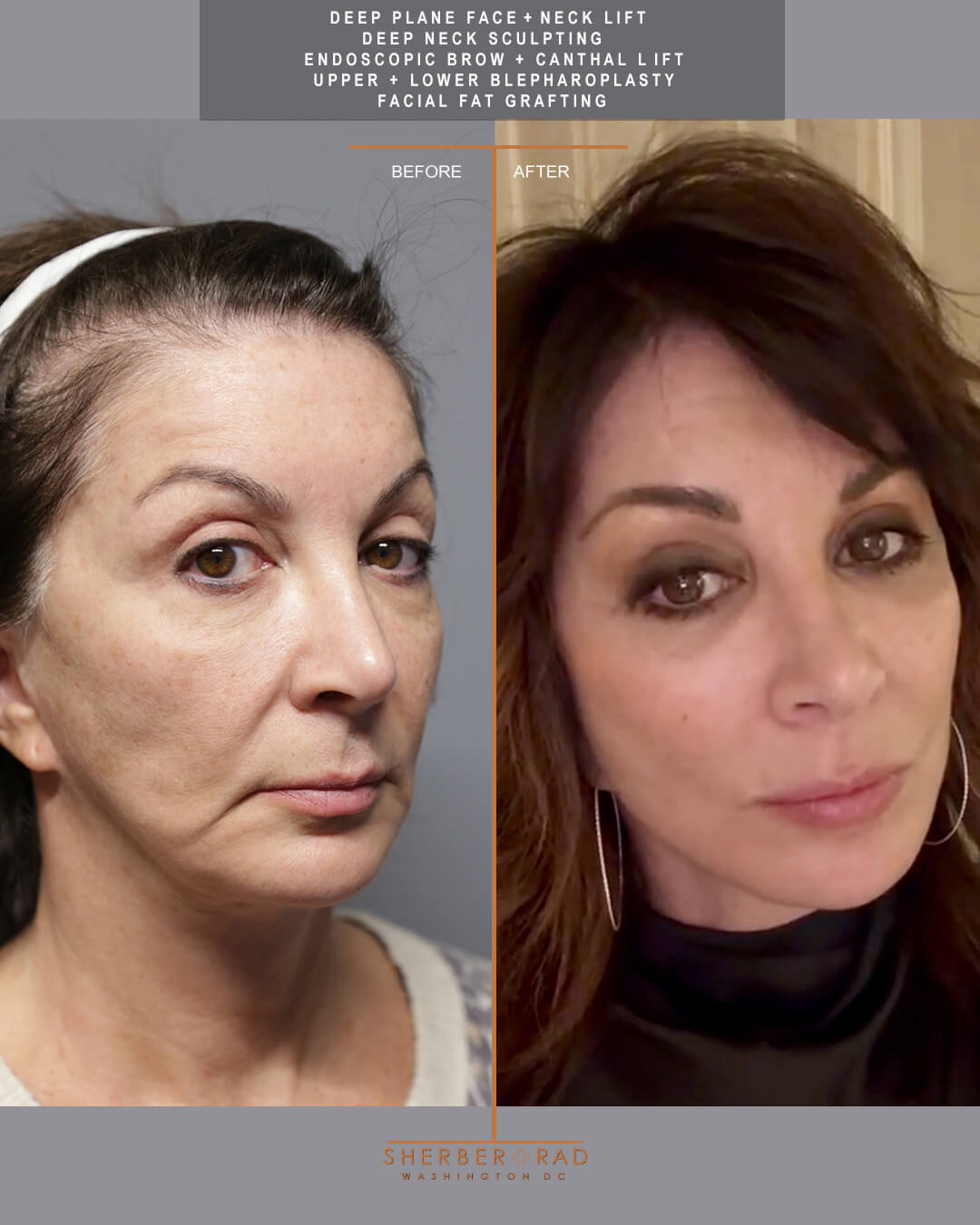
before
after
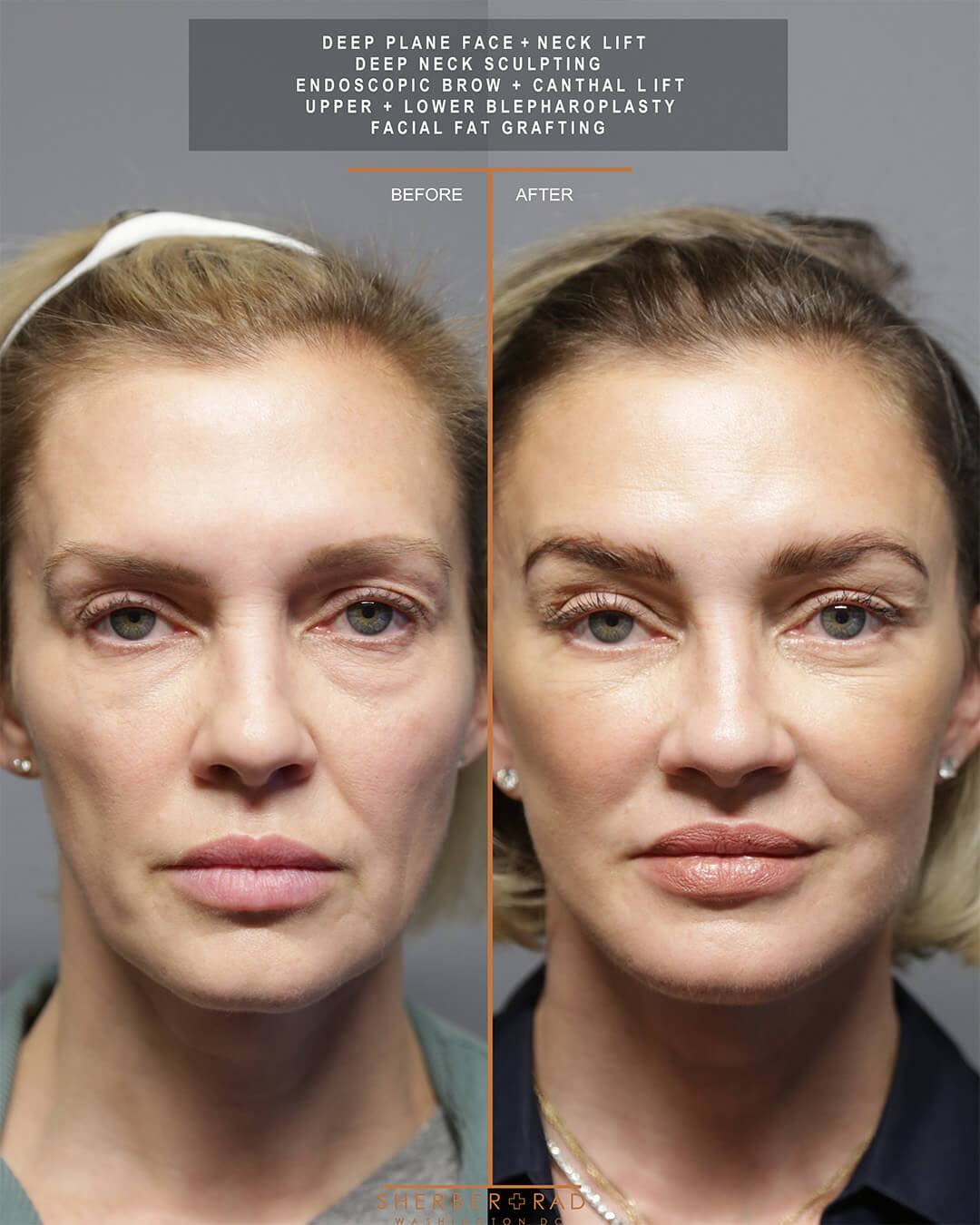
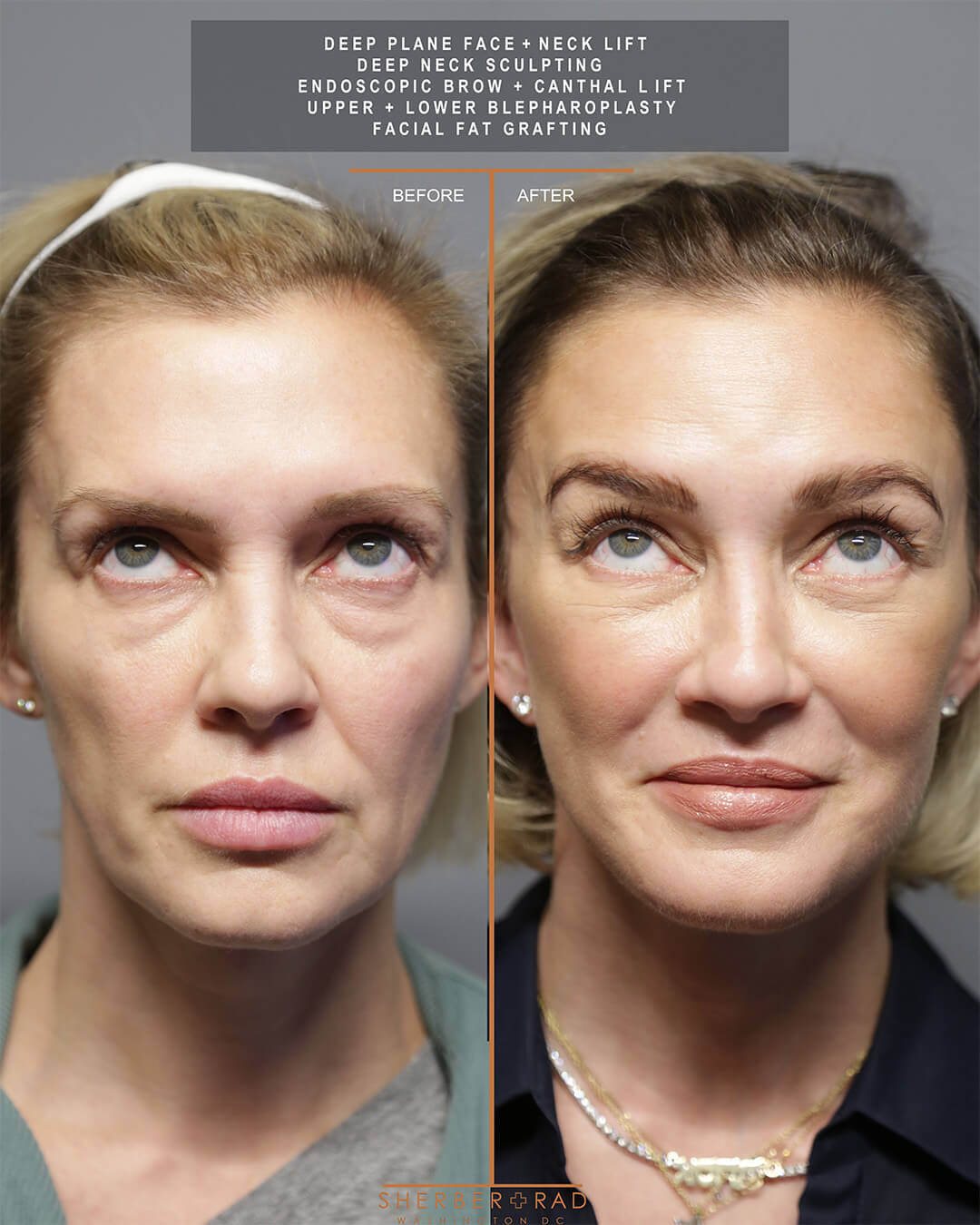
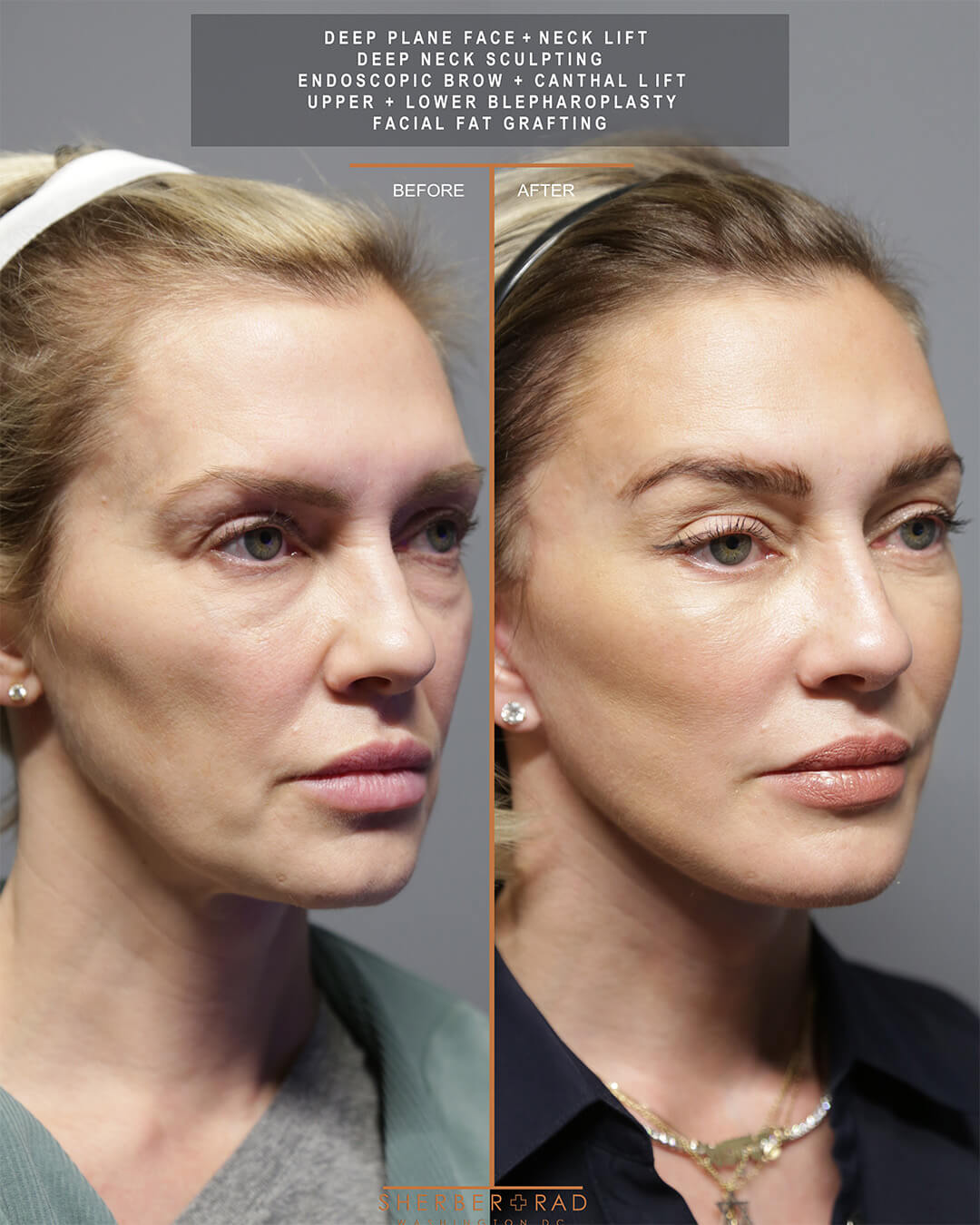
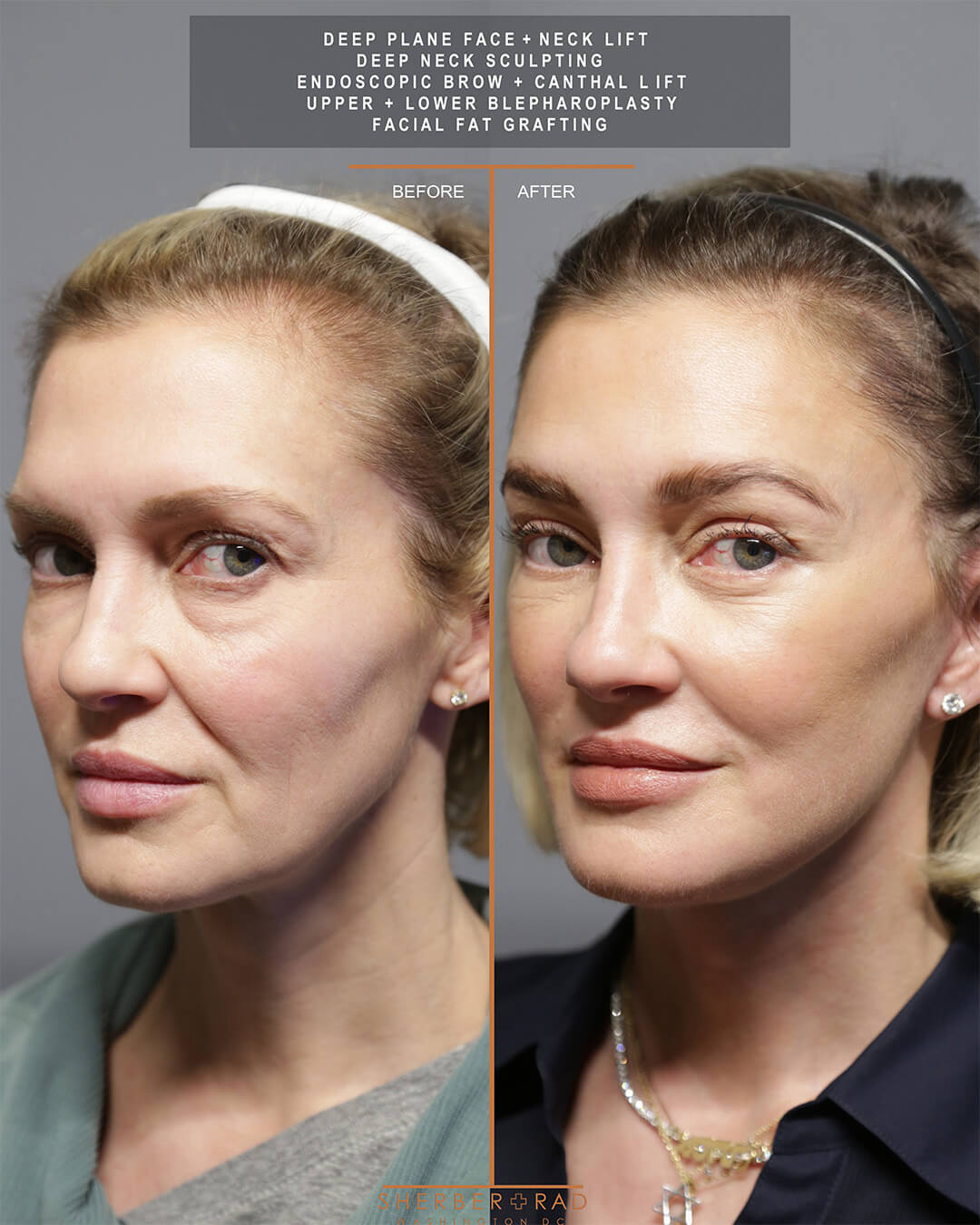
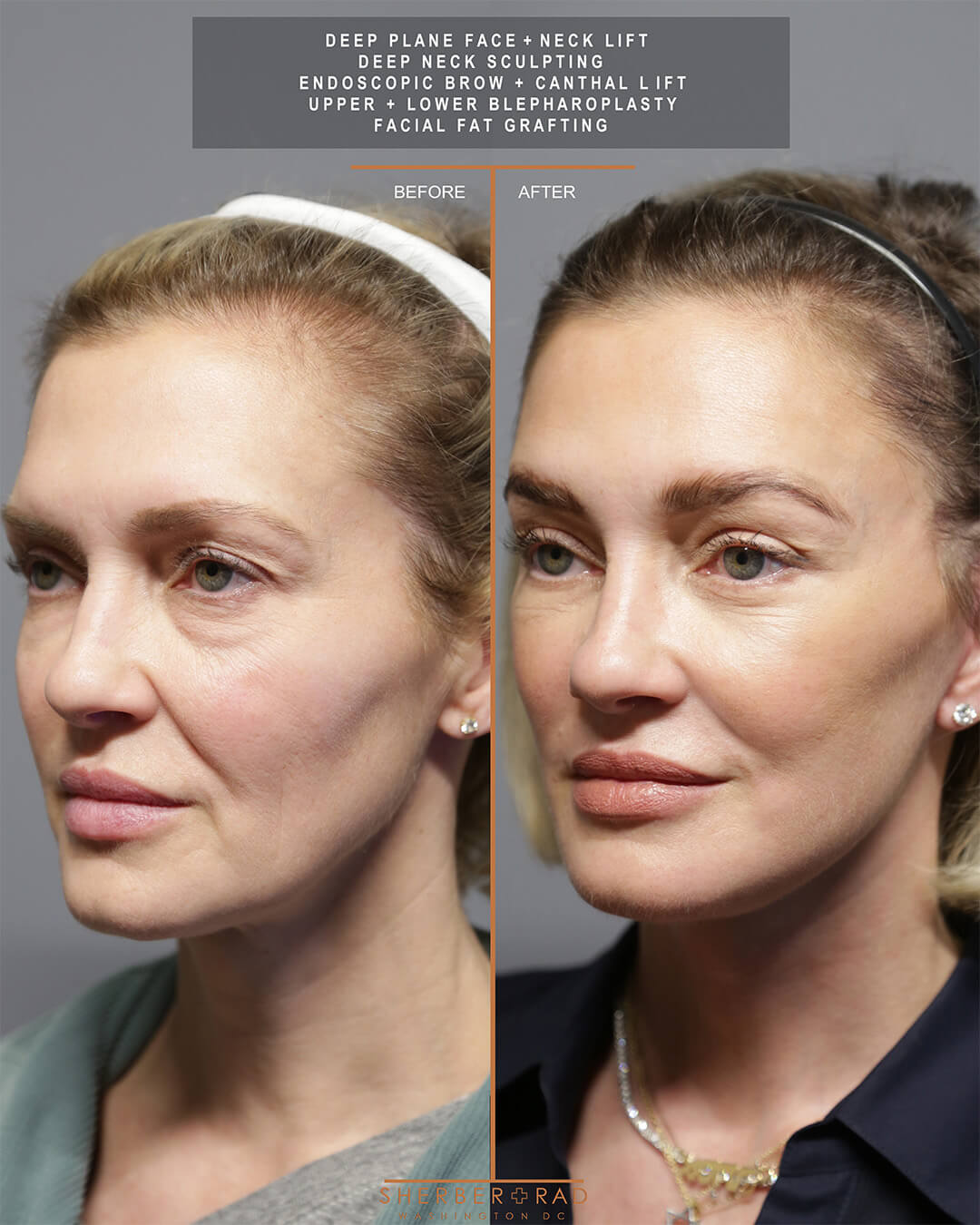
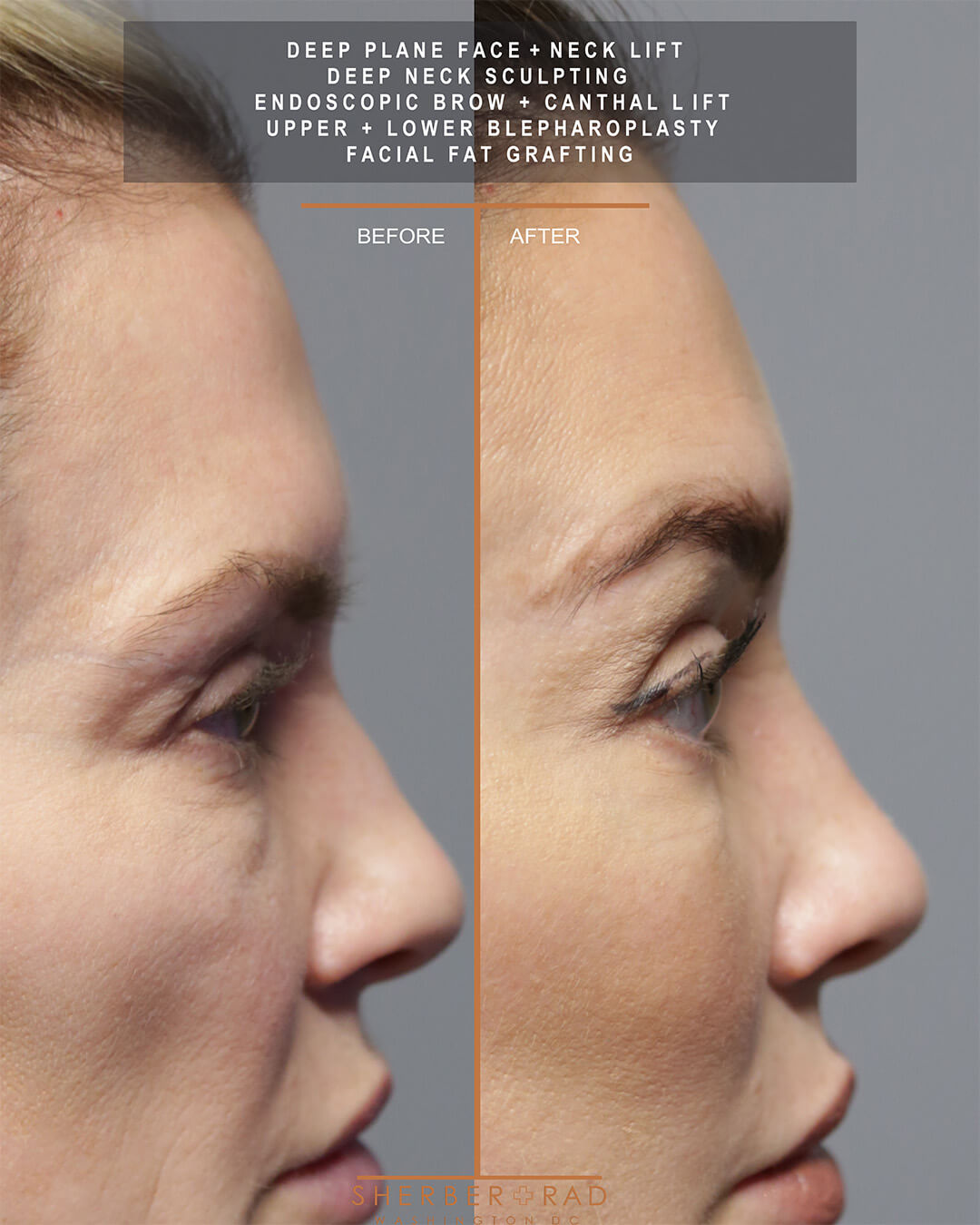
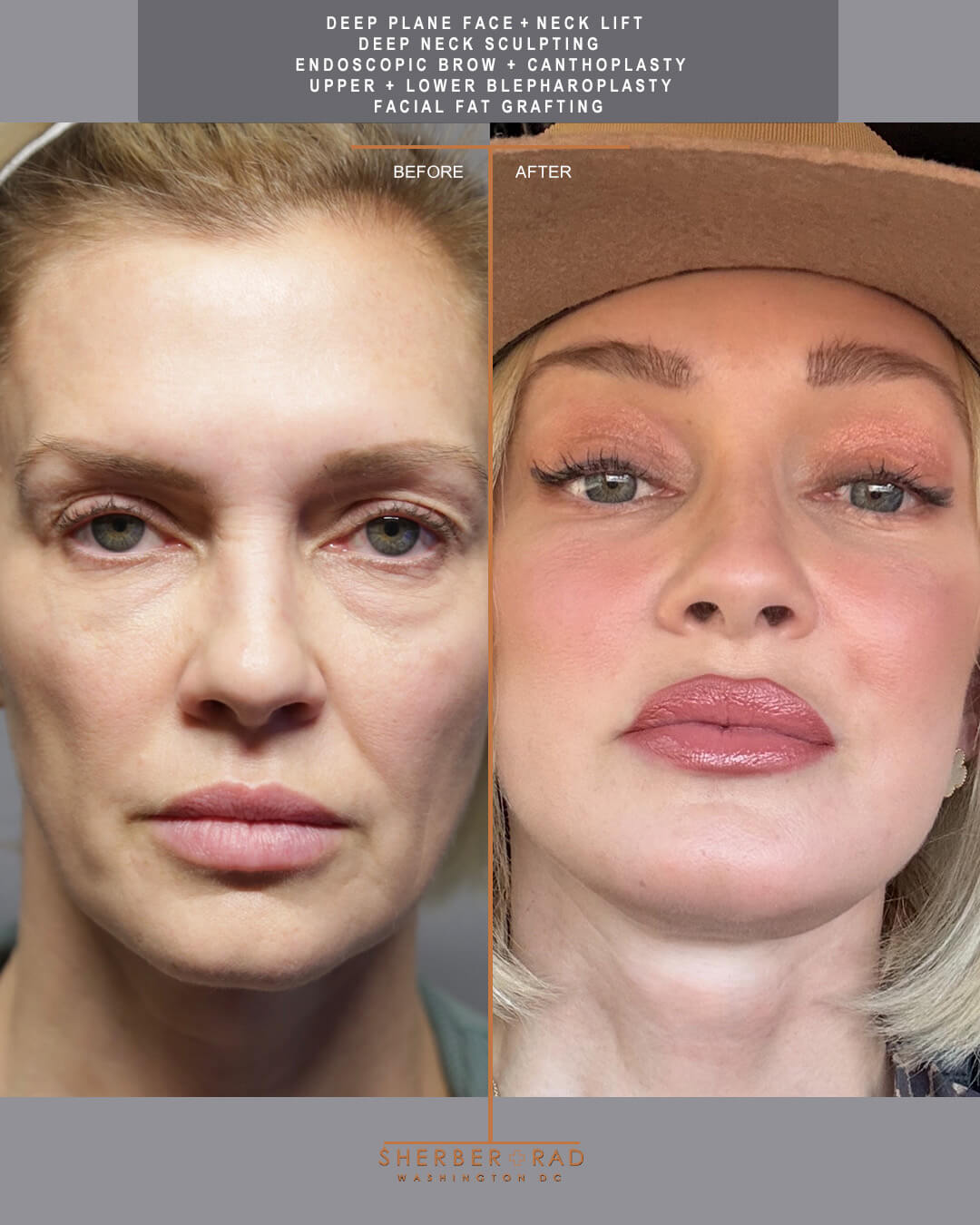
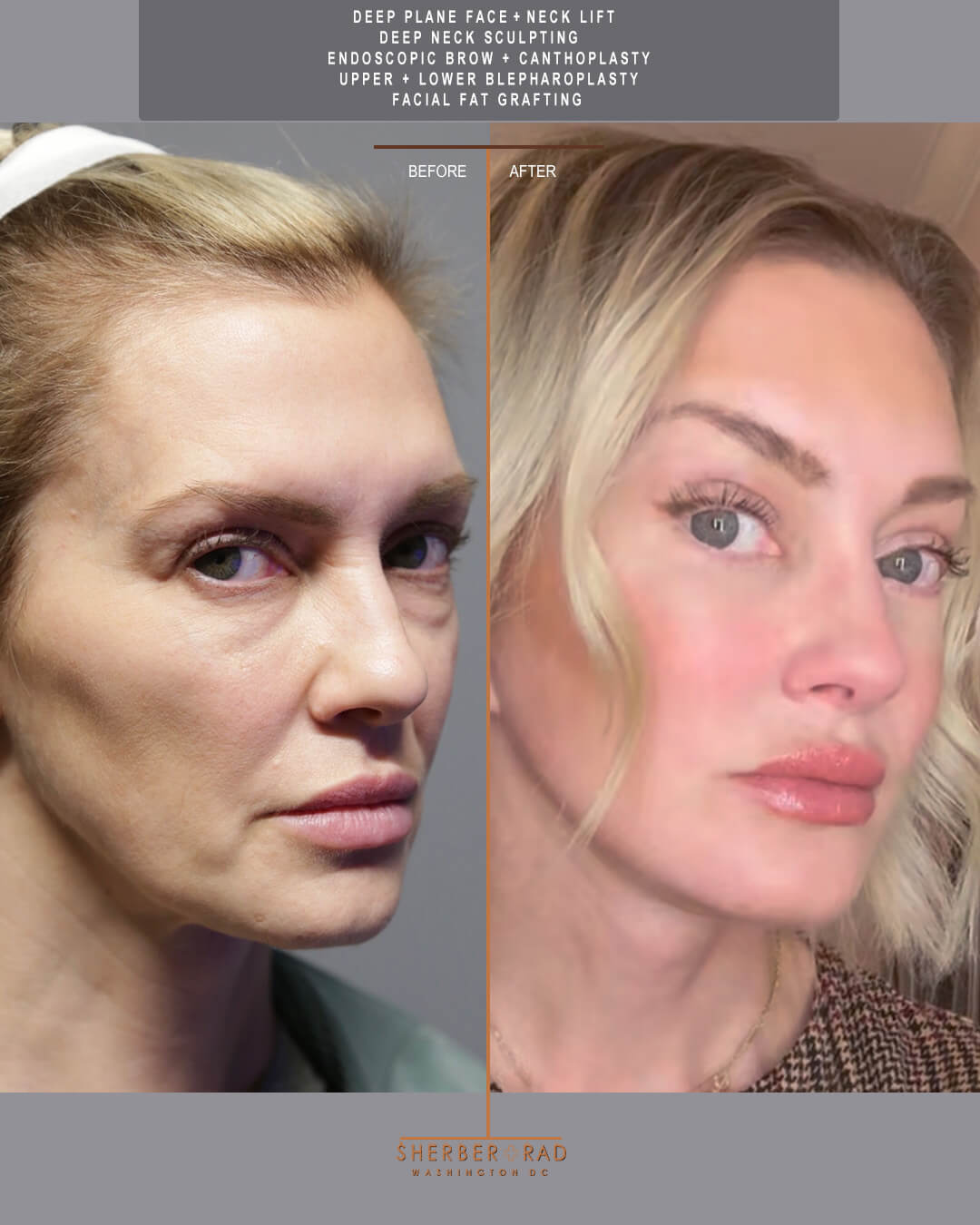
before
after
What Is Lower Blepharoplasty, and What Can It Improve?
Lower blepharoplasty is a surgical procedure designed to address age-related or genetic concerns affecting the area beneath the eyes. It is sometimes called lower eyelid surgery, a lower eyelid lift, or under-eye bag surgery.
Under-eye bags commonly develop when fat located behind the lower eyelids begins to project forward. At the same time, loss of facial volume can deepen the tear trough and create a more noticeable division between the lower eyelid and cheek. Skin laxity and changes in the underlying muscle may further contribute to wrinkles, puffiness, or an irregular contour.
Depending on the patient’s anatomy, lower blepharoplasty may improve:
- Persistent under-eye bags or puffiness
- Protruding lower-eyelid fat
- Tear-trough hollows
- An abrupt or uneven transition between the lower eyelids and cheeks
- Loose or crepey lower-eyelid skin
- Fine wrinkles associated with excess skin
- Lower-eyelid aging that creates a tired appearance
- Asymmetry caused by differences in fat, skin, or surrounding contours
- Shadowing caused by the relationship between under-eye bags and hollows
Lower blepharoplasty should not be approached as a standard fat-removal procedure. The treatment plan must account for where volume is excessive, where it has been lost, how well the eyelid is supported, and whether the skin also requires treatment.

What Causes Under-Eye Bags, Hollows, and Dark Circles?
Under-eye aging is rarely caused by a single issue. Several anatomical and skin-related changes may occur together:
- Protruding orbital fat: Fat behind the lower eyelids may bulge forward and create visible bags.
- Tear-trough hollowing: Loss of volume or changes in the underlying facial structure can deepen the groove beneath the lower eyelid.
- Lower-eyelid skin laxity: Thin eyelid skin may become looser or more wrinkled with age.
- Changes in the lid–cheek junction: The transition between the lower eyelid and upper cheek can become less smooth and more sharply defined.
- Cheek volume loss: Deflation of the upper cheek may make under-eye hollows and bags appear more prominent.
- Pigmentation or visible blood vessels: Discoloration within the skin can contribute to dark circles independently of under-eye contour.
- Genetics: Some people develop noticeable bags or hollows earlier in life despite having little other facial aging.
This distinction is important because lower blepharoplasty does not correct every cause of dark circles. Surgery may improve darkness created by shadows from prominent bags or deep hollows, but it may not eliminate discoloration caused primarily by pigmentation, thin skin, allergies, visible vessels, or other skin-related factors. Dr. Rad evaluates the structures contributing to the concern before determining whether surgery, a nonsurgical treatment, or a combination of approaches is appropriate.
Who Is a Good Candidate for Lower Blepharoplasty?
Lower blepharoplasty may be appropriate for healthy adults who are bothered by persistent changes beneath the eyes and want a more rested appearance while preserving their natural eye shape.
You may be a candidate if you:
- Have under-eye bags caused by protruding fat
- Have tear-trough hollowing or an uneven lid–cheek transition
- Notice loose, crepey, or wrinkled lower-eyelid skin
- Appear tired despite feeling well-rested
- Have inherited under-eye bags that developed relatively early
- Have concerns that cannot be adequately corrected with skincare, laser treatment, or filler
- Are in good general health
- Do not smoke or can follow Dr. Rad’s recommendations concerning nicotine before and after surgery
- Understand the potential benefits, limitations, and recovery
- Have realistic expectations for improvement rather than perfection
Candidacy depends on more than the presence of under-eye bags. Lower-eyelid position and support, skin elasticity, tear production, previous procedures, medical history, and the relationship between the eyelids and cheeks can all influence the safest and most appropriate surgical plan.
Why Choose Dr. Ariel Rad for Lower Blepharoplasty?
Lower blepharoplasty involves delicate anatomy and small changes that can significantly affect eye shape, expression, and the balance of the surrounding face. Successful surgery requires more than removing visible fat. It requires determining how much volume should be removed, repositioned, preserved, or restored.
At Sherber + Rad, lower blepharoplasty is performed by Ariel N. Rad, MD, PhD, FACS, a board-certified plastic surgeon whose practice emphasizes advanced facial rejuvenation and individualized surgical planning.
Patients choose Dr. Rad because of his:
- Board certification in plastic surgery
- Advanced surgical training at Duke and Johns Hopkins
- Extensive focus on facial rejuvenation surgery
- Experience performing lower blepharoplasty for women and men
- Detailed knowledge of lower-eyelid and facial anatomy
- Experience with both transconjunctival and subciliary surgical approaches
- Ability to incorporate fat repositioning or complementary fat grafting when appropriate
- Emphasis on minimizing surgery while achieving the necessary correction
- Focus on natural, balanced results that preserve facial identity
Dr. Rad’s philosophy is that millimeter-level changes throughout the face can work together to produce meaningful improvement. In lower-eyelid surgery, that means evaluating the bags, hollows, skin, eyelid support, and cheeks as connected structures rather than treating each concern in isolation.
What Does Dr. Rad Evaluate During a Lower Eyelid Consultation?
Your surgical plan begins with identifying what is creating the changes beneath your eyes.
During consultation, Dr. Rad evaluates factors including:
- Amount and location of protruding lower-eyelid fat
- Depth of the tear trough
- Relationship between under-eye bags and hollows
- Lower-eyelid skin quality and elasticity
- Presence of loose or wrinkled skin
- Lower-eyelid tone, position, and support
- Shape and position of the outer corners of the eyes
- Upper-cheek volume and projection
- Lid–cheek transition
- Lower-eyelid symmetry
- Pigmentation and other causes of dark circles
- Previous filler, laser treatments, or eyelid surgery
- Changes affecting the upper eyelids and brows
- Overall facial proportions
- Your concerns, priorities, and aesthetic goals
This evaluation helps Dr. Rad determine whether lower blepharoplasty is appropriate and which surgical approach is most likely to produce a balanced result. It also allows him to identify concerns that surgery may not correct, such as dark circles caused primarily by pigmentation.
What Does Dr. Rad Evaluate During an Upper Eyelid Consultation?
Your surgical plan begins with understanding what is creating the changes you see around your eyes.
During consultation, Dr. Rad evaluates factors including:
- Amount and location of excess upper eyelid skin
- Natural eyelid crease and contour
- Eyelid symmetry
- Position of the eyebrows
- Relationship between the brows and upper eyelids
- Underlying eyelid tissues
- Changes affecting the lower eyelids and surrounding orbital area
- Overall facial proportions
- Previous facial or eyelid procedures
- Your individual aesthetic concerns and goals
This evaluation allows Dr. Rad to determine whether upper blepharoplasty alone is likely to achieve the desired result or whether another procedure should be considered. The goal is not to create a larger operation. In keeping with Dr. Rad’s philosophy of minimizing surgery to achieve the best result, the treatment plan should include only the procedures necessary to create balanced rejuvenation.
How Does Dr. Rad Choose Between Transconjunctival and Subciliary Lower Blepharoplasty?
Lower blepharoplasty may be performed through an incision hidden inside the lower eyelid or through an external incision placed immediately beneath the eyelashes. The appropriate approach depends largely on whether surgery must address fat alone or fat together with loose skin and other supporting tissues.
Transconjunctival Lower Blepharoplasty:
A transconjunctival incision is made inside the lower eyelid. This approach allows Dr. Rad to access protruding fat without creating an external skin incision.
It may be appropriate for patients who:
- Have under-eye bags caused primarily by protruding fat
- Have good lower-eyelid skin elasticity
- Do not require meaningful removal of excess skin
- Need conservative fat removal or repositioning
- Want to avoid an external incision when their anatomy permits
Because the incision is located inside the eyelid, the transconjunctival approach does not leave an external skin scar. However, it also cannot independently remove significant excess lower-eyelid skin.
Subciliary Lower Blepharoplasty:
A subciliary incision is positioned immediately beneath the lower eyelashes. Through this incision, Dr. Rad can address protruding fat, redrape or remove excess skin, and treat additional tissues when appropriate.
It may be recommended for patients who have:
- Under-eye bags combined with loose lower-eyelid skin
- Fine wrinkles associated with skin redundancy
- An irregular lower-eyelid contour requiring broader access
- Anatomy requiring fat transposition and skin redraping
- Multiple age-related changes affecting the lower eyelids
The incision is designed to remain inconspicuous beneath the eyelashes as it heals. Scar quality varies among patients and continues to mature over time. The choice is not simply between a “scarless” and scar-producing operation. Dr. Rad selects the approach that provides appropriate access to the tissues requiring correction while protecting lower-eyelid position and function.
How Does Dr. Rad Achieve Natural-Looking Lower Blepharoplasty Results?
Natural-looking lower-eyelid surgery requires careful preservation of eye shape, appropriate tissue support, and a smooth transition into the cheeks. Dr. Rad considers how changes to the lower eyelids will affect the entire eye area and surrounding face. Removing an under-eye bag without addressing an adjacent hollow may leave an irregular contour.
Tightening skin without considering eyelid support can affect the position of the lower lid. Correcting the lower eyelids while overlooking upper-cheek volume loss may produce an incomplete result. For one patient, transconjunctival removal of a small amount of protruding fat may provide the appropriate correction.
Another may benefit from fat repositioning, skin redraping, or complementary fat grafting. A patient with inadequate lower-eyelid support may require an additional stabilizing procedure.
Dr. Rad designs surgery around the individual face rather than applying one eyelid shape or technique to every patient. The goal is for the eyes to appear smoother and more rested without looking hollow, overly tight, or surgically altered.
What Happens During Lower Blepharoplasty?
Patients meet with Dr. Rad again before surgery to review medical clearances, receive any necessary prescriptions and postoperative instructions, and have their remaining questions answered. Lower blepharoplasty is planned according to the patient’s anatomy and may be performed with light sedation and local anesthesia or general anesthesia.
Depending on the treatment plan, Dr. Rad makes a transconjunctival incision inside the lower eyelid or a subciliary incision immediately beneath the eyelashes. Through this incision, he may conservatively remove fat creating excess projection or reposition existing fat into the tear trough to create a smoother transition between the lower eyelid and cheek. Loose skin may also be carefully redraped and removed when necessary.
When necessary, loose skin is carefully redraped and an appropriate amount is removed. Additional fat grafting or lower-eyelid support may be incorporated when indicated by the patient’s anatomy.
Lower blepharoplasty is generally performed as an outpatient procedure. After a period of monitored recovery, patients return home with a responsible adult and follow individualized postoperative instructions.
What Is Lower Blepharoplasty Recovery Like?
Recovery varies according to the surgical approach, whether skin is removed, whether fat is repositioned or grafted, whether lower-eyelid support is added, and whether additional facial procedures are performed.
Swelling, bruising, tightness, temporary dryness, and changes in sensation are expected during the early recovery period. The lower eyelids may initially appear fuller or slightly asymmetric because swelling does not always resolve evenly.
Many patients return to work or selected social activities approximately five to ten days after surgery. However, visible bruising or swelling may last longer, particularly when lower blepharoplasty is combined with fat repositioning, skin redraping, fat grafting, upper eyelid surgery, or another procedure.
Postoperative instructions may include:
- Using cold compresses as directed
- Keeping the head elevated
- Using prescribed eye drops, ointments, or medications
- Avoiding rubbing or placing pressure on the eyes
- Temporarily limiting strenuous exercise and bending
- Following instructions concerning contact lenses and eye makeup
- Protecting healing incisions from sun exposure
- Attending scheduled follow-up appointments
Healing continues after patients feel comfortable returning to daily activities. Residual swelling and incision maturation may continue for several weeks or months, and the final contour develops gradually as the tissues settle.
Can Lower Blepharoplasty Be Combined With Other Procedures?
Yes. Lower-eyelid aging often occurs with changes in the upper eyelids, brows, cheeks, or other areas of the face.
Depending on your anatomy, Dr. Rad may recommend combining lower blepharoplasty with:
Upper Blepharoplasty: Patients with both upper-eyelid hooding and lower-eyelid bags may benefit from treating both areas to create balanced rejuvenation.
Tear-Trough Correction: Patients with pronounced hollows or structural deficiencies beneath the eyes may require more than bag removal alone.
Orbital Fat Transfer: Fat grafting may restore volume around the eye socket, upper cheek, or tear trough when age-related deflation extends beyond what can be corrected by repositioning lower-eyelid fat.
Canthoplasty: Selected patients may require additional treatment of the outer corner or supporting structures of the lower eyelid.
Lower blepharoplasty may also be included in a broader facial rejuvenation plan when aging affects additional areas of the face. The purpose of combining procedures is not to make the operation unnecessarily extensive. It is to address the anatomical changes required to create a smooth, harmonious result.
How Long Do Lower Blepharoplasty Results Last?
Lower blepharoplasty creates a lasting change in the fat and skin addressed during surgery, but it does not stop aging. Over time, the skin, fat, cheeks, and supporting facial structures will continue to change due to genetics, gravity, sun exposure, lifestyle, weight fluctuations, and other individual factors. New skin laxity, volume loss, or under-eye changes can therefore develop even after a successful procedure.
Dr. Rad’s objective is to create a durable improvement that remains balanced with the face as aging continues naturally. Maintaining stable health, protecting the skin from sun exposure, and following an appropriate skincare regimen may support the quality of the result.
Testimonials

FAQs About Upper Blepharoplasty in Washington, DC


Will lower blepharoplasty eliminate my dark circles?
It depends on what is causing them. Surgery may improve dark circles created by shadows from protruding bags, tear-trough hollows, or an uneven lid–cheek transition. It may not correct discoloration caused primarily by pigmentation, thin skin, visible blood vessels, allergies, or other skin-related factors. Dr. Rad will evaluate the cause of your dark circles and explain which changes lower blepharoplasty can realistically improve.
Will lower blepharoplasty change the shape of my eyes?
The goal of lower blepharoplasty is to improve bags, hollows, skin laxity, and contour while preserving the patient’s natural eye shape. Because lower-eyelid position and support vary, Dr. Rad evaluates eyelid tone and anatomy before surgery. Some patients may need an additional supporting procedure to maintain or intentionally modify eyelid position.
Will I have visible scars after lower eyelid surgery?
A transconjunctival lower blepharoplasty uses an incision hidden inside the lower eyelid and therefore does not create an external skin scar. When excess skin must be addressed, Dr. Rad may use a subciliary incision immediately beneath the eyelashes. This incision is designed to become increasingly inconspicuous as it heals, although scar appearance varies among patients.
What is the difference between lower blepharoplasty and tear-trough filler?
Lower blepharoplasty surgically addresses protruding fat, excess skin, and other structural changes. Tear-trough filler temporarily adds volume to selected hollows but does not remove under-eye bags or loose skin.
Filler may be appropriate for carefully selected patients with hollows and little or no protruding fat. It may be less appropriate when prominent bags or existing fullness are the primary concern. Dr. Rad can explain whether surgery, filler, fat grafting, or another approach is most suitable.
Can lower blepharoplasty make hollow eyes worse?
Removing too much lower-eyelid fat can create or worsen hollowing. This is why modern lower blepharoplasty planning considers fat preservation and repositioning rather than assuming all visible fat should be removed. Dr. Rad determines where fat creates excess projection, where volume should be preserved, and whether repositioning or complementary fat grafting would create a smoother contour.
What is the difference between upper and lower blepharoplasty?
Upper blepharoplasty primarily addresses excess or sagging skin and other changes affecting the upper eyelids. Lower blepharoplasty treats concerns beneath the eyes, such as protruding fat, under-eye bags, tear-trough hollows, loose skin, and an irregular transition between the eyelids and cheeks. Some patients benefit from one procedure alone, while others may benefit from treating both areas.
Will Dr. Rad Remove or Reposition My Lower-Eyelid Fat
That depends on the relationship between your under-eye bags and surrounding hollows. Fat creating excess projection may be conservatively removed, while existing fat may be repositioned into the tear trough when additional volume is needed to smooth the lid–cheek transition.
Dr. Rad may also preserve supportive fat or recommend complementary fat grafting when volume loss extends beyond what repositioned eyelid fat can correct. The goal is to balance prominent and hollow areas without creating an overly flat or skeletonized appearance.
What are my nonsurgical options for under-eye rejuvenation?
Nonsurgical options depend on the cause of the concern and may include filler, laser treatment, medical-grade skincare, or other dermatologic treatments available through Sherber + Rad.
These treatments may improve selected hollows, fine lines, pigmentation, or skin quality, but they cannot remove significant protruding fat or substantial excess skin. Some nonsurgical treatments also require ongoing maintenance. Dr. Rad and the Sherber + Rad team can help determine which approach matches your anatomy and goals.
What are the risks of lower blepharoplasty?
Potential risks include bleeding, infection, scarring, dry-eye symptoms, prolonged swelling, asymmetry, contour irregularities, changes in sensation, persistent hollowing, difficulty closing the eyes, lower-eyelid retraction or outward turning, changes in eyelid position, injury to surrounding structures, anesthesia complications, and the possibility of revision surgery.
Rare but serious complications affecting vision can occur with eyelid surgery. Dr. Rad reviews the risks relevant to your health, anatomy, and surgical plan so you can make an informed decision.
How much does lower blepharoplasty cost in Washington, DC?
The cost of lower blepharoplasty varies according to the surgical approach, complexity, anesthesia and facility expenses, and whether fat repositioning, fat grafting, eyelid support, or another procedure is included. Following your consultation, Sherber + Rad will provide pricing based on the surgical plan Dr. Rad recommends.
Next Steps
PLAN YOUR VISIT
Related Procedures
Upper Blepharoplasty
Canthoplasty (Fox Eye Lift)
Tear Trough Correction
Orbital (Eye Socket) Fat Transfer | Fat Grafting
Related Blog Posts
Why Do I Always Look Tired? Understanding Under-Eye Hollows, Bags and Dark Circles
Many people are surprised when friends, family members, or coworkers ask if they are tired—even after a full night\'s sleep. The truth is that looking tired is not always related to fatigue. In many cases, changes around the eyes can create a perpetually exhausted, sad, or worn appearance regardless of…